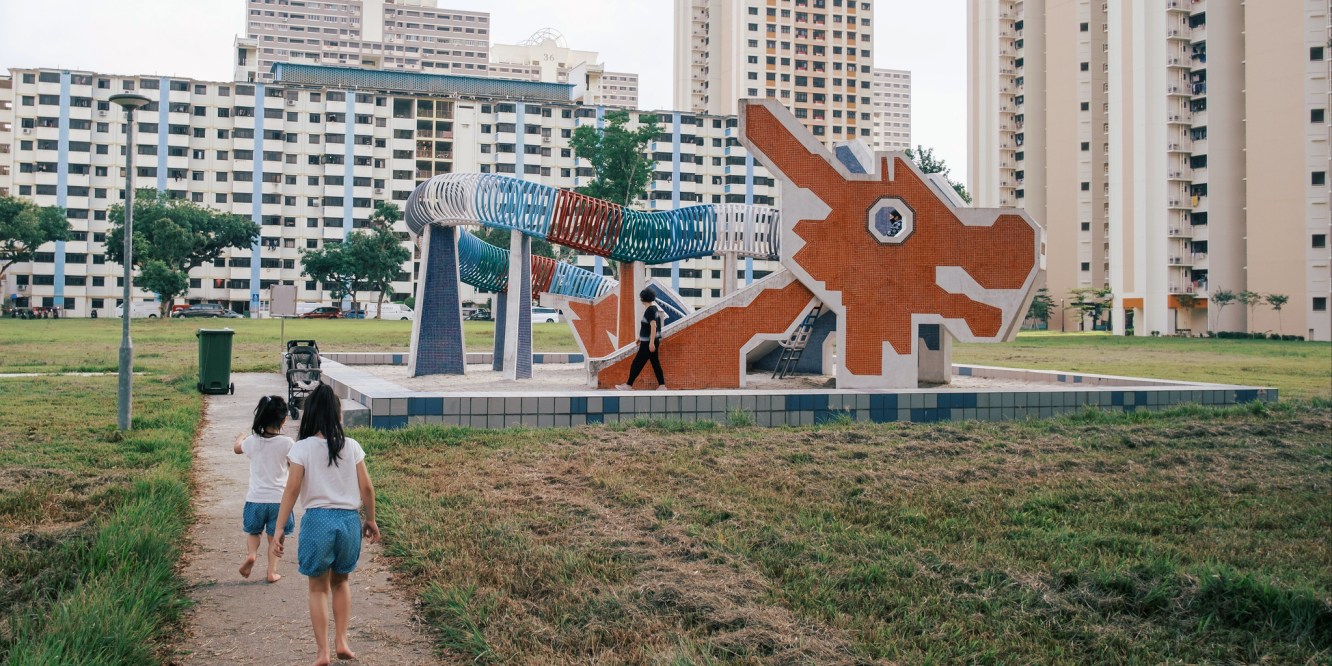
With COVID-19’s appearance narrowing options for travel, there is no better time to explore our backyard, and today’s destination is the Dragon playground that forms the memories of many childhoods back in the 1980s to 1990s.

One of the not-so-great impressions associated with land-scarce Singapore is how relentless we can be in ‘refreshing‘ our landscape, but efforts by the community in preserving architecture have started to bear fruit, and the often referred to as ‘Dragon Playgrounds’ is one such example.

Located at Toa Payoh Lorong 6 (postal code S310028), this specific playground has been picked by the New York Culture blog “Flavorwire.com” as one of the 15 most amazing playgrounds from a worldwide shortlist. In fact, this Dragon playground gave birth to many cultural references, with even a local outfit designing a LEGO set based on the Dragon playground’s design.
Let us take a look today.

LEGO Dragon Playground – designed by a local outfit.
A quick history lesson
Once a common sight in the 1980s, the Dragon playgrounds were later phased out from 1993 onwards due to safety concerns (what concerns I never understood, to be honest).
Toa Payoh’s Dragon Playground was designed by Mr. Khor Ean Ghee from our Housing and Development Board (HDB) in 1979, with the idea inspired by the looks of the oriental dragon.

Back in the 1980s, the state of the Singapore economy also necessitated easy-to-maintain and build designs, and having sandpits and structures made out of steel and concrete would be an excellent choice durability-wise.
This translated to a generation of children growing up with the dragon playground. And with the 1980s to 1990s era generally associated with Singapore’s transformation from a third-world to a first-world country, re-development plans then took place where these playgrounds gave way to the considered ‘safer’ cushioned rubber mat grounds and plastic/metal structures commenced towards what we see today in the 2020s.

Seeing the imminent disappearance of the Dragon playground, a chorus of voices in the community led to the authorities relenting from their original decision to tear down all these playgrounds, declaring the Dragon playground in Toa Payoh a heritage area to be preserved and, today, the sole surviving one in its original form.
If you drop by there in 2020 onwards, you will see that everything in the immediate vicinity has already been torn down and, I believe, ready to be redeveloped.
The Design
The Dragon playground can be generally divided into 3 main parts. The ‘head’, comprising two eyes as holes for one to look outwards from, the ‘body’ or ‘spine’ which contributes to its uniqueness which one climbs onto to reach the ‘head’ and, of course, the accompanying slides and staircases which children readily climb.
The whole structure was then placed onto a bed of sand, and I can still recall kids having fun building sandcastles or even using them as a foundation to hold candles during Mid-Autumn festival celebrations.


Every kid will surely remember two things about the playground – the ‘dragon’s spine’ with its holes that can trap the tiny feet of kids who go a bit too fast and lastly, the sheer exhilaration of how high above ground one can go climbing the dragon’s body to it’s the head.


The eye of the Dragon head was easily 2 stories high.

If you find these tiles familiar, it is only because they were one of the most commonly used building materials in the 1980s, and we can still find them around the island decorating shop fronts and, in some cases, floors. Easy to replace, pretty, cheap, and rugged – what more can one ask?


A little bonus was the area under the Dragon’s head? The perfect spot to hide from the sun in the afternoon.

The sand around the area also ensured potential fires were never an issue with how the kids of the 1980s played with paper lanterns and candles during our Mid-Autumn festival celebrations, unlike the modern battery operated ones we see today in the 2020s. Very lovingly pragmatic.
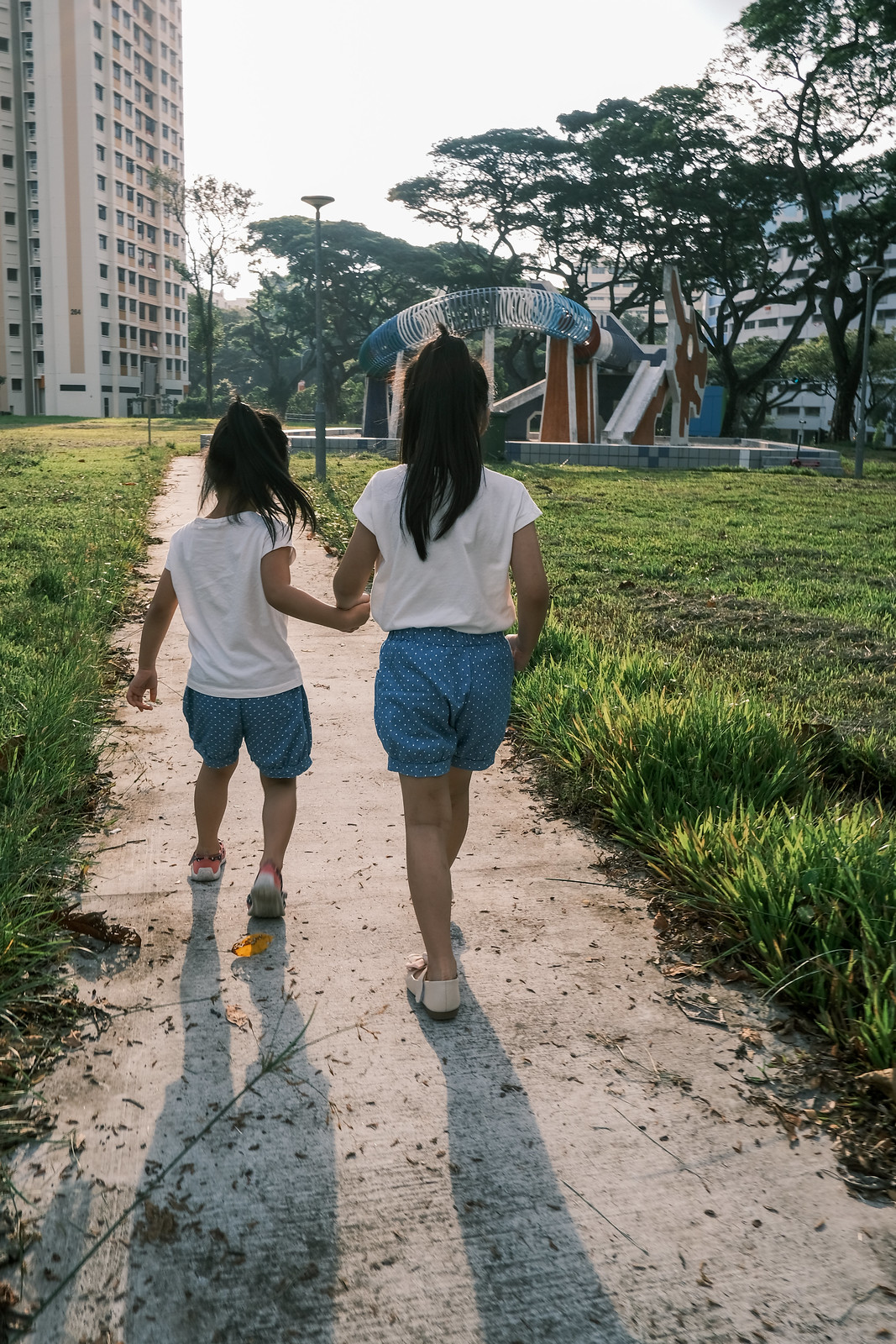
And, of course, there is just this little magic in being able to tell the kids: “Yes, papa used to play in this back then when I was a kid, too.”
Have you visited this little piece of heritage in Singapore?

Disclaimers:
- All images shared here were shot with the Fujifilm X-Pro3 and XF18mm ƒ2 setup.
- All the images were edited from RAW to my preferences in LR CC Classic.
- The review is not sponsored; all equipment used are my personal copies.

Thank you for reading.

 KeithWee | Photography
Love your photos for this post!
LikeLiked by 2 people
Thank you 🙂
LikeLike