Introduction
Five years ago, I was very much intrigued by the first-generation Polaroid Go (my review here), not because it was the most optically capable instant camera, but because of how incredibly small and charming it was.
The Polaroid Go 3 is available for purchase in Singapore here.
As I shared in my original review, it was the kind of fun camera one could pass around a table, bring to a family gathering, the fully analog camera which will bring a smile to every kid.

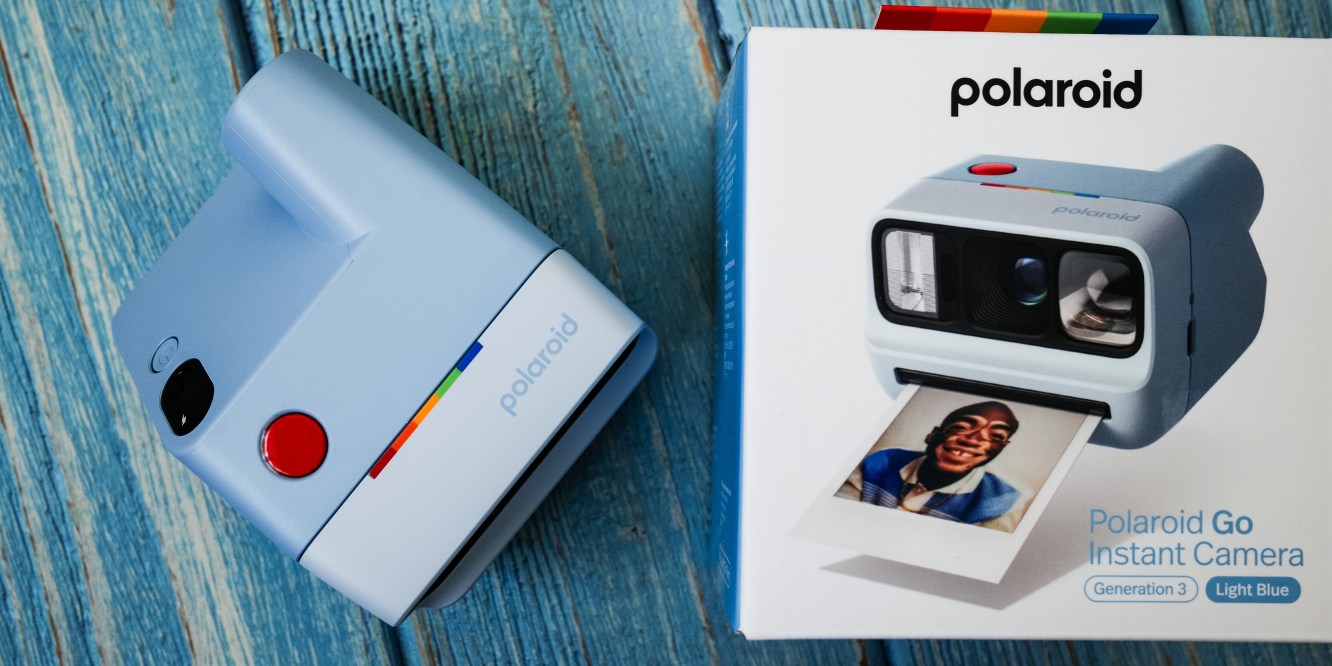
The Polaroid Go Generation 3 very much continues the same design intent, but with Polaroid making the sensible improvements where it matters: a refreshed lens, stronger flash, closer and more flattering selfies, and the same small-format Go film that keeps the whole experience pocketable.
A small gripe: prior to writing this review, I did a quick search around and found it disappointing to see the Go Gen 3 reviewed through the lens of conventional tech expectations. Some critiques seemed to miss the point of what Polaroids are meant to be, while others did a full discussion without including even a single sample photograph and based on what they ‘feel’.

And yes, Polaroid still calls it the world’s smallest instant analog camera.
Of course, anyone expecting clinical sharpness, perfect exposure, or the convenience of digital photography is probably missing the point. A Polaroid is not about making the most technically correct photograph. It is about producing a one-off, physical image that appears slowly in your hand, with all the quirks, imperfections and occasional heartbreak that come with instant film.

That, to me, has always been the charm with Polaroids.
Let us take a deeper look.
tl:dr
The Polaroid Go Generation 3 is not a camera for someone who wants maximum image quality per dollar, unless one can put a value on ‘spontaneous fun’.
I have to emphasize again, Polaroid films are not the same as Instax films.
It is a camera for someone who wants the most compact, playful and accessible way into Polaroid instant photography.

The inprovements in 2026’s third generation are focused on real-life usability: practical better flash performance, a new lens, improved selfie framing, and the continued convenience of self-timer and double exposure modes.

The prints are hardly large, but that is also the whole point. They fit into wallets, phone cases, journals, scrapbooks and little corners of daily life where larger Polaroid prints may feel too precious (or expensive).
Would I choose this over the larger Polaroid Now+? That depends on whether portability or print size matters more to you.


Would I bring the Go Gen 3 out for a birthday, cafe visit, school event, casual photowalk or family trip? Absolutely. Would I see the Polaroid I-2 in the same bracket of use? Absolutely not.
The Go 3 is probably not the Polaroid camera to overthink when using, especially for a USD89.99 camera.

Technicalities
The Polaroid Go Generation 3 keeps to the Go family’s identity as a fully analog, compact instant camera using Polaroid Go film.
| Key Specifications | |
|---|---|
| Film type | Polaroid Go film |
| Image area | approx. 47 × 46 mm |
| ‘Paper’ size | approx. 54 × 67 mm |
| Lens | Polycarbonate resin fixed-focus lens |
| Focal length | 63.75 mm |
| Aperture | ƒ14.4 and ƒ32 |
| Shutter speed | 1/500 sec to 1 sec |
| Battery life | Rechargeable lithium-ion, up to 15 film packs per charge |
| Flash | Built-in vacuum discharge tube flash |
| Dimensions | 106.5 × 83.8 × 64.6 mm, at 252 grams without films |
| Features | Double exposure, timer mode |
The headline is simple: this is still a fully analog tiny camera.
The original Go Generation 1 was already small enough to make many instant cameras look oversized, and the Generation 3 continues with essentially the same philosophy. The camera is not designed to replace the larger Polaroid bodies. It is designed to go where they may not.
The new lens and stronger flash are important because instant photography is often used in exactly the kind of situations where lighting is less than perfect: indoors, at night, during gatherings, or in spontaneous moments where no one is going to wait for you to calculate exposure.

The Go Gen 3 remains a fixed-focus camera, and that is worth remembering. This is not the top-end Polaroid I-2 (my review is linked) with LiDAR autofocus and PASM controls. This is closer to the “aim, compose, press, and pray a little” end of the Polaroid experience.
And honestly, that is the whole raison d’etre of Polaroid photography .
Handling
The best part of the Polaroid Go has always been its size and its simplicity, where any kid can handle it with 5 mins of patient coaching.

There are basically only 3 buttons on the camera, a huge shutter button in bright red no one can miss, an ON/OFF switch and a button for the flash and that is all to it unless one wishes to go with the double-exposure or timer functions.

A significant improvement not listed is the viewfinder which I find much brighter than the 1st generation; a practical and real improvement during usage.

Some cameras look compact in product photos but feel bigger once in hand. The Go series is the opposite. It is genuinely small, almost toy-like at first impression, but in the best possible way.

The Go Gen 3 still looks unmistakably like a Polaroid, just shrunk down. The front retains the familiar rounded shape, the viewfinder remains simple, and the integrated selfie mirror makes sense for the kind of user this camera is clearly designed for.

The handling limitation is also clear. The Polaroid Go Gen 3 is small, which means the viewfinder and controls are delibrately simple and not a camera for precision framing. Parallax will exist, especially at closer distances, and the final result may not always match exactly what one saw through the finder, and if you are OCD about these, there are many other options such as a USD9195 Leica rangefinder or the higher end full sized Polaroid cameras you can consider.

The Polaroid Go Gen 3 is an exercise in design intents of fun in a simple and spontaneous manner.
Upfront, the Go Gen 3 is not trying to be the most serious Polaroid camera. It is made for the friend who does not often shoot film and does not really like to work with the development of film.

It is made for the child who wants to see a photograph appear magically in hard-copy, slowly materialising across a 15 minutes wait.

True to its design intents, Polaroid Go films are literally a open-lid, load, close-lid and you are ready to photograph process.

The self-timer is useful for group shots, and double exposure remains one of those features that can be either brilliant or a complete mess. That, however, is part of the fun. With instant film, experimentation is expensive enough to make one think, but not so serious that it stops one from playing.

The Polaroid Go system is about ‘looseness’ and it asks one to let go a little.

The smaller Go film format also deserves mention. The prints are tiny compared to standard i-Type Polaroids, and there will be photographers who find them too small. Personally, I see this as both a limitation and a strength.
A larger Polaroid print has more presence. It feels more substantial, more display-worthy, and frankly more satisfying when one gets the exposure right.

But the Go print is cute, approachable, and less intimidating. It can be slipped into a wallet, a notebook, a phone case or given away without feeling like one is handing over something too precious.
It is trying to be the Polaroid camera you actually bring out.
The stronger flash should also make a practical difference. Instant cameras often live in social spaces, and social spaces are rarely lit like a studio. If Polaroid has improved the flash output and lens behaviour for clearer shots in mixed lighting, that is exactly the kind of upgrade that matters more than simply adding another fancy mode.

To be upfront, the films are are not cheap, and every failed shot stings a little. One does not “spray and pray” with instant film the way one does with a digital camera. Every frame costs money, and every frame is final.
But perhaps that is also why the successful shots feel more meaningful and valuable in an era where everyone with a digital camera or a handphone is almost always guaranteed a ‘correct’ shot.
Conclusions
The Polaroid Go Generation 3 is a sensible update to what was already one of the most charming instant cameras around.

It does not attempt to be the Polaroid I-2, a professional creative tool nor an economical instant photography option.
Instead, it stays focused on what the Go series has always done well: being small, approachable, playful and genuinely easy to bring along.

For those who want maximum print size, the larger Polaroid Now+ or I-2 will make more sense. For those who want more control, the I-2 remains on another level altogether.
Polaroid is about the dreamy colours, the deep shadows, the imperfect exposures, and the smile that appears when someone sees the photograph developing in real time.
The Polaroid Go Gen 3 keeps that spirit alive in the smallest possible form, offering an experience still wonderfully, stubbornly and beautifully analog.
The Polaroid Go 3 is available for purchase in Singapore here.
Thank you for reading.
Disclaimers:
1. All product photos and samples here were photographed by me. I believe any reviewer with pride should produce their own product photos.
2. All images were shot with the Polaroid Go Gen 3 or Go Gen 1 where stated.
3. This review is not sponsored. Just in case, the purchase links shared are out of my goodwill, and I do not earn anything when you make a purchase through them.
4. I write as a passion and a hobby, and I appreciate that photography brands are kind enough to respect and work with me.
5. The best way to support me is to share the review, or you can always help support me by contributing to my fees to WordPress for the domain using the Paypal button at the bottom of the page.


Hi Keith, you hit the nail on the head with the whining regarding those reviews churned out with probably zero use of the camera.
LikeLike
Hi there, thank you 🙏
LikeLike
cute one! Probably will purchase one for the kids if I can manage the cost of films.
LikeLike
Hi! Thank you and yes, not the brightest idea to hand one over to the children without any controls 😂
LikeLike
I love the form factor so much but sadly I just can’t afford the price of the film to be reasonably using it. I have the Polaroid original – the one that takes 600 film and that really costs and arm and a leg
LikeLike
Hi Anna, the price of films is always a concern for me too. At least for my country, back then Instax used to be cheaper than Polaroids but recent years the price of the GO Polaroids have gotten so close to Instax minis that I end up using Polaroids.
For the Polaroid 600 that’s a different level of cost and I agree that these can’t really be shot at a random manner.
LikeLiked by 1 person
Polaroids just have such a likeable design, it’s hard to resist haha
LikeLike
much appreciated!
LikeLike
Hi, thank you !
LikeLike