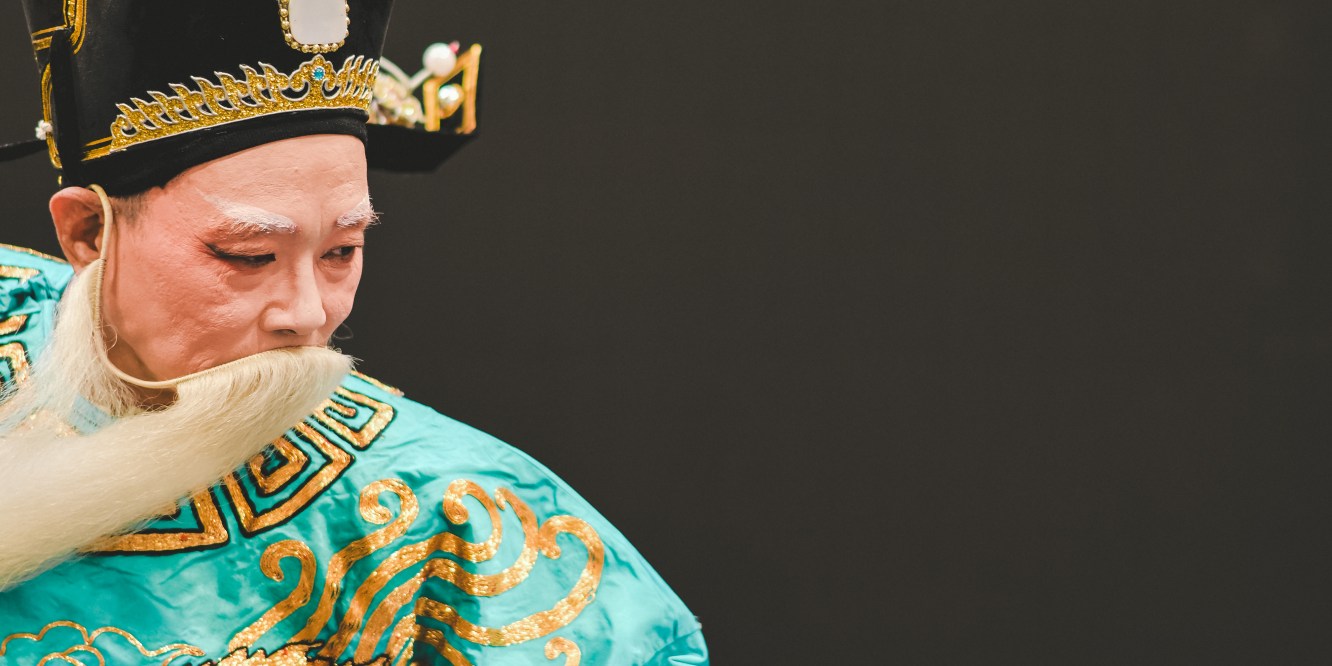
In the fourth instalment of my series on exploring and documenting Singapore’s heritage, we focus on a fast-disappearing cultural treasure: Chinese opera.
My first, second and third articles are linked and many thanks to John from Drew & Barry for the kind invite.

Chinese Opera in Singapore
Chinese opera has a long history in Singapore, tracing back to the 19th century when early Chinese immigrants brought with them different regional opera traditions such as Teochew, Hokkien, Cantonese, and Hainanese styles.

Performances were often staged during temple festivals, religious rituals, and community gatherings, serving not only as entertainment but also as a means of preserving cultural identity and transmitting values across generations. At its height in the mid-20th century, Chinese opera was a common sight in kampongs and neighbourhoods, with makeshift stages set up in open fields or temple courtyards.


However, with urbanisation and the rise of modern entertainment, Chinese opera’s popularity has waned, leaving behind a heritage that is now sustained by dedicated practitioners and cultural organisations working to keep the art form alive.

Chinese Opera Studio
Chinese Opera Studio is a Teochew opera troupe based in Singapore, affiliated with the Singapore Chinese Cultural Centre (SCCC) Their performances spotlight the Teochew dialect and artistry, offering viewers and fans a very distinct slice of Chinese opera tradition and I am very appreciative that they have kindly allowed a behind-the-stage glimpse.


For today, as we arrived at the venue a full 5 hours before the performance, the flurry of activity surprised us. On one side we had a dedicated make-up artist applying makeup for the key performers while on the stage we were met with rehearsals.

The white costumes form the ‘base’ layer of the much more elaborate opera costumes the performers will don later. Much more comfortable and easier to move in, they also minimise the likelihood of damage to the costumes.


Some of these costumes are so layered and elaborate that they require an assistant’s help to put on.

Yes, they do use mikes and speakers nowadays unlike decades ago where it was literally their own voices. In a way, technology such as stage lighting, sound systems and even conditioned halls in this case have blended with traditional opera.
Exploring we soon found ourselves on another floor, and this time a new realisation for me that like all performances, there is a hierarchy, and here is where the other non-as-key performers gather to prepare.


Another surprise was also how everyone knew exactly what to do, and the much larger than expected number of performers. Like clockwork, everyone had their own spot, settling in perfectly forming a picture of precision.


The focus in the room was impressive, and looking at how steady the hands were given the age of some of the participants gave me a feeling of awe.

A Highlight: Chinese Opera Festival 2025
This year, Chinese Opera Studio graced the inaugural Chinese Opera Festival 2025. The festival showcased five local troupes, each representing different Chinese dialect traditions: Teochew (Chinese Opera Studio), Hainanese (Chinese Opera Ensemble), Cantonese (OperaWorks), Peking (Tian Yun Beijing Opera Society), and Yue (Tang Renaissance)
Chinese Opera Studio’s standout performance was The Mistake of Justice Bao, staged on 21 June to enthusiastic reception. The event provided bilingual subtitles and was complemented by enriching fringe activities such as interactive movement workshops and insightful practitioner talks featuring esteemed artists like Joanna Wong and Cai Bixia.
Final Thoughts

Chinese Opera Studio stands as a passionate steward of Teochew opera in Singapore, a bridge between heritage and contemporary relevance. Their participation in national festivals and their emotionally compelling performances illustrate their multifaceted strength. They not only preserve a traditional art but also thoughtfully evolve its presentation for modern audiences, and I really hope that as we progress as a nation, this valuable piece of heritage stays alive.

For anyone keen on exploring the depth of Chinese opera traditions, particularly Teochew storytelling, I invite you to follow Chinese Opera Studio and check out their performances.
Disclaimers:
- All of the images shared here were shot with the Nikon Zf, Nikkor 58mm ƒ1.4G.
- All the images were edited from RAW to my preferences in LR CC Classic.
- My many thanks to John from Drew & Barry for providing the opportunity.
Thank you for reading.

 KeithWee | Photography
Hi Keith, a lovely series you have kept up over the years. Do continue writing!
LikeLike
Hi! Thank you for the kind words 🙂
LikeLike
glad to see the Nikkor 58/1.4G, this lens is phenomenal!
LikeLike
Hi, thank you. The 58mm F1.4G is the only f mount lens I keep, preferring it over all the Z 50mm options 🙂
LikeLike
Thank you for the series and especially this article.
I really like how you documented the preparations for the opera with your pictures and gave context in what you wrote. To be honest, I wished the text would go on explaining more how this is part of Singapur’s culture etc. 🙂
My favourite picture is the one where you capture a man putting on make-up where we see only the face in the mirror.
Thank you for the article and keep up the good work. Best wishes, Bernd
LikeLike
Hi Bernd, thank you for the kind words. It is very true how I can share more deeply and actually learn even more about opera to give the article more depth and I appreciate you sharing your thoughts.
Take care 🙂
LikeLike