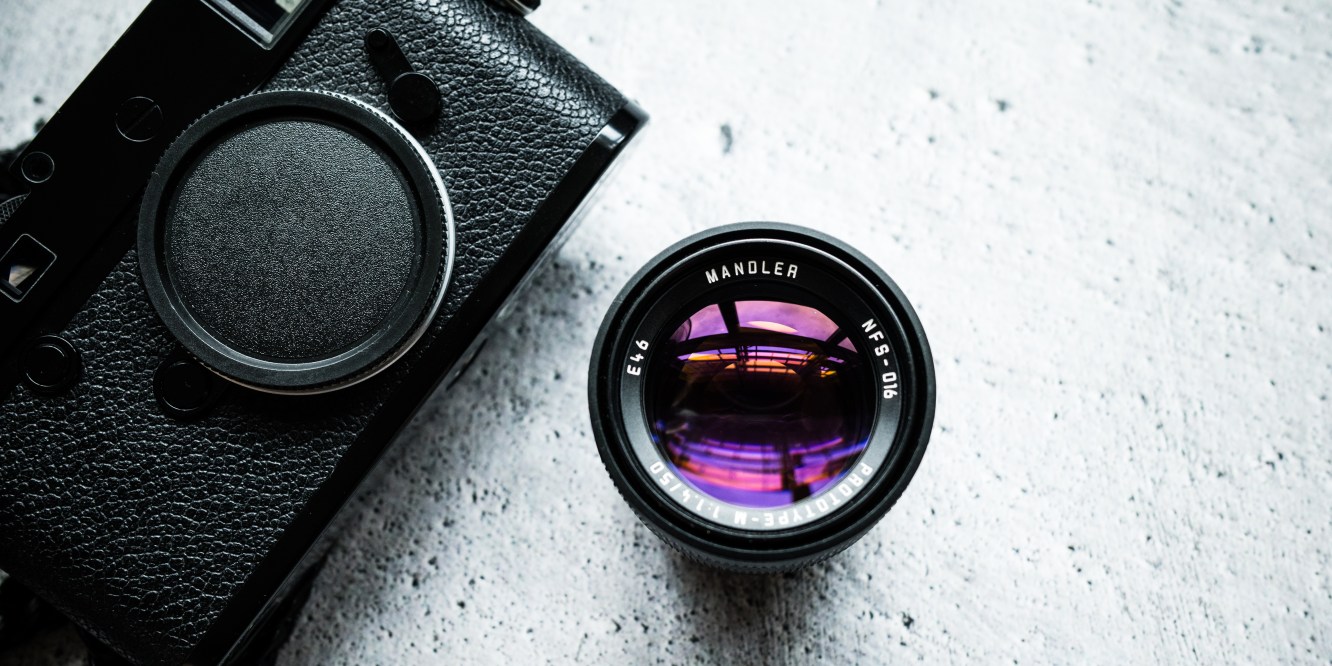
Introduction
The Mandler 50mm ƒ1.4 Pre-A is available here
at USD368 (Aluminium) USD548 (Brass)
There are lenses designed to impress through technical perfection, and then there are lenses which remind us that photography has never been solely about perfection.

Mandler, a relatively new optics maker has in a short time gained a decent share of attention among Leica M-mount users. Its first release, the Mandler 35mm ƒ2 (my review is here), has become a popular 35mm choice for photographers for offering an excellent balance between build, price and performance.

It was not simply inexpensive; it was a genuinely usable and characterful lens which showed that Mandler understood the audience it was designing for.
And of course, this means Mandler’s next lens will be one that M-mount users, whether critics or supporters, will be watching closely.

And now in 2026, Mandler has released the 50mm ƒ1.4 Pre-A, a fast standard prime based around a seven-element, five-group pre-aspherical optical design. It focuses down to 0.5 metres, uses a 12-bladed aperture, all in a improved build guided from feedback received from the Mandler 35mm ƒ2’s release.
Rather than simply producing another modern, clinically corrected fast fifty, Mandler appears to be aiming for something more familiar: the balance of sharpness, softness, glow and transition that made earlier pre-ASPH 50mm lenses so desirable.

Let us take a deeper look.
Credit where it is due: during my time with the prototype set for this review, I was impressed by how receptive the Mandler team was to feedback, and how quickly they acted on it to refine the final production sets.

Model: Jiaqi
tl:dr
The Mandler 50mm ƒ1.4 Pre-A is a promising fast standard lens for Leica M users, combining a traditional seven-element, five-group pre-ASPH optical arrangement with practical modern touches such as 0.5-metre close focusing, an E46 filter thread and a 12-bladed aperture.
At 46.5mm in length and 53mm in diameter, the lens remains compact enough to balance comfortably on a Leica M body. Buyers get to choose between a 290g aluminium version and a more substantial 385g chrome-plated brass version.

Rather than chase the highly corrected output of a modern design, the Mandler 50mm ƒ1.4 appears to prioritise strong central performance, gentle transitions and optical personality associated with a classic fast fifty.
The Mandler 50mm ƒ1.4 Pre-A outputs a strong contrast and resolution around the centre, followed by a progressively obvious fall-off towards the edges and is a lens designed for a specific drawing rather than win every laboratory measurement.
Handling is generally good from my experience with the prototype set. The 0.5m close focusing capability is genuinely useful, the half-stop aperture settings are practical and the choice of aluminium or brass allows users to decide between portability and heft.
There are areas regarding handling where I had provided Mandler feedback which they will refine before production. In all, the Mandler 50mm ƒ1.4 Pre-A feels like a natural and considerably more ambitious follow-up to the Mandler 35mm ƒ2.
Technicalities
The key specifications of the Mandler 50mm ƒ1.4 Pre-A are as follows:

- Focal length: 50mm, for Leica M and LTM
- Optical construction: Seven elements in five groups
- Aperture range: ƒ1.4 to ƒ16, evenly spaced clicks in half-stop increments
- Aperture blades: 12
- Minimum focusing distance: 0.5m
- Filter size: E46
- Dimensions: 46.5mm long and 53mm in diameter
- Materials: Aluminium or chrome-plated brass
- Weight: 290g in aluminium and 385g in brass
Mandler’s E46 design process
It is common knowledge that the first and second generation of the Leica Summilux 50mm ƒ1.4 E43 lenses share the same optical design, with the second generation designed by Dr. Mandler featuring better anti-reflective coatings and improved contrast.

My review of the the Leica Summilux 50mm ƒ1.4 E43 version 2 is here

The third generation featured a major redesign in mechanics that introduced an internal, built-in hood and reduced the minimum focusing distance to 0.7 meters and is known as the Leica Summilux 50mm ƒ1.4 E46, the version that inspired Mandler’s current release.

After going through four design iterations, the team at Mandler finalised the 50mm ƒ1.4 Pre-A optical design with a seven-element, five-group pre-aspherical arrangement including the use of a high-refractive-index element at the front and an extra-low-dispersion element toward the rear.

The high-refractive-index element allows light to be shaped more effectively within a comparatively compact optical system. The ED element, meanwhile, is intended to improve the control of chromatic aberrations and colour fringing without removing all the qualities associated with a traditional pre-ASPH design.
Mandler’s design team shared that compared to the original Leica Summilux 50mm ƒ1.4 E46, the Mandler 50mm ƒ1.4 Pre-A offers noticeably higher central sharpness while the out of focus character retains the original E46’s distinctive three-dimensional feel and tonal transitions.

This is interesting because Mandler does not appear to be reproducing an old formula without consideration for present-day expectations. Instead, the company seems to be using modern optical materials to refine a classical concept.
There is a fine difference between recreating an old lens and designing a new lens which understands why photographers still love the old one.
The 12-bladed aperture maintains a relatively rounded out-of-focus highlights as the lens is stopped down. This is especially relevant for a fast 50mm lens, where the quality and shape of the transition into the background can matter as much as outright sharpness.

In terms of the mechanical design, Mandler has preserved the compact form factor of the original Leica Summilux-M 50 ƒ1.4 E46, while refining the feel and secure fit of the lens hood.
The MTF charts
At maximum aperture of ƒ1.4, the supplied MTF chart indicates strong performance around the centre of the frame.
The upper curves remain relatively high across much of the central and mid-frame region, suggesting good overall contrast and reproduction of details where most photographers are likely to place their subject. As quite expected, performance gradually declines as one moves toward the edges, with the sagittal and tangential structures becoming more separated.
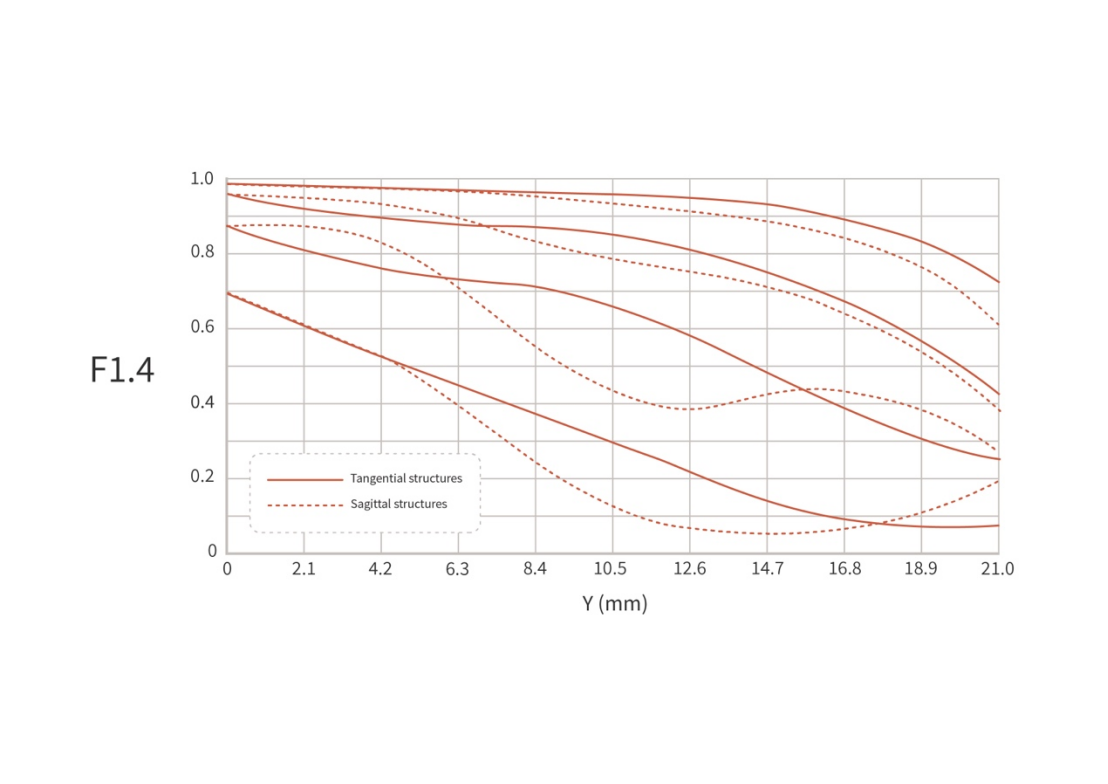
For portraiture and everyday photography, a lens with strong central performance and gentler outer-frame rendering can help provide a natural sense of subject separation with the lens guiding attention toward the in-focus subject.


Of course, an MTF chart cannot fully describe glow, tonal transitions, flare behaviour or the quality of the out-of-focus areas. It provides an indication of contrast and resolution, but not necessarily whether the final photograph will feel beautiful.

And with character lenses, that difference matters.
Stopping a fast 50mm lens down to ƒ5.6 should generally provide a more controlled rendering, with increased contrast and improved performance across a greater portion of the frame.

For now, the more important point is that the lens is intended to provide two sides to its personality: a gentler, more characterful rendering at larger apertures and a cleaner, more disciplined output when stopped down.

This duality is often what makes a classic fast fifty useful rather than merely novel. A lens can be romantic, yet still behave sensibly when one needs greater depth of field and consistency.
Handling & Performance
The first thing one notices is that the Mandler 50mm ƒ1.4 Pre-A is very much as compact as the Leica Summilux-M 50mm ƒ1.4 E46 lens.
At 46.5mm in length, it sits comfortably on a Leica M body without making the camera unnecessarily front-heavy. Its 53mm diameter is proportionate and makes for a good everyday carry setup.

At 290g, the aluminium model will naturally be the more practical choice for daily use and travel. The 385g chrome-plated brass version offers a noticeably denser feel and will appeal to photographers who associate the tactile experience of a traditional brass lens with part of the pleasure of using an M camera.
For the sun-star lovers, the 12 aperture blades design provides a pleasant sun-star when stopped down.

Optical aberrations are of course present if you look hard enough or photographing bright light sources or high contrast areas, though they are easily fixed in post-processing and unlikely to be an issue in everyday use
For the brass vs aluminium versions, heft is not automatically an indication of quality, but I fully understand why some photographers enjoy it. (I prefer brass M-bodies too)
The focusing ring on this prototype provides sufficient resistance for accurate adjustment at ƒ1.4. The focusing range from infinity down to 0.5m is also genuinely useful though I am sure we all know that the use of live view or a Visoflex is necessary for focusing closer than 0.7m.

Even so, this functional opens additional possibilities for tighter portraits, food, objects and everyday details.
There is, however, one ergonomic refinement I wish could have been done.
The focusing ring moves continuously from infinity down to 0.5m, and I would really appreciate a tactile indication when one crosses below 0.7m. A small bump, detent or increase in resistance at the 0.7m point would allow photographers to know when they have entered the close-focusing range and that would be really perfect.

This is especially useful on film M bodies, where there is no live-view assistance and one may otherwise continue turning the ring without realising the rangefinder is no longer providing an accurate focusing reference.
I like that the aperture ring uses evenly spaced half-stop click settings from ƒ1.4 to ƒ16. This provides a useful balance between precise exposure adjustment and quick operation.


On the prototype set, I felt the aperture ring can be tightened slightly and this will be improved in the final production sets. A firmer level of resistance would help prevent the aperture from accidental shifts.
Key is that these are not fundamental design problems. They are precisely the kind of smaller mechanical adjustments one expects to identify during the prototype stage for further improvements which Mandler will incorporate into the final production units.

More importantly, the Mandler 50mm ƒ1.4 Pre-A already gets the essentials right. Proportions suit the Leica M system, the focusing range is useful, the aperture adjustment is sensibly arranged and users are given a meaningful choice between the lighter aluminium body and the more traditional brass construction.

For portraits and everyday photography, the optical output character may prove advantageous. A lens does not always need identical performance from the centre to the extreme corner to create a successful photograph. Sometimes, a slight reduction in peripheral definition and a gentler transition away from the focal plane can help provide a more dimensional and natural-looking image and the Mandler 50mm ƒ1.4 Pre-A gets this important point right.
Conclusions
Going directly to the point, the Mandler 50mm ƒ1.4 Pre-A is shaping up to be a much more ambitious lens than I expected from the relatively young optics maker.

The Mandler 35mm ƒ2 established the company as a credible option for Leica M users who wanted a well-built and characterful lens at a wallet-friendly price. The 50mm ƒ1.4 now gives Mandler an opportunity to demonstrate that the earlier lens was not an one-off success.
On paper, the ingredients are compelling: a five-group pre-ASPH design, a 12-bladed aperture, 0.5m close focusing and a compact body available in both aluminium and chrome-plated brass.

The MTF curves also gives a clear indication of the intended priorities. This does not appear to be another attempt to produce a perfectly corrected and emotionally anonymous 50mm. Instead, the design favours strong central performance and a more gradual, characterful transition toward the edges.
The Mandler 50mm ƒ1.4 Pre-A seems less concerned with being the sharpest fast fifty and more interested in becoming one which photographers genuinely enjoy using.
As touched on, there are still areas to improve. However, there are realistic refinements Mandler will work on and easily resolved and I look forward to receiving my final production unit.
To me, there is always something to improve on regardless of lens or brand. Even now I do wish that a focusing tab was included on my USD9650 Noctilux 35mm ƒ1.2.
The final production quality, optical consistency and eventual price will determine how strongly the Mandler 50mm ƒ1.4 Pre-A can compete within an increasingly crowded M-mount market. Yet based on the prototype, Mandler appears to understand what made the company’s 35mm ƒ2 appealing in the first place: not technical perfection at any cost, but a thoughtful balance between construction, usability, image character and accessibility.

I guess Mandler is really just only getting started with more noteworthy releases, and akin to some of the third-party M-mount lens makers I review, to be taken more seriously.
Credit where it is due: during my time with the prototype set for this review, I was impressed by how receptive the Mandler team was to feedback—and how quickly they acted on it to refine the final production sets.
Thank you for reading.
The Mandler 50mm ƒ1.4 Pre-A is available here
at USD368 (Aluminium) USD548 (Brass)
Disclaimers
- All product photos and samples here were photographed by me. I believe any reviewer with pride should produce their own product photos.
- All images were shot with the Mandler 50mm ƒ1.4 Pre-A (prototype no. 16) on the Leica M10-R. The lens for review will be returned to Mandler to ensure neutrality.
- This review is not sponsored.
- I write as a passion and a hobby, and I appreciate that photography brands are kind enough to respect and work with me.
- The best way to support me is to share the review, or you can always help support me by contributing to my fees to WordPress for the domain using the Paypal button at the bottom of the page.

 KeithWee | Photography
Amazing work Keith! I’m definitely getting one.
LikeLike
A random take: I would have asked to keep the prototype lens! And as always, excellent balanced writeup.
LikeLike