Introduction
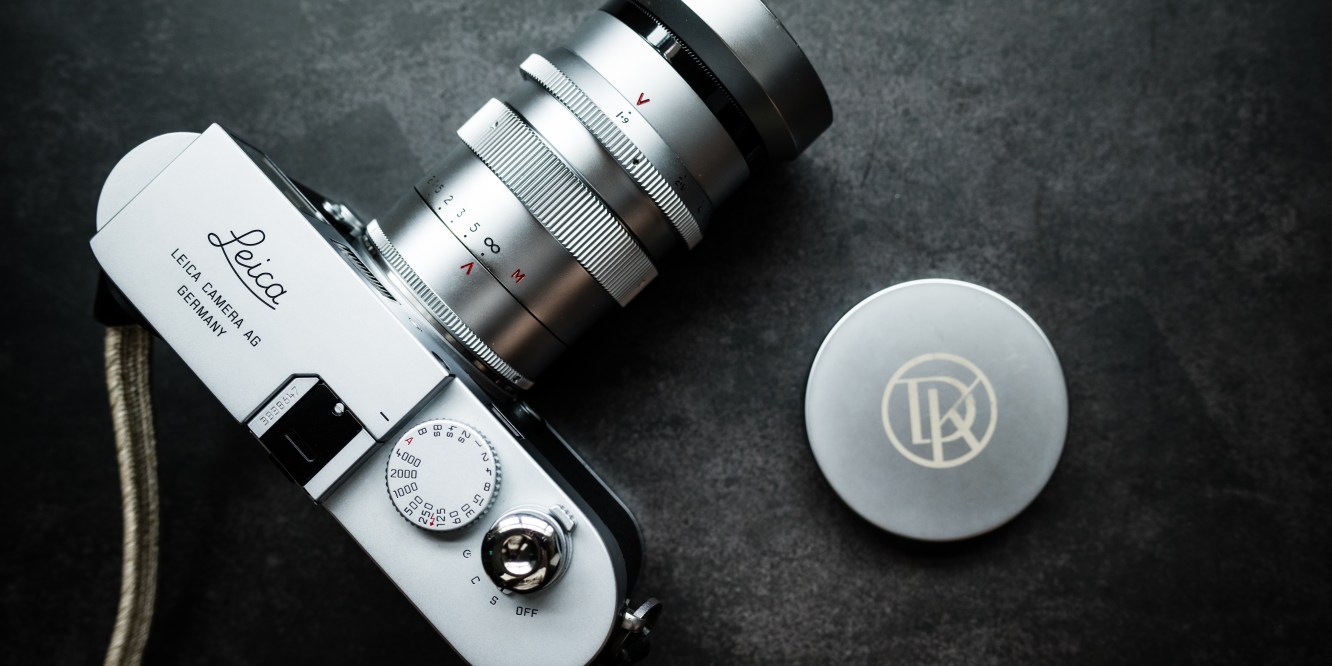
It is not every day that one comes across a lens maker declaring a 1:1, true-to-original restoration of a legendary lens, devoid of ‘alternations’ for modern sensors. DK-Optic is new to me, but with the Chiaro 3-inch (76mm) ƒ1.9 M, it has certainly made a bold opening statement.
The DK-Optic Chiaro 3-inch (76mm) ƒ1.9 M is not sold in Singapore. For purchase inquiries, send a message to RKenix Creative Studio here.
The Chiaro 3-inch ƒ1.9 is DK-Optic’s tribute to the legendary Dallmeyer Super Six 3-inch ƒ1.9, a lens often regarded as one of the great optical legends of mid-20th-century portrait and cinema photography. Among seasoned vintage lens users, the Super Six needs little introduction. It has long been revered for its immense light-gathering ability, unusually large image circle, and its ability to create exceptional spatial separation.

The attraction of the original Super Six was never merely about resolution or sharpness but it’s drawing: the glow, the depth, the roundness of transition, and that almost magical ability to seemingly carve the subject out from the background.
In that sense, the DK-Optic Chiaro is aiming for something very specific: a modern, usable M-mount lens that preserves the emotional signature of a historical optical design while avoiding the practical challenges of handling an ageing, rare, and increasingly expensive vintage original.
Photographers today are not short of clinically excellent lenses. Leica, Voigtländer, Zeiss, Thypoch, and others have given M-mount users a wide range of choices. What is rare is a lens that gives images a distinct drawing without becoming unusable in daily photography and this is where DK-Optic seeks to eke a foothold.

For brevity’s sake, I will refer to the DK-Optic Chiaro 3-inch (76mm) ƒ1.9 M as the DK-Optic Chiaro 3 inch from this point onwards.
Let us take a deeper look.
tl:dr
The DK-Optic Chiaro 3 inch is a 76mm ƒ1.9 Leica M-mount lens inspired by the classic Dallmeyer Super Six 3-inch ƒ1.9, a lens long regarded by vintage lens connoisseurs as one of the “Holy Grail” optics for portrait and cinema work.

MD: JiaQi ( IG ) | Organiser: RKenix Creative Studio ( IG )
It uses a faithful 6-elements-in-4-groups optical design, offers a 0.7m minimum focusing distance, a 16-bladed diaphragm, and comes in a silver chrome finish with a detachable threaded metal hood.
This is not a lens for the general run-of-the-mill photographer, the DK-Optic Chiaro 3 inch is a lens for those who know exactly what they want and who have the capability to work with such a piece of optics.
Instead, the DK-Optic Chiaro 3 inch is specifically for photographers who appreciate character: subject separation, painterly bokeh and that vintage ability to make the subject stand apart from the background. Wide open at ƒ1.9, the promise is not as simple as sharpness, but dimensionality. DK-Optic describes this as a form of strong 3D isolation.
The attraction here is not perfection, but personality.
Under backlit conditions, the Chiaro is also designed to produce rich, cascading flare patterns, described by DK-Optic as “peacock feather” flares. Stopped down, it builds contrast quickly and become significantly sharper, giving the lens a useful dual personality: romantic wide open, more controlled when needed.

The lens stands at a considerable cost. However, when viewed against the rarity and cost of original Dallmeyer Super Six lenses, the DK-Optic Chiaro becomes a more realistic way for M-mount users to experience this style of rendering without entering the collector-lens market.
This lens will appeal most to portrait photographers, vintage rendering enthusiasts, Leica M users who appreciate and know how to work with a more cinematic and painterly signature.
This lens was not designed to be for everyone like a Leica Summicron 50mm, and that is probably the point.

Technicalities
The DK-Optic Chiaro 3 inch follows the philosophy of a faithful optical resurrection rather than a modern reinterpretation with excessive correction.

- Focal length: 76mm / 3-inch for Leica M-mount
- Clickless Aperture from ƒ1.9 to ƒ11
- Optical design: 6 elements in 4 groups
- Format coverage: 135 full frame, with a stated image circle that can cover 645 medium format sensors
- Minimum focusing distance: 0.7m
- 16 bladed aperture design.
- Lens hood: Detachable threaded metal hood
- Length mounted on camera: 91mm
- Maximum diameter: 62mm and weight at 364g (excluding caps)
One specification that immediately stands out is the 0.7m minimum focusing distance. For M-mount users, this matters. A 76mm lens with a fast ƒ1.9 aperture is naturally suited for portraits and detail work, and being able to focus down to 0.7m gives the lens a useful degree of intimacy without needing to move too far away from the subject.

The second interesting point is the 16-bladed aperture design. In practice, this should help retain rounder out-of-focus highlights when stopping down, which is important for a lens whose character is closely tied to bokeh and tonal transitions.
That said, for most users, the core appeal will remain simple: this is a fast, character-driven short telephoto lens for Leica M-mount.
Handling & Performance
At 91mm when mounted, the DK-Optic Chiaro 3 inch is not a small lens by M-mount standards, however at 364 grams, it is definitely very reasonable for a 76mm ƒ1.9 lens.
The DK-Optic Chiaro 3 inch comes with a good balance on the Leica M body, with a full metal body which feels assuring to work with. The aperture ring is click-less and together with the focus ring, comes with a good amount of resistance that I enjoy using.

Personally I find the design quite industrial-like and visually attractive, with the two red arrows providing a practical marker for one to track focus distance and aperture size.

The choice of materials is interesting. Instead of brass that some are more acquainted with, DK-Optic uses 7075 aerospace-grade aluminium for the main exterior barrel to reduce weight, while the focusing helicoid and aperture mechanics are made from CNC-machined brass. This combination makes sense. It allows the lens to avoid becoming unnecessarily heavy while still retaining the dense, smooth mechanical feel that users expect from premium manual-focus lenses.
For lenses like this, optical character may be the emotional reason one buys it, but mechanical feel is often the reason one continues using it.

The unequal spaces between aperture values on the aperture ring is also a reminder that this is not a lens designed for high-speed event coverage. It is more likely to be used for portraits, slow documentary work, still life, quieter street scenes, and moments where the photographer has time to work the frame.
With a 76mm focal length and ƒ1.9 maximum aperture, the lens should allow strong subject separation at closer distances. This is where I imagine the Chiaro being most interesting: half-body portraits, details on a table, quiet family moments, café scenes, and older neighbourhoods where the rendering can add atmosphere to an already textured environment.

Wide open at ƒ1.9, DK-Optic describes the lens as delivering strong three-dimensional subject isolation and painterly bokeh. This is exactly what one would expect from a Super Six-inspired optic. The original appeal of such lenses was never that they behaved like modern APO lenses. Rather, they created a sense of depth and glow that made the subject appear separated from the background in a more organic way.

Wide-open, do not expect the Chiaro 3 inch to be tack sharp, that is not understanding the original Dallmeyer lenses.

When a lens renders with a particular combination of shallow depth of field, gentle transitions, residual aberrations, and smooth background separation, the image can feel dimensional in a way that is not easily measured on a chart.
Under backlit conditions, the flare character will also be divisive. Some photographers will see this as a flaw. Others will see it as the very reason to use the lens.
Personally, a character lens should not behave the same way in every situation. It should respond to light, sometimes beautifully and sometimes unpredictably. This is part of the charm of using such a lens.

In practical terms, I would expect the DK-Optic Chiaro 3 inch to be most attractive between ƒ1.9 and ƒ2.8 for portraits and mood-driven work, and more generally useful from ƒ4 onwards when the photographer wants a cleaner file.

The above shot is the only one here photographed at ƒ2.8.
The Chiaro is designed for photographers who value transition, depth, colour behaviour, flare, layered bokeh, and the emotional quality of an image over measurable perfection. If you realised, I did not even bother to include the MTF charts for this lens.
Conclusions
The DK-Optic Chiaro 3-inch (76mm) ƒ1.9 M is an intriguing addition to the growing world of modern vintage-inspired M-mount lenses.
What makes it interesting is not simply that it references the Dallmeyer Super Six 3-inch ƒ1.9. It is that DK-Optic appears to have approached the project with a clear understanding of what made the original desirable: not just speed, but rendering.

The DK-Optic Chiaro 3 inch suggests that imperfection, when handled intentionally, can still be beautiful.
The claim of a 1:1 true-to-original optical restoration is significant. If DK-Optic has indeed preserved the classic Super Six formula without adding the usual modernising corrections, then the Chiaro is not merely a lens inspired by history. It becomes a deliberate attempt to make that historical rendering accessible again through a modern, mechanically refined body.
Photographers who want a compact, modern, high-contrast, clinically sharp 75mm lens please look elsewhere.
As mentioned above, the DK-Optic Chiaro 3-inch (76mm) ƒ1.9 M belongs to that special category of lenses which reminds us that photography is not always about correcting optical imperfections, but sometimes about choosing them intentionally.

It brings the spirit of the Super Six into a modern M-mount workflow, without the fragility, rarity, and cost of owning an original vintage copy. More importantly, it offers a distinct visual signature: a short telephoto portrait lens more interested in drawing than measuring.

And perhaps the whole point is some lenses are at their best precisely because they are opinionated.
Thank you for reading.
The DK-Optic Chiaro 3-inch (76mm) ƒ1.9 M is not sold locally in Singapore, for purchase inquiries, send a message to RKenix Creative Studio here.
Disclaimers:
1. All product photos and samples here were photographed by me. I believe any reviewer with pride should produce their own product photos.
2. All images were shot with my personal set of the Leica M9-P. The DK-Optic Chiaro 3-inch was returned to it’s owner at the end of the review.
3. This review is not sponsored.
4. I write as a passion and a hobby, and I appreciate that photography brands are kind enough to respect and work with me.
5. The best way to support me is to share the review, or you can always help support me by contributing to my fees to WordPress for the domain using the Paypal button at the bottom of the page.


Hi Keith, this must be the first proper review of the 3 inch online. Thank you!
LikeLike
Hi good day, thank you 🙏
LikeLike
I really enjoyed this review. The mention about the lens being “more interested in drawing than measuring” sums the lens up perfectly.
LikeLike
Thank you, to me this is one of the cases where the lens maker really went to lengths to do a 1:1 reproduction and that is noteworthy. Seems like DK Optic did a very good job with the Septac (2 inch F1.5) too.
LikeLike
Bro, you are literally driving up the prices for the M9! Beautiful images.
LikeLike
Well written review! I do find the 75mm tight for everyday use and will go with the 50mm where possible.
LikeLike