Introduction
A new Noctilux at 35mm is one of those Leica moments where you pause, smile a little, and then ask the only question that matters:

Is it a “specs flex” or is it a real daily lens?
(vs the next most popular question of: “how much does it cost?”)
On paper, the Leica Noctilux 35mm ƒ1.2 ASPH is everything the Noctilux designation promises: speed, subject separation, and that unmistakable way it lets the “in-focus world” breathe away into the out-of-focus one. It is also pleasantly compact for what it is and it focuses closer than the traditional rangefinder limit when paired with live view or a Visoflex.
This is the second out of three reviews on the Leica Noctilux 35mm ƒ1.2 ASPH. The first in depth review is here and third on street photography is here.
But the sharing today is not about using it on the latest nor highest megapixel Leica M body.

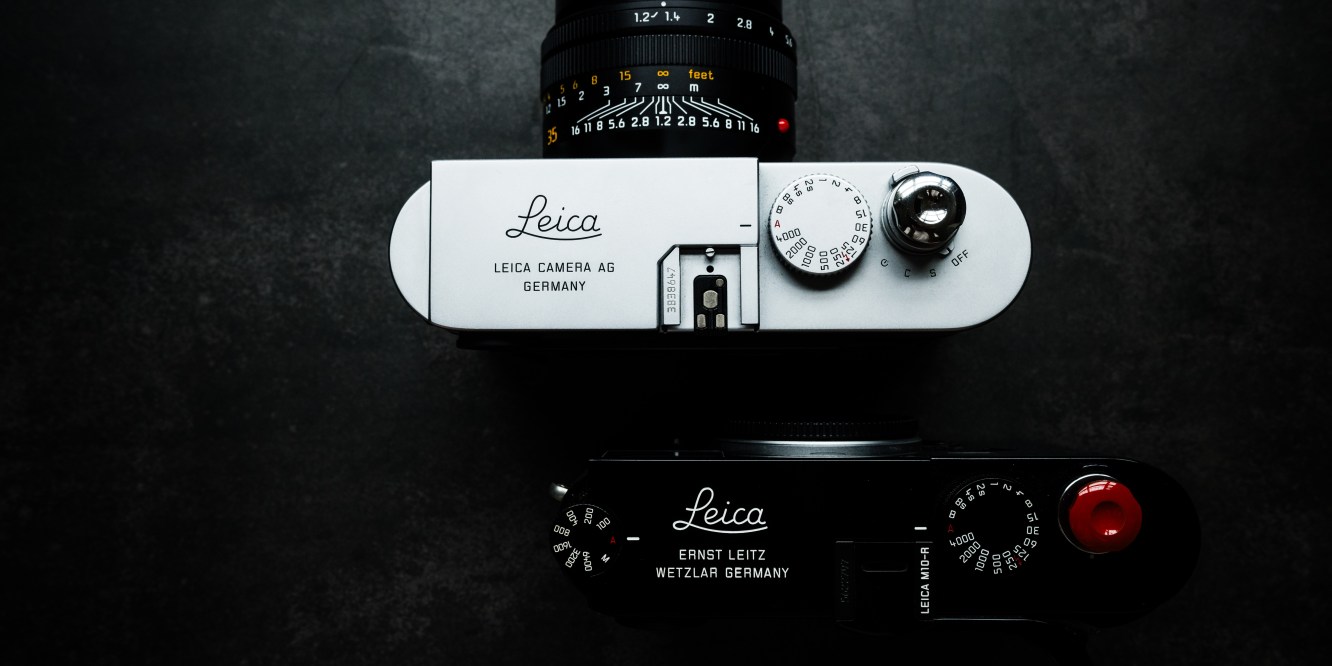
This is about a pairing that feels almost wrong on a spec sheet, and yet makes perfect sense with a camera in hand: the 2026 Noctilux-M 35mm ƒ1.2 ASPH. on the 2011 Leica M9-P.
A 14-year-old CCD digital M body, a brand-new modern Noctilux, and the question that quietly sits behind every frame:
Can a lens this new still speak the old Leica language?
Yes, the CCD sensor matters but it is not all only about the CCD sensor (and that matters here)

There is a popular shorthand many of us are guilty of that reduces the Leica M9-P to “CCD colour”. I get why, the output can be unique and gorgeous so long as we are not photographing above ISO800 .
But the magic, at least in my experience, is not a single ingredient. It is the sum of parts: the sensor, the micro-contrast of Leica M lenses, the calibrated colour palette of that era, and (this one is crucial) the light conditions that best suit the M9 series.

The Leica M9-P, when treated well, gives saturated primaries, gentle highlight roll-off, and a kind of acuity that can feel Ektachrome-like in the right light.

It also has a distinctive magenta-red bias that can be remarkably flattering to skin tones in warm lighting that you can see in my review of the Leica M9-P here.
And then there’s the constraint, because constraints are where real decisions happen.
The Leica M9-P’s dynamic range and usable ISO range is not modern by any stretch (the Leica M9-P simply gives you less room to “save it later” if you blow highlights), and I personally treat ISO 800 as a practical ceiling for output I’m happy to live with.
So when you mount a fast, characterful lens like the Noctilux 35mm ƒ1.2 ASPH on the M9-P, you’re not only chasing shallow depth of field. You’re also chasing light, and not any light, but the M9-P’s favourite kind: “just enough light” situations, where golden hour and blue hour feel like they were made for it.

The Noctilux 35mm ƒ1.2 ASPH’s character is not only about the “0.45 stop”
People will inevitably reduce the difference between ƒ1.4 and ƒ1.2 into a small number. And of course this makes an easy argument, an easy dismissal.
But the Noctilux 35mm ƒ1.2 ASPH isn’t interesting because it is 0.45 stop faster. As shared in my review of this lens, it’s interesting because of how it composes a frame: transitions, fall-off, and that gentle persuasion from sharp to soft that is hard to quantify and easy to recognise.

Wide open, it carries what I would call the unmistakable Noctilux signature: dreamlike rendering, gentle fall-off, and detail where it matters without turning the whole world into a clinical test chart.
It even carries a subtle swirly bokeh character that sets it apart from the more modern, contrasty look of many contemporary 35mm lenses.

Now place that on the Leica M9-P, a camera that already tends to reward restraint: careful exposure, protected highlights, and a willingness to accept that not every scene is meant for ISO 3200 heroics.

The pairing, to my surprise, doesn’t feel like “new lens on old body”.
It feels like the lens is simply giving the Leica M9-P a new vocabulary while still speaking the same language.
At 50mm or 75mm, a Noctilux is often an isolation machine, a beautifully indulgent one, but still an isolation machine.
But at 35mm, it becomes something else: a documentary lens with a halo switch. (And yes, the halo switch is called “ƒ1.2” and the Leica Noctilux 35mm ƒ1.2 ASPH on the M9-P does something very particular here:
- The subject separation is obvious, but not cut-out-and-pasted.
- The transitions are gentle, with fall-off that feels more like a “sigh than a slap”.
- The M9-P’s colour response in warm light (that flattering bias, the film-like richness) makes skin feel alive not over-processed, not “digital perfect”.

When you land exposure correctly and keep highlights safe, the output can look timeless, not because it is technically superior, but because it feels emotionally coherent.
Conclusions
Pairing the Leica Noctilux 35mm ƒ1.2 ASP. with the Leica M9-P is not the “sensible” way to review a modern flagship lens.

And yet, it might be one of the most honest because the Leica M9-P refuses to let you hide behind modern advantages. It forces you into the essentials: light, timing, exposure discipline, and intent.
And the Noctilux, when treated as more than a stop-counting exercise, rewards that intent with rendering that is distinct: gentle swirls, dreamlike transitions, “just sharp enough” detail, and a character that doesn’t collapse the moment you stop down.
Is it perfect?
No of course and part of the charm is that it isn’t trying to be.
The practical friction is real: the M9-P’s ISO limits and dynamic range constraints remain, and the lack of live view means you won’t exploit the lens’s 0.5m close focus in the way a modern M body can.

But if your aim is not “maximum technical performance”, and instead it is a certain kind of photograph, one that feels human, one that feels lived-in; then this pairing can be quietly magnificent.
It doesn’t make you chase photos. It makes you want to go out, find the right light, and earn them.
Sometimes, the best way to understand a lens is not to ask how sharp it is, but to ask how it draws light.

Thank you for reading.
These photographs were taken at the Lorong Koo Chye Sheng Hong Temple, all done within 2 hours during my loan period of the review set from Leica Camera AG Singapore.
Disclaimers:
- All product photos and samples here were photographed by me. I believe any reviewer with pride should produce their own product photos.
2. All images were shot with the Leica Noctilux 35mm ƒ1.2 ASPH on my personal Leica M9-P , and the lens returned to Leica Singapore at the end of the review period.
3. This review is not sponsored.
4. I write as a passion and a hobby, and I appreciate that photography brands are kind enough to respect and work with me.
5. The best way to support me is to share the review, or you can always help support me by contributing to my fees to WordPress for the domain using the Paypal button at the bottom of the page.

 KeithWee | Photography
At the rate you are writing about the M9 cameras prices are going so up that I am never going to afford one.
LikeLike
Ah haha, thank you, I don’t think so though as M9 with ID15 or 16 prices are already at a surprisingly high despite their age.
LikeLike
Hi Keith,
thank you for that inspirational post. I totally agree with you about disregarding some technical aspects when matching this camera and lens. A lot of people seem to think about sensors something like, “if I use a raw file, I can create any color rendition I like”, and while not entirely impossible, it isn’t always practical to do that.
I think many people don’t know what sensors actually measure, and what kind of differences between sensors actually exist. And also the aspect of “in camera corrections” and “color science”, that play into what you end up seeing on the screen at the end of the day.
https://photo.stackexchange.com/questions/79534/what-are-the-peak-wavelengths-passing-through-a-bayer-filter
Behind this link is a diagram, that shows an example of how one particular sensor breaks down the spectrum of light into 3 channels. This works, because our eye does roughly the same thing. But keep in mind, that this kind of spectral sensitivity is slightly different on each sensor, because of various compromises made between various technical aspects of the physical construction of the sensor. So different sensors already see slightly different, and may not be able to distinguish some color frequencies as well as others in some small parts of the spectrum.
Then the lens also affects how colors are filtered before they even hit the sensor, which to some extent manufacturers try to compensate for, by using “in camera correction profiles”, that are applied automatically, if a lens is detected that has a profile in the camera software associated with it.
And then finally, the raw data gets demosaiced in the computer and the rgb values get mapped to a working color space, and simultaneously are displayed in the color space of your monitor, which might also be different from the working color space. When the raw data gets converted into the color space of your program it needs to know how to map the primary colors, red, green and blue, but also all the inbetween colors, like orange, purple, turqoise etc. This “interpretation” is not only supposed to yield mostly accurate (subjective) colors in most lighting situations, with the “correct” white balace applied, it must also make sure the end result is pleasant looking, and potentially smooth over any deficiencies, the raw data may have. This is the actual color science, as far as I know it.
Now imagine attempting to create the same color on screen, of a large number of different subjects, in a variety of different lighting situations, on, say, 5 different camera models, with one custom color profile for each model. Good luck. At this point you may be able to apply at the company who made any of those cameras and ask them to work for them, if you really got to the bottom of it, and were able to achieve good results. 😉
No, in essence, at the end of the day, you are better off picking the camera model, that produces color in the closest way to what you desire, and disregard other aspects like iso performance, dynamic range, and other technical aspects, to the extent where they are not in the way, when it comes to actually taking the pictures you want. (When working in color, of course.)
Color is really complex, and people like to underestimate it’s complexity, and subjectivity, and ignore the challenges associated with it, in favor of concepts they find easier to compare, like iso and dynamic range.
Here is one real world example:
In october in germany, I took pictures at the height of autumn. The trees were full of color. Greens, yellows, reds, browns, and so many shades of them, while the sky was blue, with big passing clouds playing with the light of the sun, creating interesting transitions of sunshine and half shadow. I used my Leica M (Typ 262) with the 35mm and 75mm Summarit-M lenses. This camera has a dynamic range of about 9.5 stops. This is not the manufacturers specification, it is what I actually measured using a test chart I created myself. And also, if I use the zone system to map it’s dynamic range into zones, zone V, which should be middle gray, falls a 2/3 stop under what it should be at that iso. I took all pictures at iso 200, which by my measurement must in reality be, what would be iso 125 on film. I used the zebra mode on the image review to make precise adjustments to my exposure. I was able to capture pictures in the most challenging lighting situations, that filled the entire dynamic range that was available, and didn’t sacrifice anything important.
Now the next problem is that even though your camera may be able to capture 9.5, or 11 or 14 stops of dynamic range, only a part of that range can be displayed on screen or print in a close to linear way, without it looking flat. Parts of the whole dynamic range have to be compressed and parts even cut, to create an expressive and beautiful image. I dare say, if I had a camera that day, with a theoretical dynamic range of 14 stops, there would not have been any practical advantage over what I had. Those extra stops would have been to no use for the final picture, as long as I chose my exposure precisely.
It is funny how you say the M9 colors remind you a bit of Ektachrome. I used a plugin called “dehancer photo” and applied it’s Kodak Ektachrome E100 film preset, with a lot of little tweaks, to those autumn color pictures, to get the colors I wanted. I didn’t go for “realistic color” I went for slightly nostalgic, athmospheric, but still nuanced colors. I used a Wacom Movink 13 OLED screen for editing, calibrated to the color space Rec.2020, and the working color space in the software was also set to Rec.2020. By that I was able to see a lot more color variation than in both AdobeRGB, and of course sRGB, and retain the most intense colors for printing. Printing these pictures was also challenging, because even with properly made icc profiles, on most papers the colors and tonal transitions didn’t look quite right, and were not able to display all the colors with sufficient depth, to make the pictures work. But I found a paper that worked, with the particular printer model I used.
I could propably write just as much as I already did about what I exactly did to those pictures, to get the result I wanted, including how I created a linearization curve, to have a better starting point for editing, plus the adjustments to white balance using dehancers “color head” module, the tonal curve adjustments, the contrast masks and split filter color grading I did, and all the aspects of the printing, to only name the few most important bits.
I will leave it at that. The tldr is, what kind of conclusions most people on the internet come to, when comparing cameras and lenses and colors, are quite often limited by their knowledge and practical experience. It is easier to buy a new lens or camera body than to dig deep and understand the basics of the technology that is being used, in order of making the most of it. It is true, that one should use equipment, that is sufficiently capable, to be able to create the pictures that are desired. But how many people actually know what the limits of their technology really are, and what they actually need? The easiest way to learn this, I think, is to go out, take lots of pictures, and critically compare the results, in a real use case, like for the purpose of creating a physical portfolio.
One final bit of information.
The M11 uses a sensor by sony. The M (Typ 240) and M (Typ 262) (and others from that generation), as well as the 24mp versions of the M10 use sensors designed by Leica. The output of the sony sensor is tweaked by Leica to suit their taste, but the Leica sensor is designed from the ground up with their philosophy in terms of color science in mind. Whether this makes them better or worse, I can not tell, I have no comparison. And non Leica lenses may not be properly corrected in the camera, meaning, you need the expertise and tools nessecary to correct for cyan drift and color shift in post, when using those lenses, if the same color output as from a Leica lens is desired, on one of these cameras.
Keith, I enjoy reading some of your observations about these interesting lenses and cameras, and also, I like to see your pictures, from a part of the world that is so different from where I live. But I want to invite you to take your interest further, more in terms of deep photographic knowledge and/or practical real world application. I would be most interested in hearing your thoughts on your favorite pieces of equipment, from such a point of view.
Anyway, I don’t mean to critisize, only inspire (if possible). Please do what feels right to you, and do what you enjoy. I will keep reading, and quite often enjoying your articles regardless of what path you choose.
LikeLike
Hi Djilina,
Firstly I must thank you for sharing taking the time to share this information. I have learnt and reminded of quite a few things reading them (and I know I will have to reread a few times to really get it)
The comparison you shared between the M10 and M11 sensors is of course correct but I am appreciative you went deeper sharing how sensors ‘read’ and output/mapped. This is a good reminder that there is always more to learn and I gladly will want to improve in these knowledge too.
Have a great day ahead 🙂
LikeLike
Love the combo of the M9 and 35 Noct- very nice! I do wish that Leica will improve color rendering on the M12- we’ll have to see.
Still curious about whether the 35 Noct or 35 FLE II is the best EDC. The Noct is heavier, larger, has less close focus, and longer focus throw. It seems perfect for portraits, fashion, landscape for those who love that shallow depth look. The FLEII with the smaller size/weight, closer focus, shorter focus throw.. seems better for street, photojournalism, weddings, all day travel, etc.
Certainly the GAS and FOMO leans towards the Noct. If one were available to me today.. I don’t know which way I’d go.
LikeLike
Hi! Thank you for dropping by. Regarding the M12, I know as little as everyone else but yes, it will be interesting to see how Leica tunes its output.
I do feel that both the Summilux FLE II and Noct are excellent lenses to use, and one can’t go wrong with either.
I live in a world where I have to make choices for camera equipment and not own them all and I’m sure with time we will prob find our most loved lenses 🙂
LikeLike