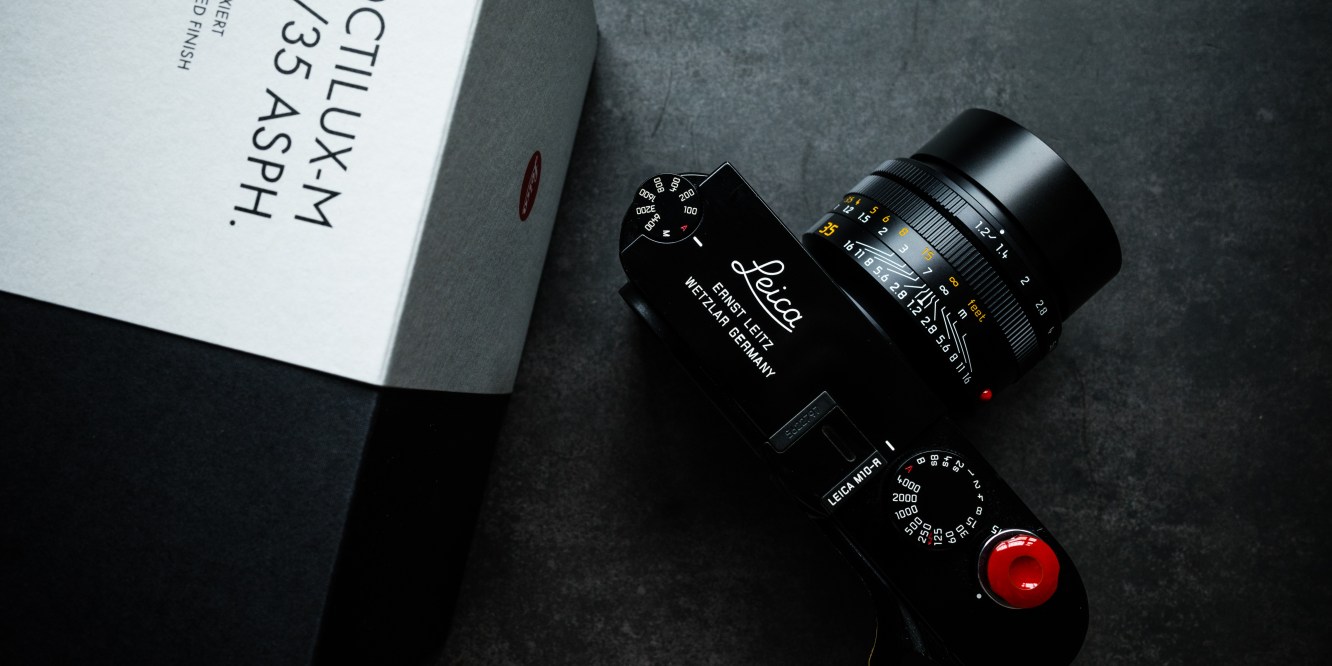
With more than 250 reviews over the last eight years, this one was unexpectedly hard to begin. I found myself stuck on a single question: how do I write about a lens that some may consider the “end-all” 35mm choice for the Leica M photographer?
But once I began looking through the images, the words started writing themselves. And true to my usual style, this review won’t be overly technical, full specifications are a quick Google search. Instead, I’ll focus on what the Noctilux stands for, and on the real life performance of the Noctilux 35mm ƒ1.2 ASPH based on my few days experience with it.
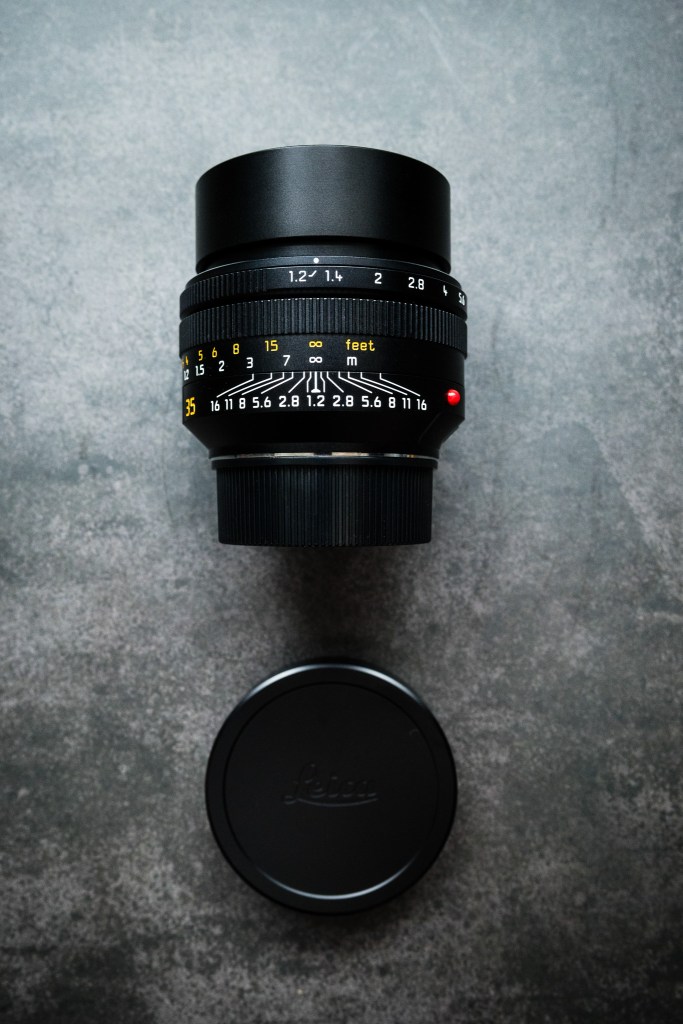
My appreciation to the Leica Singapore team for kindly providing the review set. Without the help from Mr Sunil Kaul and his team, this review wouldn’t have been possible on the launch day.
This is Part 1 out of a total of 3 write-ups on the Noctilux 35mm ƒ1.2. Part 2 and Part 3 (on the M9-P and on Street Photography are linked on the words respectively.
Introduction
To many in photography, the name “Leica” conjures up a feeling of photography mystique and attraction. This interest is further heightened when the label “Noctilux” comes into the picture. With roots in Latin, the word Noctilux: an amalgamation of “nocturnal / nocturnus” (night) and “lux” (light); implies night light gathering; Leica’s answer to low light photography in 1966 when they released the Noctilux 50mm ƒ1.2.
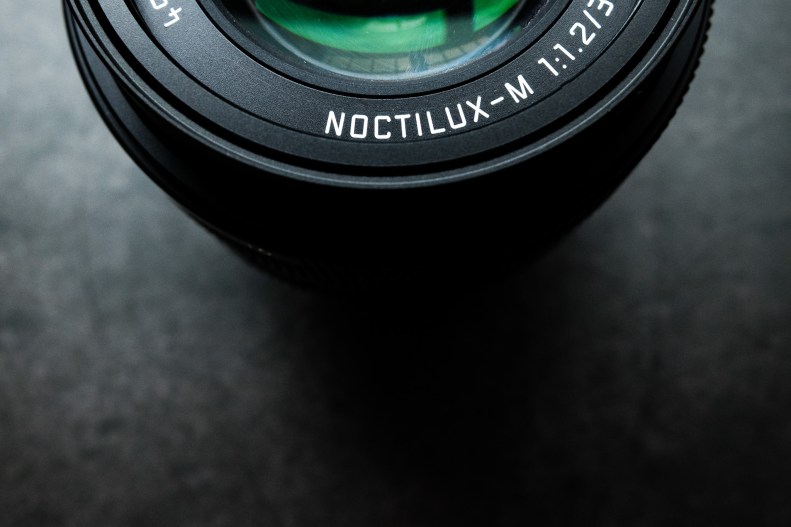
But the magic of the Noctilux series, which Leica first released in 1966, was not only its maximum aperture that varied from ƒ1.2 to ƒ0.95 across the decades. The Noctilux magic was also the drawing of the optics, and the quality of the falloff or “bokeh” that kept it at the top of the pedestal amongst Leica optics.

And that’s why this 2026 release matters. The Noctilux 35mm ƒ1.2 ASPH is not just “another fast 35mm”. It is literally the first 35mm Noctilux in Leica’s 100 years history, a new chapter written with the promises that this renowned optics maker has made for this series, now in a focal length that many of us use daily.
Let’s take a deeper look.
tl;dr
This is the Noctilux lens, a designation that touches on the words ‘ultimate and pinnacle’ that finally feels daily. The first 35mm Noctilux arrives with a size and weight that doesn’t automatically turn every outing into a commitment. Of course the Noctilux 35mm ƒ1.2 ASPH is still a serious lens, but it no longer feels like you need to plan your entire day around bringing it along.

And the point, as always with a Noctilux is the look. That signature mix of depth, separation, and a slightly dreamy aesthetic, now translated into a focal length that tells fuller stories than a 50mm or 75mm ever can. At the 35mm view, the environment matters as much as the subject in telling one’s story.
Context becomes part of the portrait, and your images gain a sense of place without losing that Noctilux presence.
The Noctilux 35mm ƒ1.2 ASPH is also a precision built tool . The focus throw and beautifully tuned focus resistance make it feel like a precision instrument in the hand, confident, deliberate, and reassuringly tuned. Not a flex piece and not for vanity’s sake, but something designed to be used by the one who appreciates (and can afford) it.

In practice, it shines for portraiture, street, and reportage, especially when you want subject presence without stepping too far back. The Noctilux 35mm ƒ1.2 ASPH is a lens for moments where you want intimacy and environment to coexist, where mood is part of the story-telling.
My other Noctilux reviews are: Noctilux 50mm ƒ1.2 reissue, Noctilux 50mm ƒ0.95 and Noctilux 50mm ƒ1 (E58).

Technicalities
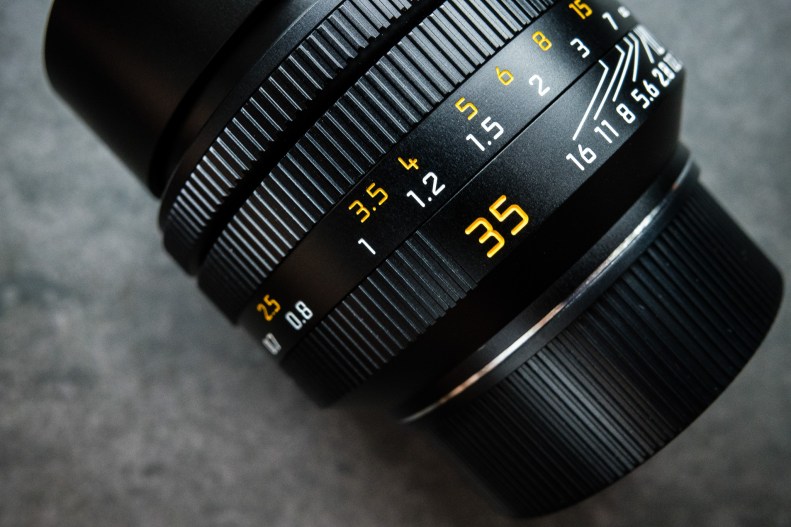
- The first Noctilux lens by Leica in 35mm focal length.
- 10 elements in 5 groups with 3 aspherical elements.
- Aspherical glass elements constructed using Precision Glass Moulding (PGM) technology
- 11 aperture blades design
- A floating-element design to ensure consistent performance from minimum focusing distance to infinity
- Integrated lens hood
- Minimum focusing distance of 0.5 m
- Length/Height: 50.2 mm (L) X 64.6 (D) and at 416 grams
- Filter size: E49
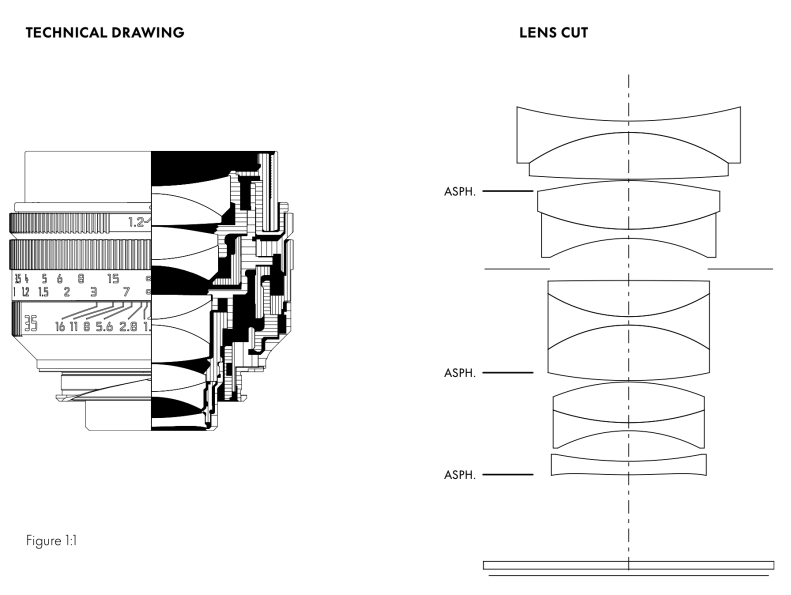
For the MTF curve readers:
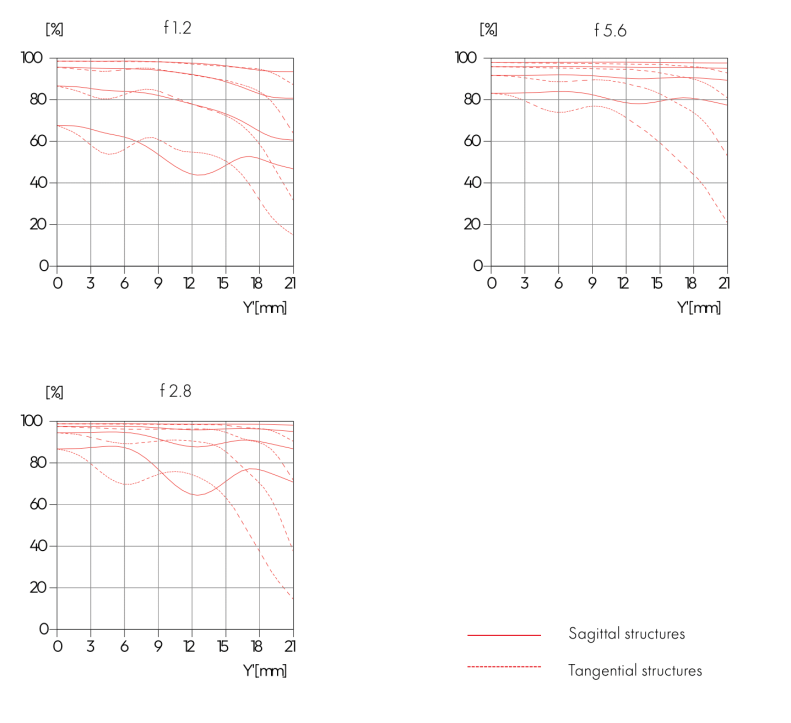
*MTF curves are shown for long focus distances (infinity). The contrast is plotted in percentages for 5, 10, 20, 40 Lp/mm over the height of the format for tangential (dashed line) and sagittal structure (continuous line) for white light.
Size context within the Noctilux family for comparisons:
- Noctilux 35mm: 50.2 mm / 64.6 mm / 415 g
- Noctilux 50mm: 75.1 mm / 73 mm / 700 g
- Noctilux 75 mm: 91 mm / 74 mm / 1,055 g

Handling and build
I’m blessed in that handling the Noctilux lenses is not a foreign experience to me. I’ve lived with the handling quirks, the weight expectations, the “this is a commitment” reality of bringing one out due to their sheer weight. So when the Leica representative placed the box onto the table, I genuinely paused, because the first thing that hit me wasn’t anticipation. It was disbelief.
The box was… small.
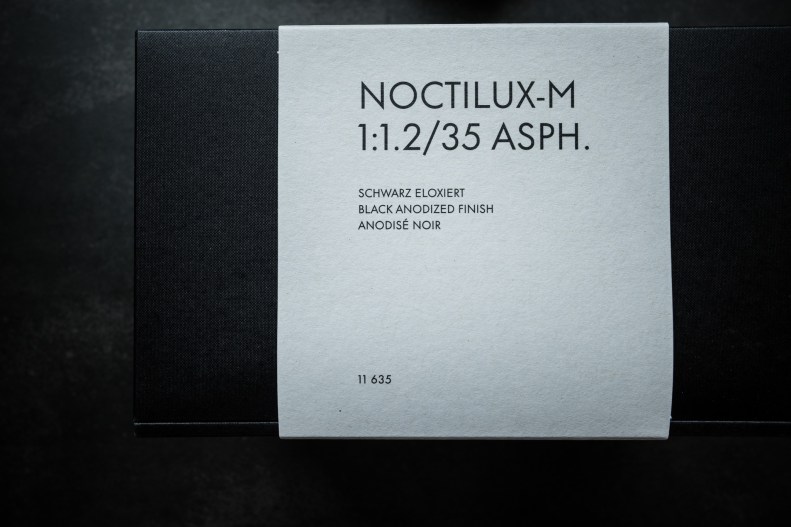
Unlike the other Noctilux lenses or special/ limited editions, the packaging for the Noctilux 35mm ƒ1.2 ASPH is restrained and aligned with Leica’s recent focus on environmental sustainability.
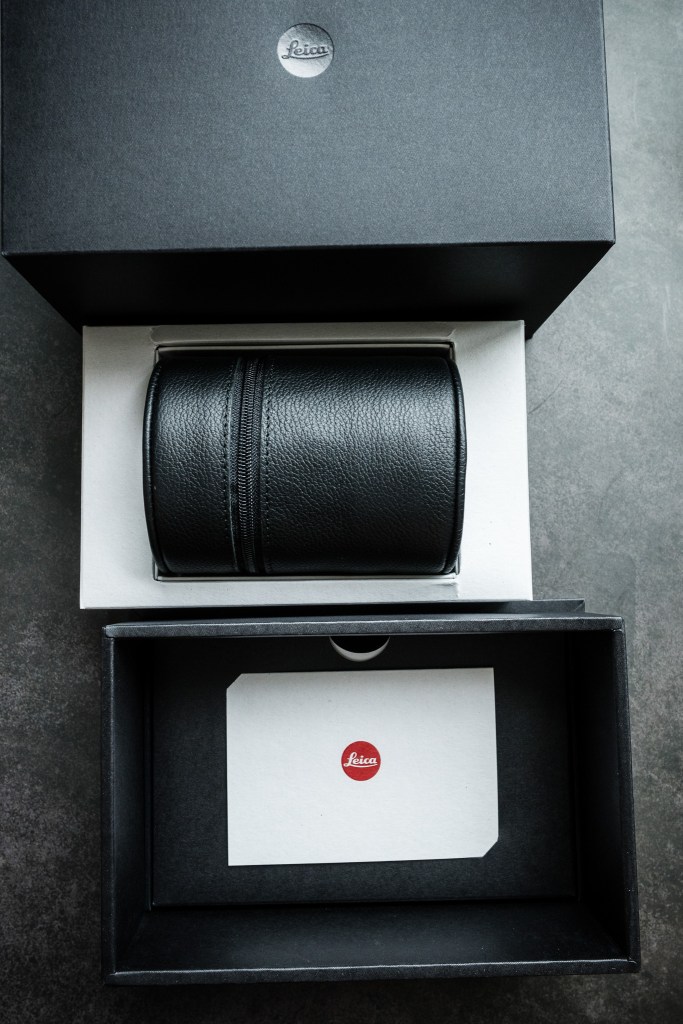
In all honesty, what surprised me first wasn’t the aperture. It was the approachability.
In hand, the lens carries a familiar Leica modernity of clean lines, purposeful design, that quiet premium feel that doesn’t need embellishment.
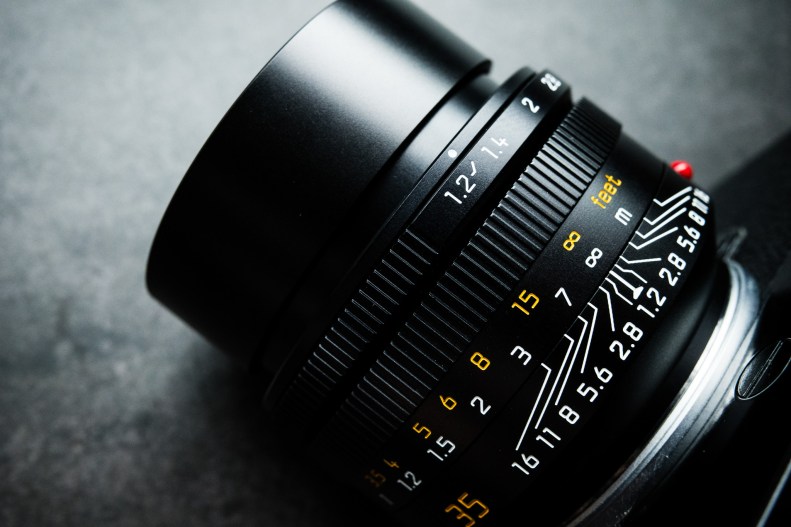
If you’ve handled the Leica Summilux 35mm FLE II, you’ll recognise the design language immediately, but this feels like an iteration refined with tighter tolerances. Everything clicks into place with a little more certainty. The aperture ring feels more assured, and the focus ring, arguably the most important part of any fast rangefinder lens is tuned with just the right resistance.
In fact, I can share with confidence out of all the standard edition Summilux 35mm lenses I have handled from the FLE II to the pre-ASPH, none of them has a build comparable to the Noctilux 35mm ƒ1.2 ASPH
The Noctilux 35mm ƒ1.2 ASPH’s build quality is a step up from the Summilux 35mm ƒ1.4 FLE II
Portability sits very high on my personal hierarchy when choosing a lens. I want something I’ll actually bring because the best lens is the one that’s with you when life happens. A Noctilux 35mm ƒ1.2 ASPH could have easily been designed like an exclamation mark: loud, oversized, front-heavy, announcing itself before you even make a frame. Instead, it carries a different kind of confidence.
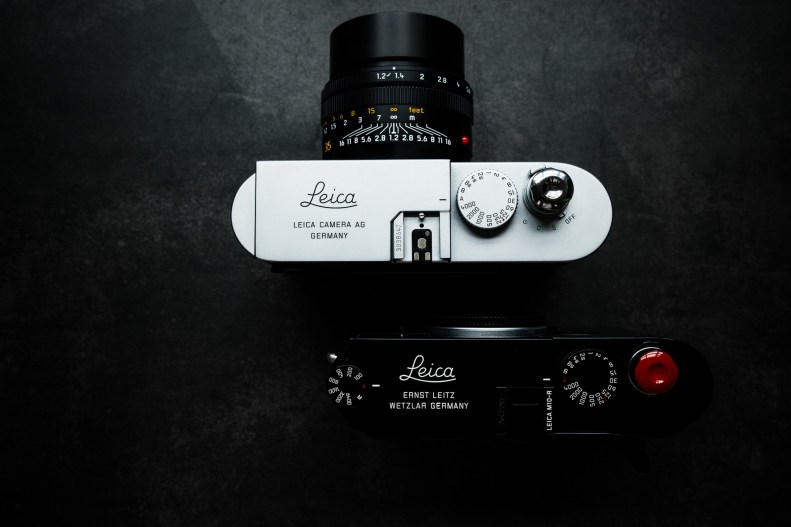
In fact, when mounted, it can actually be quite difficult to tell the Noctilux 35mm ƒ1.2 ASPH apart from the Summilux 35mm ƒ1.4 FLE II unless one goes closer.
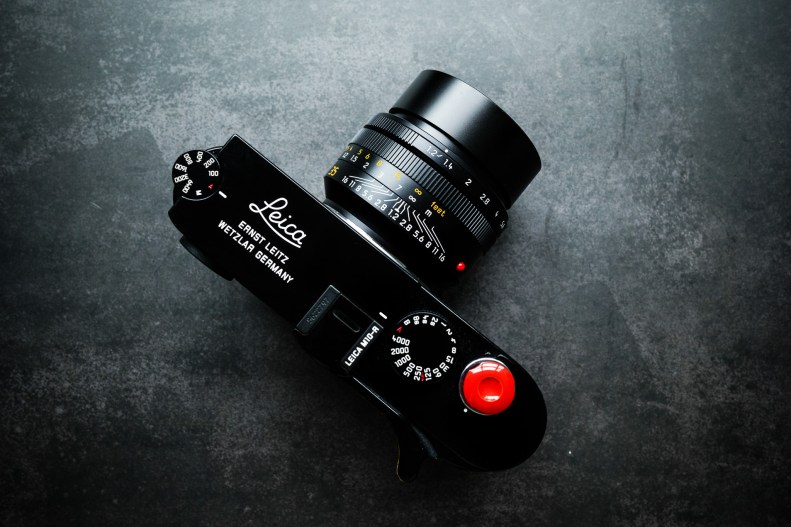
The proportions feel intentional. Even the small practical cues like the E49 filter thread signals that this lens is meant for use and not worship.
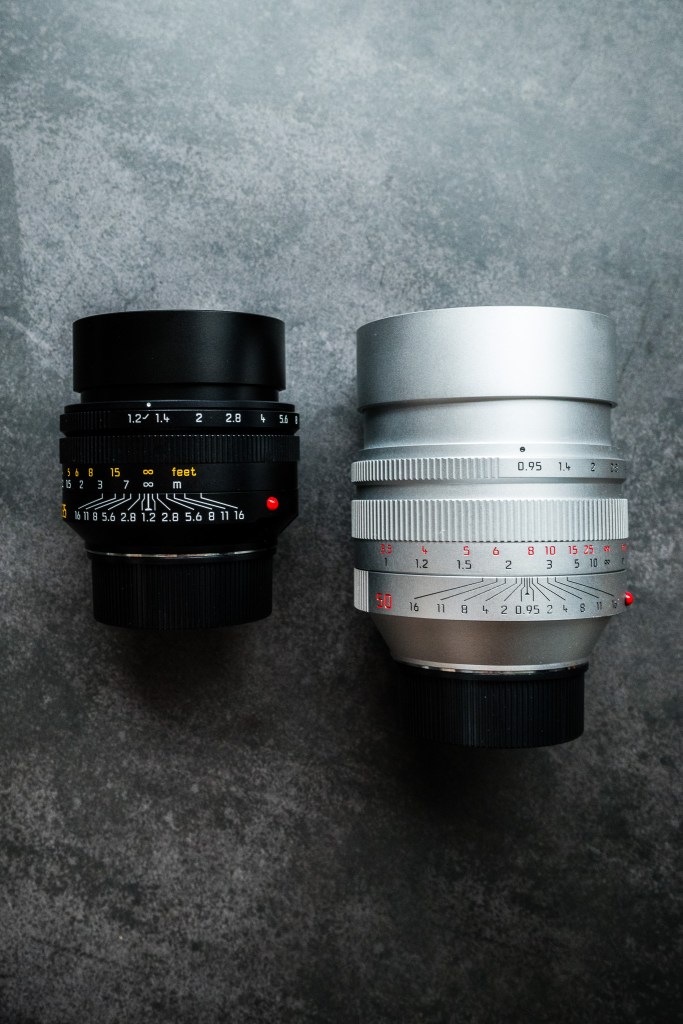
In fact, the Noctilux 35mm ƒ1.2 ASPH is quite comparable size wise to the Summilux 35mm ƒ1.4 FLE and significantly smaller than the Noctilux 50mm ƒ0.95 lens.
Leica could have designed a 35mm ƒ0.95 lens for ‘flex purposes’ and ended up with an approximately 50% larger lens, and I’m honestly glad they took the more sensible route with a 35mm ƒ1.2.
And use it I did. This setup was with me daily during the review loan period, mounted on my Leica M10-R, M9-P and MP, moving through the ordinary moments that often end up meaning the most. What it gives me is range: the ability to freeze the moment I want, whether it’s a fast glance, a quiet gesture, or a scene where the atmosphere matters as much as the subject.

There’s also a practicality here that makes the Noctilux 35mm ƒ1.2 ASPH feel unusually complete. A 0.5m minimum focusing distance isn’t macro-close, but it’s close enough to let 35mm become intimate; hands, details, small moments, those little fragments that make a day feel like a memory rather than a record.
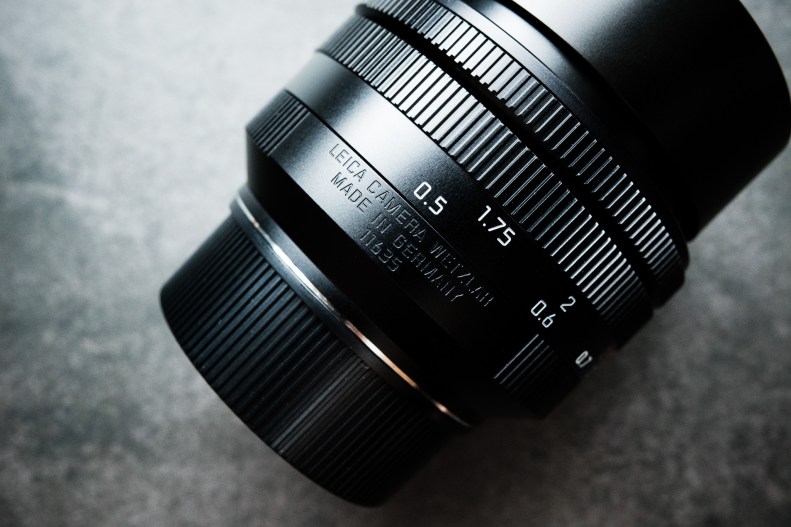
When used with live-view or a Visoflex on a modern M camera, (or the EVF of the Leica M- EV1), the photographer is enabled to work closer than the 0.7m limitation of the rangefinder mechanism with the lens’s minimum focusing distance of 0.5 meters.

The versatility of the Noctilux 35mm ƒ1.2 ASPH is further enhanced with excellent performance even when shot wide open at minimum focusing distance with details, sharpness, contrast along with the signature gentle fall-off all present in the frame.
The “0.45 stop” difference
A question that many current Summilux 35mm users will ask is what exactly does one get moving from the Summilux 35mm ƒ1.4 to the Noctilux 35mm ƒ1.2.

My review of the Leica Summilux 35mm f1.4 FLE II is here.
I get it, and this is very much a question of value for one’s money invested in a Leica lens but unfortunately the difference is not as straight as the difference of 0.45 of a stop faster but down to how the different elements of a frame come together.

To start, a gentle, subtle swirly bokeh is part of what sets the Noctilux 35mm ƒ1.2 apart from the far more modern and contrasty rendering of the Summilux 35mm ƒ1.4 FLE II.
The shallow depth of field at ƒ1.2 separates subject and space with a very beautiful falloff, giving a velvety soft bokeh and lending images tangible depth as well as a cinematic look.
Wide open, the Noctilux 35mm ƒ1.2 carries the unmistakable Noctilux signature: a gentle, dreamlike rendering aplenty with details where it matters you don’t quite get from the more modern Summilux 35mm FLE II. There are frames the Noctilux can make: certain transitions, certain moods that even the already exceptional Summilux 35mm FLE II simply doesn’t.
A lens can be too sharp, and the Noctilux 35mm is a perfect example of being just sharp enough, resolving where it matters, yet never too bitingly clinical.

Colour is also tuned differently: less saturated than the Leica APO-Summicron 35mm and Leica’s newer releases, leaning instead toward a softer, more muted palette.
Distortion from the Noctilux 35mm ƒ1.2 is also minimal and not significant, though there is indeed a fair amount of vignetting which can be cleared up easily in post-processing or later when the lens profiles are available for post-processing software.

And much like the Leica Noctilux 50mm ƒ1.2, the Noctilux 35mm ƒ1.2 ASPH shifts character with ease. Stop it down to ƒ2.8 and beyond, and it “changes gear” into a capable modern documentary lens, giving one a ‘cleaner’, more clinical look, and ready for everyday storytelling.

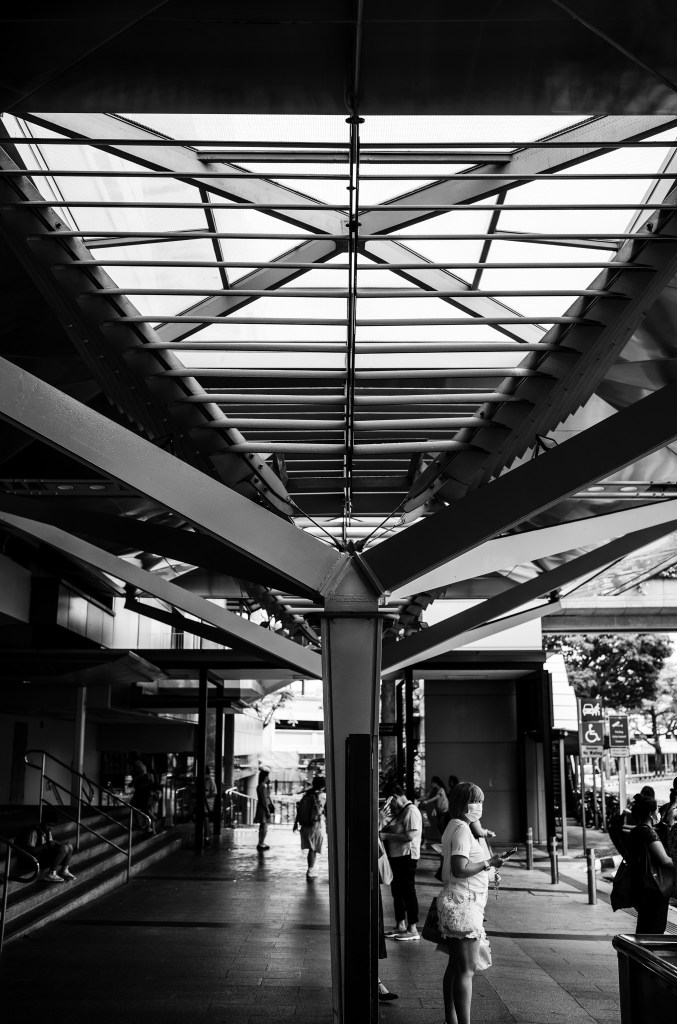
I know some purist might be aghast to see me going to ƒ2.8 and even ƒ5.6 but any lens no matter how costly is a tool end of the day. There is no shame and in fact, only correct to never use a lens only at 1 single aperture (smh) and at an aperture befitting the story or moment we wish to capture, whether it is at a fast paced basketball match or a lady with pink hair in the street.


In this sense, the Noctilux 35mm ƒ1.2 ASPH is an extremely versatile lens among its Noctilux siblings, giving you the photography potential of the Noctilux look at ƒ1.2 or allowing one to capture more of the background when one goes street photographing or capturing daily moments.
Flaring and aberrations
The Noctilux 35mm ƒ1.2 ASPH is not an APO lens, and while it is difficult to produce any flare on it due to its excellent coatings, one can definitely still do so if you know how and try hard enough.
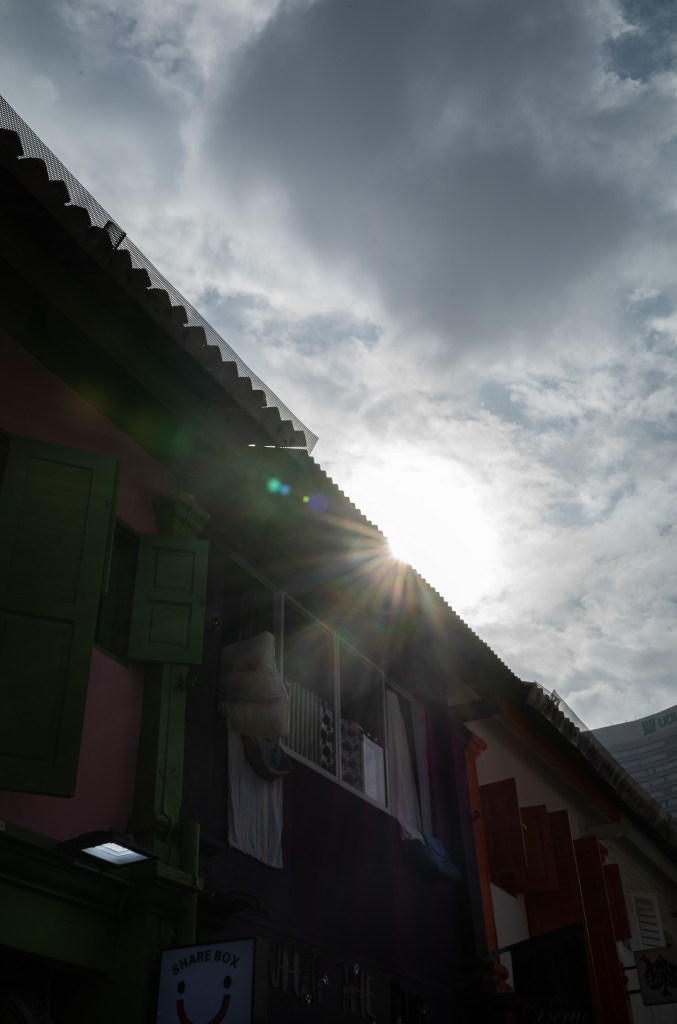
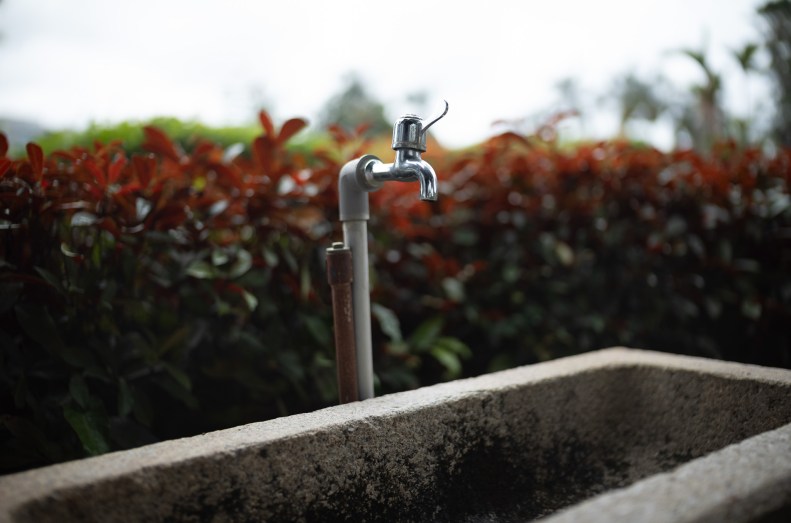
Aberrations are generally very well controlled, but they do exist in harsh shooting conditions and are easily cleaned up in post-processing.

The above shows a 100% zoomed in original unedited shot with some chromatic aberrations at the tip of the tap while the below shows the post-processed shot.
Overall, I am a photographer who sees flare adding to the character of the shot while I understanding this is really subjective.
Conclusions
If the Noctilux line has always been about a certain kind of romance touching on light, blur, mood, presence, then the Noctilux 35mm ƒ1.2 ASPH. feels like the most livable expression of that romance.
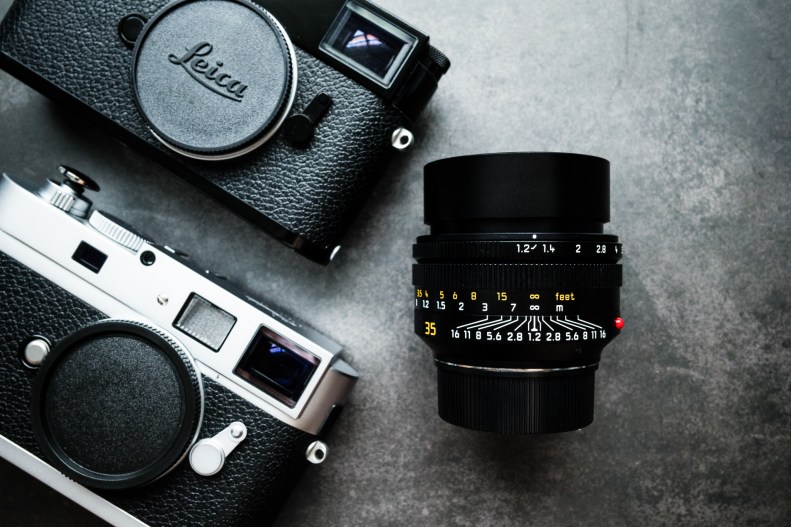
This is the first Noctilux lens, a title that touches on the words ‘ultimate and pinnacle’ that finally feels daily.
The Noctilux 35mm ƒ1.2 ASPH doesn’t replace the subject-driven compression of a 50mm, or the theatre of a 75mm view. What it does is give you the Noctilux signature in a focal length that naturally fits modern life: street scenes, indoor family moments, evenings out, quiet walks, quick portraits without ceremony.
Leica positions it as great for portrait, street, and reportage, and that description feels unusually accurate because 35mm is exactly where those worlds overlap.
In my time with it, the deeper takeaway for me is this: the Noctilux 35mm ƒ1.2 ASPH isn’t about proving you can shoot at ƒ1.2. No one cares about that. It’s about choosing a lens that makes you want to go out, again and again, and care about what you’re seeing. In that sense, this lens earns the Noctilux name not by being extreme, but by being present.

Of course the disclaimers are that this is still an ƒ1.2 rangefinder experience. Your technique matters, and photographing wide open demands intent, practice and an understanding of how a razor thin depth of field works in an image. When you get it right, it rewards you with images that feel unmistakably Noctilux. When you don’t, it will remind you that this look is earned, not a given simply because you paid for it.

If you’ve ever wished your “special lens” could also be your “everyday lens”, this might be the closest Leica has come to that idea without losing the very magic that made the Noctilux lenses legendary in the first place.

Thank you for reading and look forward to my follow-up reviews of the Noctilux 35mm.
*P.S: Across brands I am actually known for extreme short turn-around times most reviewers fail at, sometimes outputting a full review within 72 hours and damn, I like this Noctilux-M 35mm so much that it was a personal struggle to return it to Leica AG at the end of the review loan.
Disclaimers:
- All product photos and samples here were photographed by me. I believe any reviewer with pride should produce their own product photos.
2. All images were shot with the Leica Noctilux 35mm ƒ1.2 ASPH on the M10-R and M9-P , and the lens returned to Leica Singapore at the end of the review period.
3. This review is not sponsored.
4. I write as a passion and a hobby, and I appreciate that photography brands are kind enough to respect and work with me.
5. The best way to support me is to share the review, or you can always help support me by contributing to my fees to WordPress for the domain using the Paypal button at the bottom of the page.


Hi Keith, lovely pictures and most well written as always. Thank you for taking the time!
LikeLike
Hi there, thank you for the kind words
LikeLike
I appreciate the honest comparison between the Summilux 35mm close focusing and the new Noctilux 35mm. Thank you Keith
LikeLike
Hi! Thank you, I guess that will be a question for quite a lot of users.
LikeLike
Will be ordering a copy, the photograph of your daughter won me over.
LikeLike
Hi there, thank you!
LikeLike
Great sample pictures! Love the swirly bokeh.
LikeLike
Nice! You noticed the swirly bokeh character too. It’s subtle in comparison to the 50/1.2
LikeLike
Hi Keith, thank you so much for this review. I would really love to see how images render on film, with your MP. Especially in low light. The weight and handling on an MP. Thank you once again for this review.
LikeLike
Hi! Thank you for popping by. Well noted 😉
LikeLike
Super helpful review! Thank you!
LikeLike
Hi! Thank you for the kind words.
LikeLike
Thanks for the impressions 🙂 mine arrives next week, this is going to be the new every day carry lens.
LikeLike
Thank you 🙏 hope this lens will give you as much as joy as it did for me !
LikeLike
This is exactly what the ideal Summilux should be. It is a potentially commercially successful product, conceived as a rational choice for M cameras, but the problem is that for me, the Leica M + Noctilux is not a pragmatic choice, but an emotional one. Unfortunately, this lens, created by marketers rather than enthusiasts, does not evoke any emotions in me, and a rational choice would be in favour of other lenses..
LikeLike
hi, I think we all would always want to be pragmatic, especially in the face of equipment that are supposed to be tools and no more. The Summilux itself is an excellent lens, even previous versions which are now better value for money (better not equal great) and a good point you brought up is the romanticism of such equipment.
LikeLike
How do you think this lens will compare to the 35mm APO Summicron? At f2, would you say it’s as bitingly sharp?
LikeLike
hi! My two cents will be it won’t be as bitingly sharp in all situations like the APO 35, which was designed with a different set of intents. For example, in a backlit situation I am quite confident the APO 35 would deliver a more clinically correct picture vs the Noct 35 which might show some flaring/CA.
LikeLike
Hi Keith, this has to be the best review you have ever written. The text just flows and shows how inspired you were with this lens.
I bought this last week when I tried it and had a chance. I never ever buy anything without days of things about it and this is my first most expensive lens ever.
So far I am enjoying it. How would/do you use it practically? I find the included cap a bit difficult to might by a 49 lens cap and/or filter for convenience. Thanks, Mahesh
LikeLike
Hi, thank you for the kind words. 🙂
I’m feeling excited for you that you bought the lens too! Regarding your question , in general I don’t use lens caps and work using filters as lens caps are something I lose too easily haha.
LikeLike
Lovely review! As someone who is daily driving an APO Cron 35, this lens really is making me want to switch over for that versatility you and everyone else is mentioning.. if I were rich I’d own both!
LikeLike
Hi Edgar, thank you. The APO 35mm itself is an excellent lens, with an output that prides itself on the other end of performance.
I am not rich either haha, and similar to you if I do get this, I will have to sell all my other M 35mm lenses to even start.
LikeLike
Hi Keith, congratulations on your reviews. Have you tried the nokton 35 1.2 version iii or IV? Do you think it lives up to this Noctilux?
thanks
LikeLike
Hi good day and thank you. I haven’t had the chance to try the Nokton 35 1.2 v3 or v4 as a comparison. Maybe one day 🙂
LikeLike