Introduction
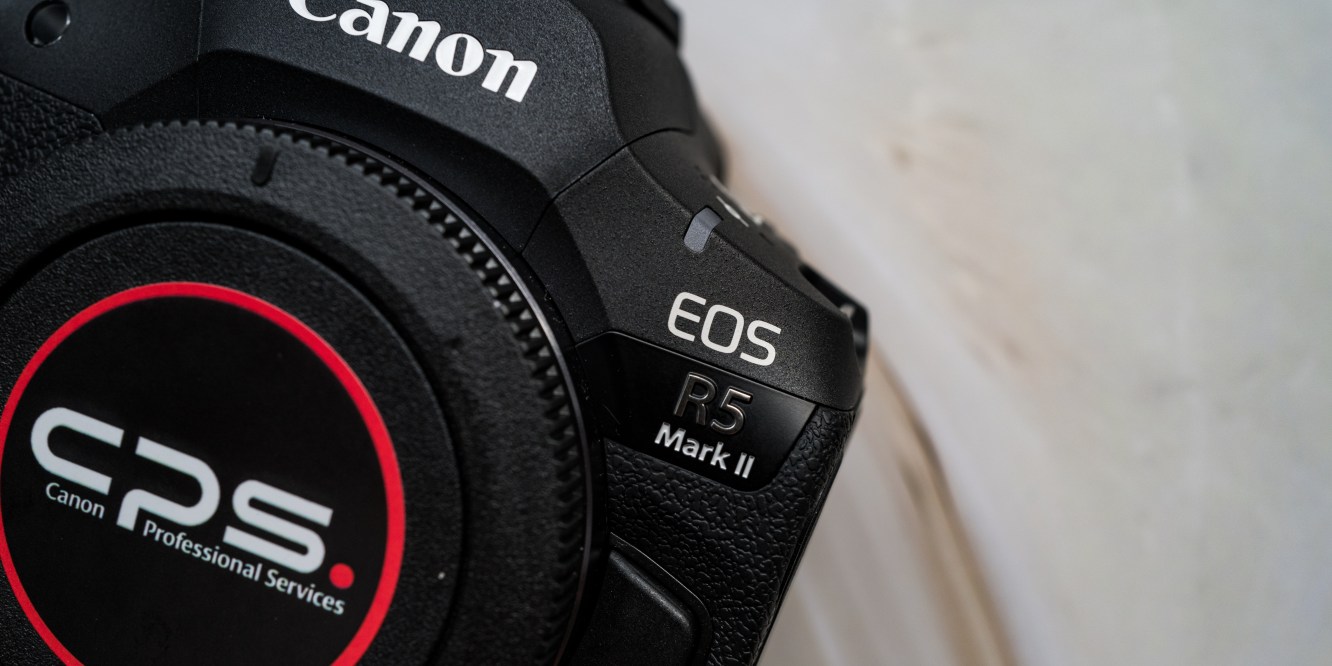
My reviews with Canon equipment started with the EOS R6 here a while ago, and from there, I fell in love with the RF50mm ƒ1.2L USM. Fast forward a few years, Canon released the EOS R5 Mark II in July 2024, a camera aimed at professional photographers and videographers.

According to Canon, the EOS R5 II introduces several new features and improvements that update the predecessor EOS R5 model with enhancements in speed, resolution, and video capabilities, promising to be a versatile tool for creators who need both stellar image quality and advanced video recording options.
Let us take a deeper look.
*A thank you to Canon Singapore for kindly providing the loan set for review.
tl:dr
When Canon releases a next-generation camera, they do not do a half-hearted job and it is generally a case of an overall step up in terms of performance. The EOS R5 II exceeds expectations with improvements in almost every respect relative to the original camera. It shoots faster, gains an even more capable and reliable autofocus system, better video tools, and, most notably, Canon’s Eye Control AF system.
I am going to be honest and say that performance wise, the Canon EOS R5 II exceeds my personal photography needs, and my most difficult point in this review is actually finding enough opportunities to put the camera through its paces.
In fact, regardless of what kind of photography you are in, whether landscape, sports, nature, or portraiture, the EOS R5 II will offer some benefits over the existing model, and it is a model easy to recommend to anyone.

Key Technicalities
Sensor: 45MP Full-Frame Stacked CMOS with DIGIC Accelerator and DIGIC X Processors
Autofocus: Dual Pixel Intelligent AF with Deep Learning AI, equipped with Eye-controlled AF subject selection (found in the Canon R3)
Auto-focus system trained by machine learning for specific sports
Continuous Shooting: Up to 30 fps with electronic shutter with blackout-free viewfinder.
Pre-burst capture (up to 0.5 sec in stills, 3 or 5 sec in video)
ISO Range: 100-51,200 (expandable to 102,400)
Video Recording: 8K/60p RAW, 4K/120p, 4K/60p (Oversampled)
Image Stabilization: In-body 8-stop IBIS
EVF: 5.76M-dot OLED Electronic Viewfinder
Display: 3.2-inch Vari-angle Touchscreen LCD
Connectivity: Wi-Fi 6E, Bluetooth 5.0, USB-C, 1 X UHS-II SD and 1 x CFexpress Type B card slot
Battery Life: Uses LP-E6P with approx. 630 shots (with LCD), compatible with BG-R20 and BG-R20EP battery grips.
Weight: 746g (with battery and memory card)


Handling and Performance
Build and design
The design of the EOS R5 II is classic Canon, with a quality of build that is so reassuring that my gut feeling tells me that if I fall while holding the camera, it will be the EOS R5 II picking me up instead of the usual other way round.

A key highlight is the shape of the EOS R5 II, which easily molds to one’s grip in an ergonomic way even though the camera body is hefty, coming in slightly lighter than 800 grams.

The feel of the EOS R5 II down to the grooves on the D-pad area gives the insight that Canon engineers were focused on usability, durability and performance during the design process, and not creating an ‘instagrammable looking camera body’, aka, this is more of a performance camera by design.

The button placement is overall similar to the predecessor, with the only significant external change in that the power On/Off switch on the top left-hand corner is now a Stills/Video switch, and the power control is now in the middle right side on the top plate.

Most of the ports are on the camera’s left side, with the usual rubber-protective flaps. The EOS R5 II also gains the multi-function hot shoe from the EOS R3, allowing additional functionalities such as the use of the DM-E1D digital stereo mic. Though trivial, I do like the protective cover of the hot shoe.

The EOS R5 II’s electronic viewfinder still uses a 5.76M dot OLED panel, keeping the 0.76x magnification, but changes have been made to allow the implementation of Eye-control AF. This makes the viewfinder appear more ‘prominent’ as you look at the camera, but it’s the same size when you use it.
What is not often mentioned is that the updated OLED panel can go much brighter than the one in the original R5, allowing the option of the ‘Optical Viewfinder Simulation’ mode seen on the EOS R3.

Though my first impression was that the rubber guards around the EVF were too deep/thick, I quickly realized how helpful they were when using the EVF under bright sunlight.

A CFExpress Type B and UHS-II slot combination works well, with the CFExpress great for heavy lifting and obviously for the significantly faster speeds it supports.
Autofocus performance
The EOS R5 II is equipped with Canon’s novel eye-tracking, which literally moves the focus point to where your actual eye’s iris is looking. Of course, one needs to build a custom profile for different situations (say, glasses versus non-glasses). Although this is a function I do not really use, it indeed feels more mature and, in fact, more reliable than the R3’s at times.
A huge plus is that the EOS R5 II comes equipped with pre-capture, found in the EOS R1 (the EOS R3 does not have this)

Auto-focus quality is considered the reliability and speed of it and the autofocus system in the EOS R5 II is nothing short of remarkable for the enthusiast or hobbyist, easily hands down more reliable than the best from some brands.
Powered by Dual Pixel CMOS AF II and deep-learning AI, the camera offers fast and accurate subject tracking. For the shots I did for this review, the miss rate was around 1%, which is huge in comparison with the autofocus system of another brand I had that generally gave a miss rate of approximately 15-20%. (back then it was so bad I ended up taking double/triple shots of the same scene even when the green ‘focused’ box was on display)
With up to 30 frames per second using the electronic shutter, the EOS R5 II is suitable for high-speed action shots, making it an excellent choice for sports or wildlife photographers.


The fact is that the autofocus system performed admirably well even with the thin depth of field of the RF50mm ƒ1.2L USM.

Image Quality
The 45MP stacked full-frame sensor continues to deliver outstanding image quality, producing the rich colors that one sees from Canon cameras. Details are well presented with excellent dynamic range. However, I noticed a few instances where shots with high ISO values seemed to give a relatively significant color shift (or simply white balance) when I work with the raw files, and to be fair, this was like around 2 files out of a close to a thousand I shot across the few days with the system.


Video Capabilities and Image Stabilisation
I am in no position to really talk about video here. Still, I believe videographers will appreciate the EOS R5 II’s ability to record 8K RAW video at 60p, a significant improvement over the original R5. The camera also offers 4K at 120p, ideal for slow-motion footage, while 4K/60p is oversampled from 8K.
With the backlash some time ago for overheating issues, I saw Canon implement a fanless design despite these high video specs, which, in my opinion, displays Canon’s engineering capabilities in minimizing overheating even during extended recording sessions.
In this era, I will say it is disrespectful to consumers if a brand still tries to sell a Vlogging or video-oriented camera without any decent form of stabilization, a bar which Canon clears easily.
The EOS R5 II’s in-body image stabilization (IBIS) offers up to 8 stops of correction, making handheld shooting incredibly stable even at slow shutter speeds or longer focal lengths. Whether you’re shooting stills or video, the stabilization system will surely be useful.

Conclusions
The Canon EOS R5 Mark II is a real powerhouse tool for photographers and videographers. Its speed, high-resolution stills, and professional-grade video capabilities make it an incredibly versatile camera, reminding me of how, years ago, the Canon 5D II was the widely accepted workhorse camera for the professional, whether one was into stills, videos or both.

Whether you’re a photographer capturing fast-moving subjects for sports events or wildlife or a videographer shooting cinematic 8K footage requiring a robust, trustworthy camera build, the EOS R5 Mark II delivers in almost every area. While the battery life could be better, as it is for all mirrorless cameras, its overall performance and feature set make it a top-tier choice for professionals looking to invest in cutting-edge gear.

The result is a camera that can do almost anything you ask of it. In my case this round, I actually feel that this is a camera that I lack the technical skills to fully utilize and one that actually made me feel that I should be working harder at upgrading my skill sets.
Thank you for reading.
Disclaimers:
- All product photos and samples here were photographed by me. I believe any reviewer with pride should produce their own product photos.
2. All images were shot with the Canon EOS R5 II with RF50mm ƒ1.2L USM, loaner units from Canon Singapore and returned at the end of the review.
3. This review is not sponsored.
4. I write as a passion and a hobby, and I appreciate that photography brands are kind enough to respect and work with me.
5. The best way to support me is to share the review, or you can always help support me by contributing to my fees to WordPress for the domain using the Paypal button at the bottom of the page.

 KeithWee | Photography
Finding a good review of the R5II is not easy and I am glad I found yours. Great writing!
LikeLike
Hi! Thank you for the kind words.
LikeLike
Nice writing, making the case between R5 II and R3 quite clear for me.
LikeLike
Hi! Thank you for the kind words. I felt I could have added more regarding video but that would have made this review probably too long
LikeLike