Introduction
Announced in March 2024, the Leica SL3 is Leica Camera AG’s update to the SL system, providing photographers a modern full-frame interchangeable lens system camera to complement its heritage M-rangefinder series.

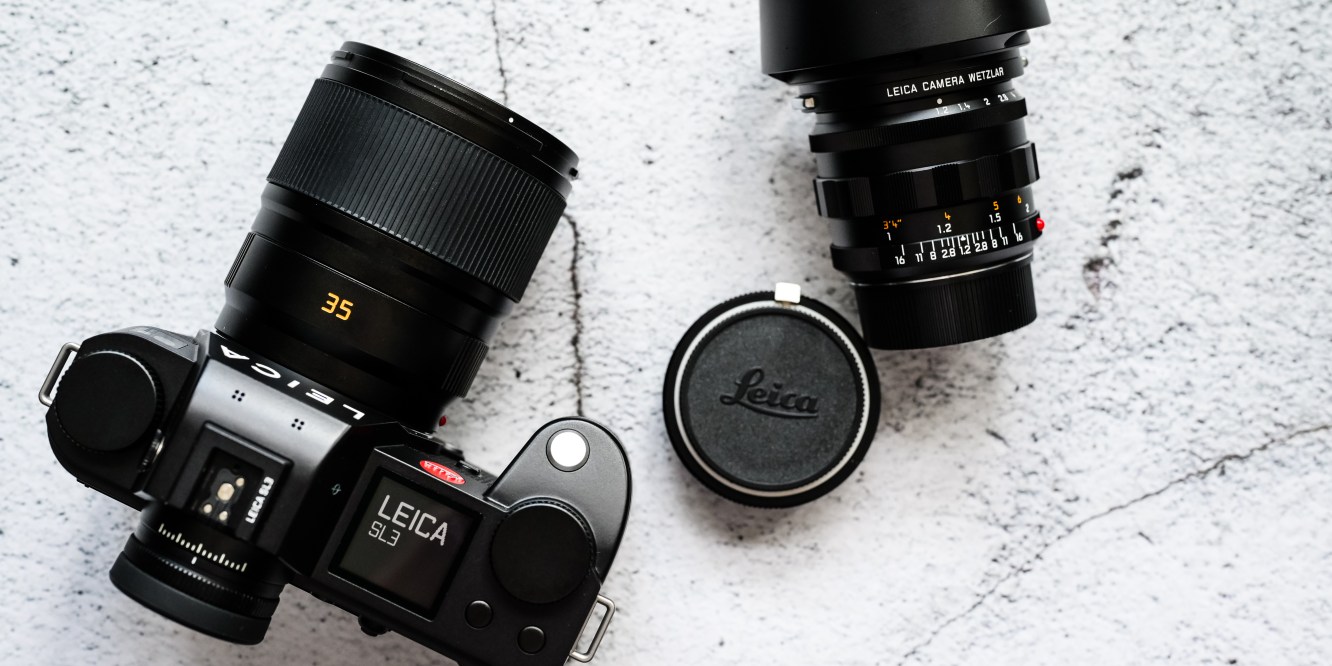
For this review, Leica Camera Asia Pacific has kindly loaned me the Leica SL3 and Summicron-SL 35mm ASPH for a trip to Nagoya, Japan.
Let us take a deeper look as I take the SL3 and Summicron-SL 35mm ASPH across three days in Nagoya, Japan

tl:dr
By the time this article was published, the Leica SL3 had returned to Leica Asia Pacific. I admit I am beginning to miss it, even though I am primarily a Leica M user.
Coming from the Leica SL2 (my review of it with the Summilux-SL 50mm is here) and starting with the original Leica SL 9 years ago, Leica has genuinely listened to its users and incorporated feedback into making significant improvements in the camera’s design performance, user interface (UI) and handling.

The Leica SL3 is not perfect and still possesses room for further improvement, and this is the same for all cameras. For example, while it will not match the autofocus prowess of Sony’s A9 III, the Leica SL3 is undoubtedly the best of what Leica as a brand (and probably the whole of the L-mount alliance) provides.
Not to forget, the SL system is made even more competent with the range of lenses available in the L-mount alliance comprising SIGMA, Panasonic, Ernst Leitz Wetzlar GmbH, DJI, ASTRODESIGN, SAMYANG, and Blackmagic Design.


The Leica SL3 now sports phase detection in a more compact, lighter, yet as robust weather-resistant body aligned to the Leica Q3 and Leica M11 design. (Leica even squeezed an extra dial on the left top of the camera). Additionally, the Leica SL3 now comes with a tilting touchscreen with improved ergonomics, the newest triple-resolution sensor, and the Maestro IV processor supporting even 8K/30P video, making this camera a legitimate powerhouse improvement from its predecessor and easy to recommend, whether a professional or an enthusiast.
(like it or not, I must say the ergonomics of the SL were, well, hardly good, and it is indeed super gratifying to see how vastly improved the SL3 is now in this area)

Technicalities
As usual, I am only listing key specifications, and you can find the complete listing here

- Mirrorless L-mount
- Full-frame CMOS Triple resolution sensor at 60.3 / 36.5 / 18.6 MP at 3:2
- 14-bit (DNG) and 8-bit (JPEG) color depth
- 5-axis sensor-shift image stabilisation
- ISO range: 50 to 100,000 (in Manual mode), 100 to 100,000 (in Auto mode)
- Shutter speed: 1/8000s (Mechanical),1/16000s (Electronic) to 60 minutes
- Up to 7 fps in mechanical shutter, 15 fps in electronic shutter
- Contrast and Phase detection autofocus
- Dual slot memory cards: 1 x UHS-II SD and 1 x CFexpress Type B
- 1 x USB-C (for power and data output transfer at USB 3.2)
- Uses the SCL-6 rechargeable battery, rated at approximately 260 shots
- 3.2 inches touch screen tilt-LCD at 2.3 million dots in 3:2 format
- OLED 5.7 million dots EVF with 100% coverage at 60 or 120 fps
- Internal recording modes
H.265 Long GOP 4:2:0 8/10-Bit
H.264 ALL-Intra 4:2:2 10-Bit
ProRes 422 HQ - External recording modes
4:2:2/4:2:0 8/10-Bit via HDMI - At 5.6 x 4.3 x 3.3″ / 141.2 x 108 x 84.6 mm and 1.7 lb / 769 g (Body Only)


Handling and Performance
For long-time Leica SL users, a good guess is that we would associate the SL setup with ‘hefty’, and a pleasant surprise is that the SL3 has indeed improved ergonomically, making the SL system now even better handling and portability-wise. In fact, when you hold the Leica SL3, you know the difference, and, amazingly, Leica managed to pull this off.

More compact, lighter with a deeper grip in an robust weather resistant, all metal build all contributes to the quality build we have all long associated and expected with Leica cameras.

For me, the most significant improvements come from three particular redesigns.
First, the SL3 replaces its predecessor’s fixed screen with a tilting touchscreen – which turns the camera from a viewfinder-only device to one that’s instantly more versatile for low- and high-angle shooting.

However, it is not all perfect; for example, the size of the overhanging viewfinder is such that it does partially obscure the screen if you only tilt it up, meaning that you have to deploy the mechanism to extend it away from the body. And for me, though I have not mentioned it to Leica, I am immensely relieved they did not end up doing a flip-out screen design.
While I generally prefer vintage M lenses shot at 38MP on my M11-P, I will always prefer to go with the maximum 60MP on the SL3 with the SL line of optics.
The Leica SL3’s interface takes obvious cues from the Leica Q3 interface, a welcome development, which leads to the second significant improvement regarding the button placement on the rear of the camera.

On the Leica SL2, they were laid out to the left of the camera screen – necessitating a two-handed use. The Leica SL3 has this column of buttons shifted to the right, offering one-handed operation in a nod to how the Leica Q3’s buttons are placed, too.
And, one awesome thing the Leica Q3 cannot do is that the Leica SL3 allows one to ‘hold’ on one of the top row icons below and they will expand to allow one to make settings changes without going into the menu.

A surprise one may or may not like, however, is the redesigned On-Off switch, which, in my experience, now has a higher chance of being depressed accidentally versus the tactile switch we used to have, but even so, this little button actually serves dual purposes – turning RED when there is a camera error and GREEN when the battery is being charged through USB-C.

As part of the evolution towards higher megapixel output, the Leica SL3 now supports the CFexpress Type B format to facilitate the expected fast transfer speeds for imaging, especially 8k video.
The third significant improvement lies in the firmware, which Leica has humbly not said much of. Not only just aligning to the Leica Q3 and Leica M11 series layout, Leica has really thought through the flow and made multiple ADDITIONAL adjustments, from being able to make setting adjustments with the multiple Fn buttons to highlighting ‘error’ settings in Video mode under its Video profiles to enable easier trouble-setting.

Just to show one example, below, we can see that video settings deemed ‘conflicting’ are highlighted with a Yellow dot to guide the user in rectification.

The Leica SL3 features a CFexpress card slot and a UHS-II SD card slot. While I am sure some users might prefer an all-in approach with dual CFexpress cards to deliver the highest possible speed and buffering (rather than a performance difference with the slower SD format), personally, I do appreciate the ability to keep using the still-more-common SD cards.
*or until the day Macbook Pros come with built-in CFExpress card readers, in my case.


An unexpected development was that despite the faster memory formats and more powerful Maestro IV processor, continuous shooting capabilities have not improved from the Leica SL2, down from a maximum burst of 20 fps to a top speed of 15 fps – without autofocus. If you want autofocus while shooting, the burst speed is limited to 5 fps.
While, of course, some may argue the Leica SL3 is a resolution-focused camera, it remains to be seen whether it will be improved with the Leica SL3-S or whichever is the video-oriented SL3 model (note, I am not confirming anything here)

The jump in autofocus reliability and speeds with phase detection alone gives extremely good reasons for the upgrade to the Leica SL3.
Auto-focus-wise, the introduction of phase detection is an absolute improvement, especially compared with the previous contrast-based system, which could be slow (hunt) or inaccurate in challenging light. The current system, which I am confident will only improve with firmware updates over the SL3’s support lifespan, instantly expands the practicality and applicability of the SL system – particularly with the promise of the new subject recognition algorithms.


Video-side, I find that the auto-focus tracking possesses further room for improvement, especially for non-human subjects. I reckon this will be improved over time to catch up with the top-end cameras from other brands.


Speaking of battery life, I guess while ratings are generally more conservative, the SL3’s rated 260 shots on a full battery is quite representative. While one can continue to juice the camera on the go with a USB-C power bank, I recommend extra batteries for a wedding or event shoot that lasts more than half the day.
While most of the SL lenses are no means light-weight, the image quality they deliver even on the 60MP sensor is phenomenonal.


I am not new to the triple resolution sensor that debuted in the Leica M11, and it is indeed one unique thing of excellence Leica proudly has. The sensor delivers where it matters, providing color depth, details, and dynamic range that sometimes reminds me of a medium format camera. Adding the 5-axis stabilization to the mix ensures one gets the optimum output while shooting at maximum resolution.


Conclusions
While anyone can write a few thousand words waxing lyrical the improvements Leica has brought to the SL system with the Leica SL3, the fact is that Leica designers/engineers have indeed made improvements in the 3 areas that matter most to any photographer/videographer: ergonomics, performance, and imaging quality.

The Leica SL3 has indeed achieved two critical things for Leica:
- consistency in handling and imaging output with the same triple-resolution BSI-CMOS sensor aligned across their main camera lines with the M11 series, Q3, and SL3.
- Moving the SL system to the next performance tier as a camera system that more professionals can now consider and taking full advantage of the excellent optics in the SL system, especially considering the developments across other brands in the last two to three years.

While some may find it weird to hear a reviewer saying ‘value for money’ and ‘Leica’ in the same sentence, this is indeed how I feel regarding the Leica SL3: a value-for-money system camera given the quality build, unique and versatile triple-resolution sensor all in an improved now more ergonomic body supported by the comprehensive lenses from the L-mount alliance which I find easy to recommend to anyone.
Fans of the Leica SL3 know it for its superb full-frame image quality, flexible triple-resolution sensor, and the creative possibilities of the L-mount alliance. If you’d like a small way to make this flagship feel even more “yours,” custom enamel pins Canada are a fun option with using the SL3’s silhouette and logo as design elements. With GSJJ’s fast turnaround, you can get your personalised pins in just a few days, adding a subtle, professional nod to your love for photography.

Thank you for reading.
Disclaimers:
- All product photos and samples here were photographed by me. I believe any reviewer with pride should produce their own product photos.
2. All images were shot with the Leica SL3 and Summicron-SL 35mm ASPH, loaner units from Leica Camera AG Asia Pacific and returned at the end of the review.
3. This review is not sponsored.
4. I write as a passion and a hobby, and I appreciate that photography brands are kind enough to respect and work with me.
5. The best way to support me is to share the review, or you can always help support me by contributing to my fees to WordPress for the domain using the Paypal button at the bottom of the page.


I was looking forward to this review on the SL3! Thank you Keith.
LikeLike
hi, thank you for dropping by!
LikeLike
Great review as always Keith, excellent detailed sharing on the camera with some information that the sales at Leica store did not even know.
LikeLike
Hi! thank you for the kind words. 🙂 Some items like holding onto an icon, I only learnt after someone technically competent at Leica taught me haha, if not I would have probably missed it.
LikeLike
Hi Keith, thank you for doing this review. I cannot stand Youtube videos and prefer a clear reading format like yours. A quick question, for a SL2S user what is you take on whether I should upgrade to the SL3?
LikeLike
Hi! Thank you. A quick 2 cents would be will that since the AF performance is substantial for the SL3, maybe a guiding question be will you be in need of this. For example someone who uses the SL for M lenses would prob have lesser need for this.
LikeLike
Is the setup heavy to bring around for say, an overseas trip? Lovely review!
LikeLike
Hi there, the SL 35 APSH at 370 grams surely helps 🙂 end of the day the whole setup was quite portable even while I was managing the trains/buses and streets of Japan
LikeLike
Great job on a very fair and balanced review Keith. I will actually consider the SL3 based on your writing versus those fake video reviews praising this camera to the skies.
LikeLike
excellent review Keith. Always looking forward to your balanced take. Also, will you be reviewing the Pentax 17?
LikeLike
Hi there, thank you. For the Pentax 17 I’m quite intrigued by it to be honest but it doesn’t seem that the local distributor for Pentax is able to help and at its price, I’m a bit hesitant to purchase it seeing that the Rollei 35AF is coming soon too.
LikeLike