Introduction
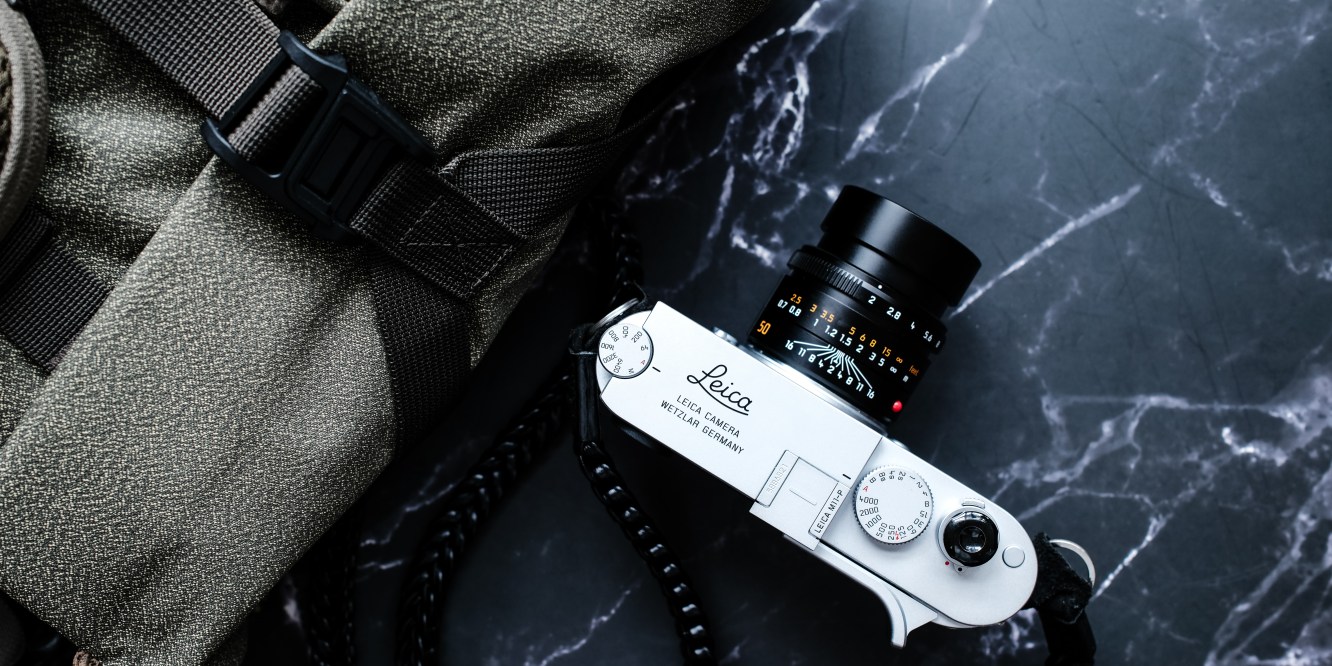
The Leica 50mm APO-Summicron-M ASPH ƒ2 was released in 2012 together with the Leica M9 Monochrom “Henri”, and in Leica’s words, to herald in a new level of resolution in details and sharpness. Let us take a closer look at these ‘new standards’ of optical performance.

Leica claims the APO-Summicron 50mm to be their most perfect 50mm ever made. In our world where there exists the legendary Summilux 50mm ƒ1.4 ASPH and Noctilux 50mm ƒ0.95 ASPH, that is pretty intriguing.
for simplicity’s sake, I will refer to the Leica 50mm APO-Summicron-M ASPH ƒ2 as the Leica 50mm APO-Summicron.

Technicalities
With the advancement of technology in lens design and manufacture, advancements such as floating elements, more effective coatings, and ever more compact focusing mechanisms, we have the race towards ‘perfection’ in image production and the Leica 50mm APO-Summicron is a representation of this pursuit.

The Leica 50mm APO-Summicron-M ASPH ƒ2 comes in a complex 8 elements in 5 groups optical design that is reminiscent of a heavily modified double-Gauss design and equipped with a rear floating aspherical group.
As with all Summicron lenses, the maximum aperture is at ƒ2 closing down to ƒ16 with a minimum focusing distance of 70 cm. The Leica 50mm APO-Summicron comes in an 11-aperture blade construction.

Most of all, the Leica 50mm APO-Summicron is extremely petite, coming with a filter size of 39mm and dimensions (ø x L)of 47 x 53mm, and clocking in at 300 grams with a built-in hood.

The big question: So why is it the most ‘perfect’ 50mm Leica lens?
To start, the Leica 50mm APO-Summicron lens is built on the foundations of what made the original Leica-M Summicron 50mm lens great.
The Leica Summicron-M 50mm is a proven piece of Leica optics, and the APO Summicron 50mm takes this foundation and pushes the optical performance even further ahead.
When one handles the Leica 50mm APO-Summicron, the first thing that comes to mind is how the build is designed and kept to the tightest tolerances. The non-APO Leica Summicron 50mm is a well-built lens coming in at less than half the price (USD2895) of the APO version, but it is not as well-built when compared to the APO version coming in at USD9095.
Personally, I also prefer having a focusing tab, which allows me to find focus faster, and the relatively thick knurled surfaces make a real difference during real-life use. Everything about the lens has been well thought through ergonomically, down to the balance of the lens on the Leica M body.

The addition of a rear floating element design helps to retain spectacular contrast throughout the image, even with close-up shots, once an issue with older lens designs and which debuted with the Leica Summilux-M 35mm FLE.

Beyond what was already achieved with the excellent Leica Summicron 50mm, the Leica 50mm APO-Summicron seeks to add exceptional correction of color and aspherical aberrations. During the period this lens was with me during the review, I had tried multiple times to get it to flare or ‘maximize’ the chance of aberrations appearing, but it solidly refused to yield.

Vignetting has been reduced to the very very edges when shooting at maximum aperture. It is further reduced to its natural vignetting by ƒ2.8, and stopping down a full two stops nearly eliminates it altogether. The apochromatic correction also seeks to reduce distortion to where it is nearly imperceptible.


Colors are reproduced realistically (no funky filters) with a good amount of saturation and the much fawned-over ‘Leica pop’ but yet very well balanced without ever overwhelming the image; even when I tried shooting directly at bright sources, there was hardly any loss of details in the images.


It is also obvious that at maximum aperture, images are extremely sharp corner to corner, with excellent reproduction of details and contrast. The Leica 50mm APO-Summicron at 50mm focal length basically makes this lens suitable for most situations that M-users will be in too.

Yes, while we all know the appreciation of bokeh is subjective, from my perspective, the bokeh is pleasing, and probably best described as neutral; it is creamy but never gets distracting or overpowers the subject, and it does not dominate the image in the way the Noctilux 50mm ƒ0.95 APSH (my review is linked) does.


In general, for the ones who study bokeh as a science, the Leica 50mm APO-Summicron does not have an onion ring problem, nor does it have a harsh look some lenses give between the out-of-focus to focused areas, and I guess this is part of the reason why people pay for the APO version.
Conclusions

it is actually pretty amazing that Leica has managed to take one of their best (also bang for the buck) lenses, the Summicron-M 50mm, and modernized it, taking the optical performance from great to close to perfection. This feat is easy to type out but yet really tough to realize, even among experienced lens makers.
The Leica 50mm APO-Summicron lens is one of the best 50mm lenses money can buy.
There is really nothing much to fault for with the Leica 50mm APO-Summicron. As with all higher-end Leica optics, it is probably over-engineered; providing razor-sharp output running corner to corner with an excellent quality of bokeh and a build quality even some of the lenses within Leica cannot match.

While some users will understandably comment that they will be happy with the approximately 70% cheaper Summicron-M 50mm, the lack of distortion and color correction necessary in post-production is drastically reduced with the Leica 50mm APO-Summicron’s clinically perfect (close to) output.
This frees up precious time for professionals and, to be honest allows the Leica 50mm APO-Summicron to be a lens I will recommend anyone to have so long as one has the budget.
Thank you for reading.
Disclaimers:
- All product photos and samples here were photographed by me. I believe any reviewer with pride should produce their own product photos.
2. All images were shot with my personal copy of the Leica M11-P, the Leica 50mm APO-Summicron is a loan copy which has been returned.
3. This review is not sponsored.
4. I write as a passion and a hobby, and I appreciate that photography brands are kind enough to respect and work with me.
5. The best way to support me is to share the review, or you can always help support me by contributing to my fees to WordPress for the domain using the Paypal button at the bottom of the page.

 KeithWee | Photography
Excellent review! May I ask what is the camera bag in the picture?
LikeLike
hi! Thank you, that will be the Wotancraft 7L Pilot in Salt & Pepper edition.
LikeLike
Clear explanation of what differentiates the APO lenses, well-written!
LikeLike
Hi, have your posted photos undergone any post-production ? Thanks
LikeLike
Hi! Thank you for popping by. In general for reviews I only adjust exposure, highlight/shadows and crop in post processing. Nothing major to ensure a balance.
LikeLike
Very nice lens. I own it, and using it on am M3 with Ilford XP2 gives as nice results as on my M10M.
LikeLiked by 1 person
Thanks for sharing this, it didn’t occur to me to use this on film and i aim to try this one day
LikeLike
im kinda sick of people for lying about CA in leica . leica optics plagued with it . this apo isn’t an exception . ive had 2 standard ones and then bought 17k+ usd black chrome . only for the looks of the lens . apo has TON A CA – even while you are writing about lack there of under your crazy edited images with automatic CA / sharpness/ lens profiling in software downresoluted by internet WITHOUT punching in I SEE PURPLE AND GREEN FRINGING ON THEM ! comparing to 50 1.4 this lens is phenomenal although comparing to 35apo it is complete garbage – no contrast NO CORNER TO CORNER sharpness NO clarity and MORE ca. ive had all most expensive M lenses only one deserving praise is 35 Apo although I wish there were NO CA at f2 ! for devil sake its 10000usd f2 lens . my 2300usd Sony 50 1.2 AT 1.2 has less CA . all and all like your web site and articles . only wish you to be moderate in statements . now I cannot TRUST you for praising 50 1.4 SL lens . since you say 50 cron is good – and in actuality its the garbage that should be trampled under mens feet.
@georges_angeles
LikeLike
Hi there, I like to be open and thus replying to your sharing though I must say that maybe let us cool down a bit first.
Leica doesn’t pay me a dime for writing and thus there is little need for me to defend them and I think I’m too old to be a crazed fanboy too.
I do not do crazy amount of edits on my images unfortunately (if not I’m sure they will be much better), and one reason is prob also my lack of skill to do massive edits. For my files shared I generally do a quick update on exposure (shadows highlights mostly) and crop when needed.
The 50/1.4 (I assume ASPH?) and 50 Summicron are not perfect , but I wouldn’t label anyone of them ‘complete garbage’. Generally, most modern lens are pretty decent nowadays and hardly worth being compared to garbage.
One can easily find examples of fringing on either piece and I do find that the 50 APO is significantly more improved in comparison, though I do have a softer spot for the older lenses. If one seeks to find anything specifically I’m sure anyone can, whether it is CA or well, issues.
I do agree that I can be more moderate and more critical though, I tend to prefer to focus on the good in things rather than pick things apart relentlessly and will take this feedback and work to be better.
Thank you 🙂
LikeLike
If I sold all of my 50s (I own three) I could just about afford a 50 APO. Part of me has always wondered if it would be worth making the switch: that way I’d just own one “perfect” 50mm lens. What do you think? Would you rather own a single 50 APO, or, say, a 50 Lux ASPH and 50 Summarit f/2.5?
LikeLike
Hi, that’s a tough one with no fully ‘correct’ answer. My keeper is the Noct 50 F1.2 because I really have a soft spot for how it draws wide open and when stepped down (it’s like two diff lenses in one body). The 50 Lux ASPH is an excellent lens which I’ll take if I’m into character while the APO is what I’ll take if I’m into really moving as close to clinical perfection as possible (note no lens is ever perfect too)
LikeLike