Introduction
In recent months, I have tried to incorporate a change in my photography, which is to work with some see as ‘make-do’ lenses that are hardly the fastest that money can buy, like the Noctilux ƒ0.95 or Summilux lenses, and thus, for the 1st time in my reviews, an Elmarit.

Interestingly, while the faster lenses have their raison d’être, slower lenses (slower than full-frame ƒ2, specifically) have started to perk my interest.
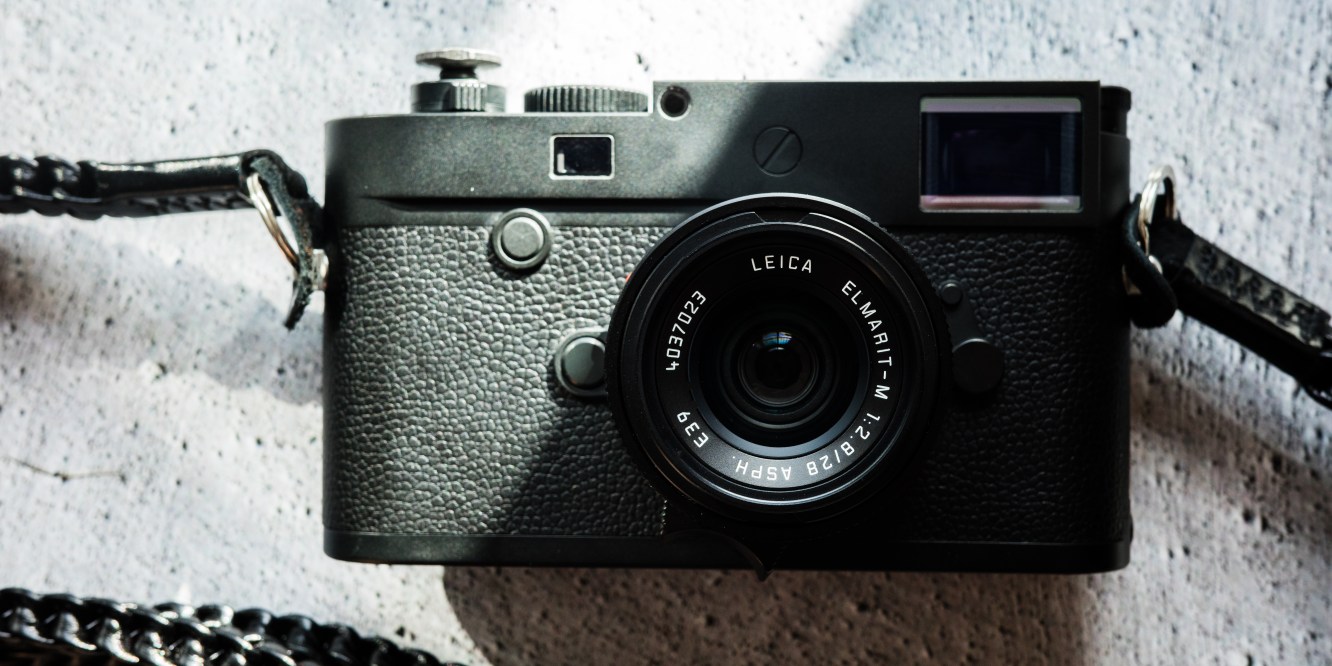
Here is my experience and review of one of Leica’s smallest lenses, the Leica 28mm ƒ2.8 Elmarit-ASPH.
*for brevity’s sake, I will refer to the Leica 28mm ƒ2.8 Elmarit-ASPH as the Leica 28mm Elmarit from this point onwards.
td:lr
The Leica 28mm Elmarit is one M-system optic that every photographer should have or at least tried in their photography journeys.
One slippery slope we all end up chasing is faster (and ever larger) lenses, and along the way, we forget that part of the Leica M lore is a history entrenched in the genre of documentary photography across the streets and battlefields of yesteryears, for which the compact design of the M-system played a more significant role than one sometimes realize.

We are all guilty of sometimes forgetting that an excellent lens is not solely determinded by its largest aperture value.
The Leica 28mm Elmarit is one of the smallest Leica-M lenses made, and has zero distortion and an extraordinary amount of sharpness. While it will hardly wow anyone with its ‘bokeh,’ it still presents a refreshing experience for anyone keen to enjoy capturing the decisive moment.


Technicalities
Out of the 6 versions, the Leica 28mm ƒ2.8 Elmarit (model 11606) shared here is the 5th version and the 1st Aspherical (ASPH version) sold from 2006 to 2016, which was replaced by the model 11677 with a metal hood around 2017 onwards. There are a total of 4 pre-ASPH versions.
- Leica M-mount, full manual focus
- Aperture from ƒ2.8 to ƒ22, half-stop clicks
- 10 aperture bladed design
- 8 elements in 6 groups optical design with 1 aspherical element
- Minimum focus distance of 0.7 m (2.29 ft)
- Filter size of 39mm, Length 30mm x 52mm (maximum diameter)
- 180 grams (6.3 Oz), (a Leica M10 series SCL-5 battery is around 90++ grams)
- Uses the Leica Hood 12526

Handling & Performance
I am primarily a 35mm focal length user, and my deepest love goes to the Summilux 35mm lenses, but there is something plain enjoyable about just using the Leica 28mm Elmarit due to how sheer compact it is,

I was initially worried that such a small lens would be tough to handle (well, I have handled thinner with the BrightinStar 28mm ƒ2.8), and the Leica 28mm Elmarit turned out to be a very ergonomic lens with a smooth focusing ring and an aperture ring with clear clicks.

If there is anything to pick, and I mean, if I really try hard, there is a very slight viewfinder blockage at the bottom right corner when one has the hood on. Without the hood, there is zero obstruction. For those using even the Summicrons, the viewfinder blockage is simply more in comparison.

The Leica 28mm Elmarit is a lens I will set to F5.6 and simply zone focus, enjoying the moment of photography instead of fiddling around for critical focus at say, F0.95
Being an Elmarit, I will say the purpose of this lens is more of a documentary/ street photography/ travel purpose than one used for isolating subjects or bokeh and, thus, the use case as such.


Optical performance-wise, I have tried directly shooting into the sun, and I could not get the Leica 28mm Elmarit to flare. Distortion even for a wide 28mm lens is basically non-existent, and even at wide open, the Leica 28mm Elmarit is plenty sharp.


One thing to note for landscape photographers is that there are times when very slight vignetting do occur wide open, though this can be simply corrected in post-processing.


Somehow I find it pretty liberating to photograph with the Leica 28mm Elmarit. Maybe it is because it is so small or maybe on it since the maximum aperture is ƒ2.8, I simply preferred to go ƒ5.6 or ƒ8 and zone-focused my way though, spending more time composing the shot rather than acquiring focus.
Conclusions
In its own way, the Leica espouses what the Leica M-system is all about, as a photography tool for capturing the decisive moment while remaining compact and hardly catching the attention of others.
Optically, the Leica 28mm Elmarit is a wonder, delivering zero distortion, an extraordinary amount of sharpness, and almost impossible to flare, all in 180 grams and one of the smallest M-lenses Leica has ever made.

The Leica 28mm Elmarit is one which I will keep and plan to use on film with the Leica MP next.
Thank you for reading.
Disclaimers:
- This is not a paid review for neutrality’s sake; the Leica M10 Monochrom, and Leica 28mm Elmarit are my personal sets.
- I photographed all the product photos and samples shared. I believe any reviewer with pride should produce their own product photos.
- I do not do affiliate purchase links to keep me neutral. I write as a passion and a hobby, and I appreciate that photography brands are kind enough to respect and work with me.
- The best way to support me is to share the review, or you can always help support me by contributing to my fees to WordPress using the ‘Buy me a Coffee’ button at the bottom of the page. Every little bit goes a long way.

 KeithWee | Photography
Thanks Keith. This lens is wonderful on Fuji or my Pixii Range Finder both with crop sensors. The cropped sensor eliminates the vignette. It is a lens I highly recommend.
LikeLike
Hi, lovely to hear this! The Pixii has always intrigued me too, only pity is it is pretty rare for me to find a copy at where I reside. Hope I’ll be able to try a copy one day
LikeLike
I stupidly sold my copy of this lens about a year ago, and eventually had to buy it back. I now use it almost every day, as part of a two-lens kit alongside the tiny 50 Summarit f/2.5 (which I recommend you try out and review). Both lenses are fantastic, small, quick to use, and pocketable. My many bigger M lenses—including the 28 Cron and 50 Lux—often sit on the shelf, to the point that I’m thinking of selling some of them!
LikeLike
Ya I totally understand what you mean, it’s just so tiny but yet outstanding in sharpness that it’s a lens which one can carry around daily
LikeLike
Nice review, Keith, thank you.
I’m considering adding a 28mm and I’m between the Summicron and Elmarit ASPH. Have you shot both and how do they compare?
I’ve heard that the rendering and contrast of the Summicron is a bit more gentle/classic, which I like (I shoot M10 Monochrom exclusively) and the other hand, I love the size, weight and utilitarian nature of the Elmarit – in vein with the Leica M ethos of compact gear. 🙂 So, actually leaning towards the Elmarit.
Thoughts?
Best, Mads
LikeLike
Hi Mads, thank you for popping by. The considerations will always differ personally 🙂
I’m a primarily 35mm user and have a Summilux at the 35mm length and this when I wanted a 28mm, the much smaller size and sharpness of the 28 Elmarit was very attractive to me.
For a person who is keen on say having the 28mm as his one and only I’ll say go for the Summicron. That said the Elmarit is really still an excellent lens 🙂
LikeLike
Thanks Keith. Makes perfect sense. 35mm is my main focal length as well 🙂 so, in many ways my considerations are the same.
Do you find the contrast of the Elmarit harsh on M10 Monochrom or just fine?
Best,
Mads
LikeLike
Hi ! Actually the Elmarit is a good choice for the M10M as I like my files on the Monochrom contrasty and crispy and in these areas the Elmarit does a good job
LikeLike
Thanks, Keith. Great to get your opnion. 😊 Best, Mads
LikeLike
Classic little Leica lens. I’ve been using this since my M8. Now fixed to my M11M constantly!
LikeLike
Hi there, yeap, same thoughts 🙂
LikeLike