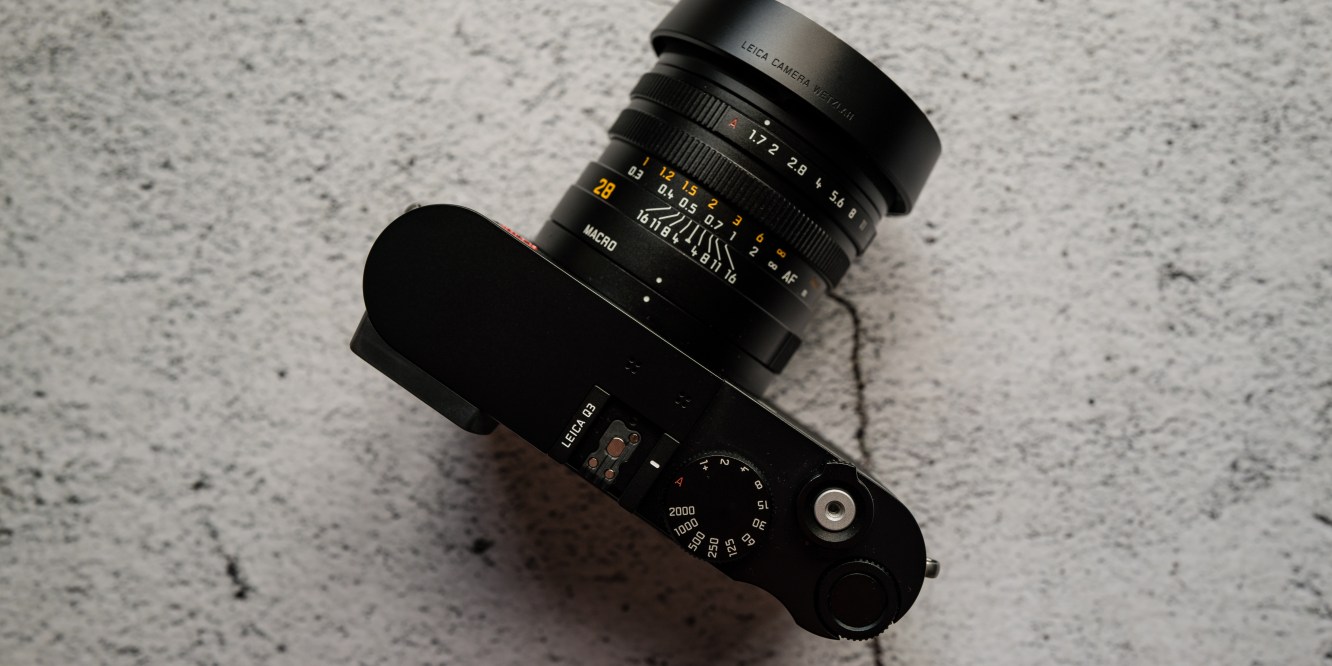
First, I am proud to share that this Leica Q3 review represents my milestone 200th post on http://www.keithwee.com!
Introduction
Announced on 25 May 2023, the Leica Q3 is the third iteration of one of Leica’s most-loved cameras. As of now, I am sure there are many specifications-focused reviews available hence this review will focus on what I deem to be the five critical improvements in the Leica Q3 over the Leica Q2 gleamed over my hands-on user experience over the last 3 days.
*The loan period for the Leica Q3 review is a week, a positive shout-out to Leica AG for always ensuring a reasonable loan duration.
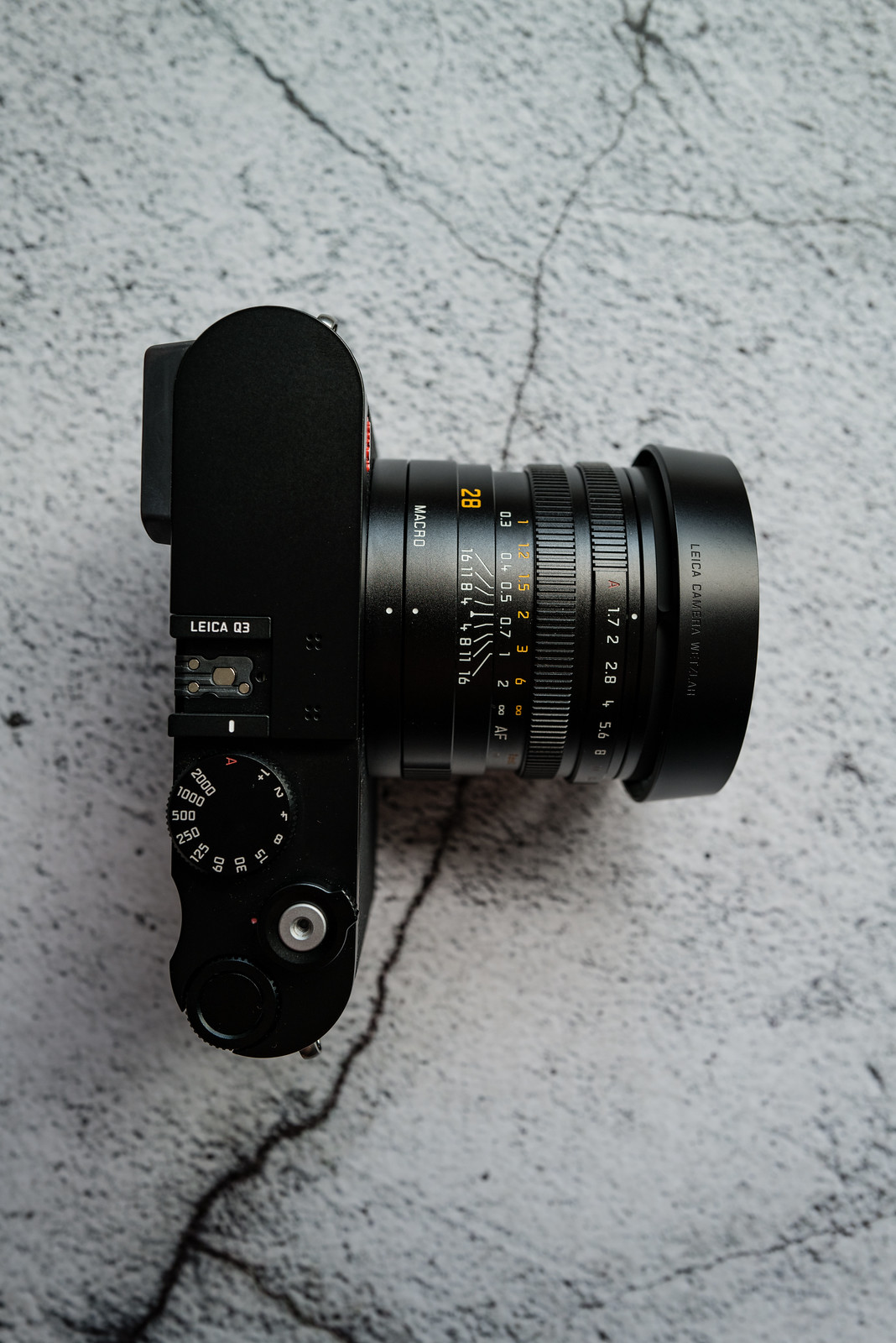
*For fairness, the Leica Q3 used for this review is a pre-production set running pre-production firmware.
This review will be long as I have tried to structure the review based on the questions requested by photographers across the social media platforms instead of the typical boring regurgitation of specifications.
My many reviews of the Leica Q2 Monochrom, Leica Q2, and Leica Q are linked to their names.
tl:dr
The Leica Q3 brings real significant improvements over the already very competent Leica Q2 in performance, functionality, and even in the ergonomics and build of the camera.
The Leica Q2 is a very capable camera, supported by Leica with Firmware version 5.00 recently released. It will satisfy most users, but the Leica Q3 will be the one that the most demanding users will yearn for.

Love the fact or hate it, with the dead-on-arrival Zeiss ZX1 and the unknown fate of the Sony RX1 series, the Leica Q is the only choice of premium fixed-lens camera in the full-frame arena. The Fujifilm X100 and Ricoh GR series have their own strengths, but none will give you the same optical potential as the Leica Q3.
The Three common questions…
As usual, once Leica’s announcement was made and the 1st wave of reviews was shared, the three most common questions asked were:
“Is the Leica Q3 worth upgrading from the Leica Q2 or the Leica Q1?”
“Is the Leica Q3 the best, beating other premium fixed lens compacts into submission?”
“Which body part should I sell for the Leica Q3?”
I lack the know-how to help with the third question, but as any self-respecting reviewer would, let me attempt the 1st two questions and leave the final deliberation to you.


Five critical improvements over the Q2
Regardless of whether one is a hobbyist, enthusiast, or professional, there will always be a few key areas that matter. Let us see how the Leica Q3 brings the Leica Q series forward.
One. Intelligent Auto-focus capabilities
Firmware 5.00 adds additional autofocus capabilities to the Leica Q2. Still, the newly developed PDAF+CDAF autofocusing system of the Q3 takes the autofocus reliability, tracking, and speed of the Leica Q3 to a significantly higher level.


With almost instant activation and excellent tracking, subject recognition has improved significantly, especially in eye/face/body detection. Leica has also worked on the focusing menu options, for example, including a new option, “Intelligent AF,” that one can apply and allow the camera to intelligently determine the most appropriate focusing mode.


I prefer more control over my autofocusing and use spot metering; hence while some will prefer to simply let the camera do the heavy lifting, I quite frequently change Auto-focus modes between Eye/Face/body detection to Spot or Field focusing and the touch-screen/menu system allows me to do so quickly.


Of course, no camera system can give one 100% hit rate for auto-focusing, but the Leica Q3 is confident in its autofocus reliability. If one wishes for higher hit rates, the camera allows up to 15 frames per second of captures.
Menu-wise, under Drive Mode, one now sees a more precise definition of the different ‘speeds’ available. Instead of Leica Q2’s Continous Low/Medium/High/Very High, Leica Q3’s menu clearly states the differentiation from 2/4/7/9/15 frames per second, with 14-bit files only available up to 7 frames per second.

Two. Perspective control, coming from the Leica M11 and newer M10 series models, this function is also now available on the Leica Q3, allowing one a handy in-camera tool in aligning converging/diverging verticals while composing.


Suppose you have never used Perspective Control and prefer photographing converging or diverging lines. In that case, you are definitely missing out, and this is one of those little yet extremely handy functions that I frequently use in my Leica M10-R.


Three. Low Light focusing and image output.
The Leica Q3 shares the same triple-resolution sensor as the Leica M11 but possesses a more advanced Maestro IV processor (Leica M11 uses the Maestro III).
One highly requested topic and seldom touched on by other reviewers is the Leica Q3’s performance in low light.


Photographing in low light, even with street photography where one generally requires higher shutter speeds was a breeze with an auto-focus system that never even hunted once.
Your storage options may curse at me, but if this is a 60 megapixels capable camera, I will use it at 60 megapixels. The output of the Leica Q3 is beautiful even in low light, with Leica’s signature micro-contrast enhanced by a good repertoire of punchy colours.
Some may question how high ISO performance will be affected if one chooses between the 18, 36, and 60-megapixel modes. My quick answer is simply that I will need to have the camera longer to test this properly, but my experience with the files is that they are excellent to work with, and as always with Leica equipment, I shoot for the shadows instead of the highlights.


Four. Ergonomics and Firmware
Leica has emphasized that adding a tilt screen is a big deal. While helpful, I believe a tilt screen is not compulsory. My M10-R and MP cameras do not come with a tilt screen, and I have never lost a shot because I did not have a tilt screen, but I digress.

What is more critical for me is one overlooked area by a few other reviewers; with the buttons now shifted to the same side, one-handed operation of the Leica Q3 is now possible, which is an experience-changing design change.

In fact, being a happy owner of the Q2 Seal, I sometimes wish that the camera comes with the convenience of USB-C sharing, and the Leica Q3 finally brings this to the table.

Kudos to the designers for being creative enough to include magnetic charging capabilities; it is cool, but this is not a function serious photographers will be desperate to have, especially when it costs approximately USD400 to unlock.

SCL-6 versus SCL-4 batteries

The SCL-6 was released along with the Leica Q3 with a higher capacity, notably to support the 8K recording and more power-hungry Maestro IV processor. Some current Leica Q2 owners wonder if they should dump their current SCL-4 batteries.
Firstly, using the SCL-6 on the Leica Q2 will not bring any benefits or extended battery life, but the battery is fully compatible. However, using the SCL-4 battery on the Leica Q3 will not allow 8K recording, and I did notice that on a few occasions, a very slightly longer start-up time on the Q3 (but I am using a pre-production unit; hence this has to be fully verified later).
Unless swimming in money or where 8K video recording is non-negotiable, I will not rush to dispose my current SCL-4 batteries for the Q3.
Five. Breaking new grounds with new capabilities.
This was one area I did not expect, but the Leica Q3 comes with significant improvements in its video capabilities. The Leica Q3 camera now supports 8K recording at 30fps, 4K at 60 fps, or Full HD at 120fps.
In a nod to practicality, Leica Q3 now has an HDMI output for connecting to an external monitor or recorder and a USB-C port for power/data transfer. Other advanced video features include ProRes recording, Leica’s L-log profile, and LUT compatibility.
I am sure video creatives would be asking about microphone inputs that there’s no microphone socket for higher quality sound. I guess Leica would offer this through USB-C later through a firmware update.


Technicalities (I recommend you skip this section)
Anyone can google the full specifications (Leica’s own site is here).
- 60MP full-frame sensor with Triple resolution technology (18/36/60 Megapixels)
- 28mm ƒ1.7 Summilux stabilized lens with integrated macro mode (focusing up to 17cm)
- Digital crop to 35, 50, 70, and 90mm (39, 19, 8, and 6MP)
- 5.76M dot OLED EVF with 0.79x magnification, 3″ tilt touchscreen LCD with 1.8 million dots
- Native ISO range of 50 to 100,000
- Shutter speeds of 120sec to 1/2000sec using the in-lens mechanical shutter, extending to 1/16,000sec using the electronic shutter.
- Hybrid autofocus (PDAF + contrast AF with new intelligent subject recognition)
- 8K video capture in UHD or DCI ratios up to 30p (H.265)
- Apple ProRes 422HQ support for 1080p video capture up to 60p
- AI-assisted perspective control and dynamic range tools for JPEG mode
- IP52-rated dust and water resistant
- USB-C and micro-HDMI ports, new SCL-6 battery with wireless-capable charging grip HG-DC1
- New Leica Looks (JPEG profiles building on the existing ones)

Touch-and-go
Another much-touted improvement is the availability of the Leica Looks to the Leica Q3; this is one area I hope to touch on later if I manage a second review of the Leica Q3.
The Leica Looks, for now, consists of the following options: Contemporary, Classic, Selenium, Sepia, and Blue, and below is to share a sample to start.


Note that one needs to transfer the Leica Looks profiles from the FOTOS app to set them up for direct use in the camera.
Some users might like them, but I prefer Leica’s standard look, so this is subjective, but I guess, more options are always good. These work as filters one can apply for the JPEG files directly in camera once you transfer them over from the FOTOS app, for example, Contemporary, which comes with a straightforward but subtle reddish tint and, in my opinion, the one that most users would use more frequently.
Conclusion
I realize quite a few considering the Leica Q3 from the Leica Q2, maybe have focused wrongly on the surface-layer attributes, such as the addition of the tilt-screen and, well, the new “Leica Looks” and as such, neglected the significant improvements under the hood and I hope this review here touches on these areas.
Similar to the Fujifilm X100 & Ricoh GR series, the Leica Q series is unique in specific ways and designing a worthy successor is never an easy feat.
The Leica Q3 lives in a market segment with no real competitors, the premium fixed-lens full-frame camera segment. This alone makes it unique, and even for a Leica M and Fujifilm X-mount system user like me, I see how the Leica Q3 complements my system.

For current Q2 owners, upgrading or not is very personal, but this is a no-brainer question for Leica Q owners. For current owners of the APSC-sensor fixed lens options, these are excellent cameras with their cult following (I have reviewed both and owned them too). Still, my honest opinion is none of them will ever come close to the imaging potential of the Leica Q3. Thus, the decision returns to which factor regarding the camera performance one prioritizes the most.
One unequivocal fact is the Leica has indeed taken the very competent Leica Q2 and yes, improved it to an even higher level of performance with the Leica Q3.
even when they could have simply continued to sell the Leica Q2
Thank you for reading.

Disclaimers:
- All product photos and samples here were photographed by me. I believe any reviewer with pride should produce their own product photos.
2. All images were shot with a pre-production set of the Leica Q3, and all DNG files were edited in LR CC Classic to my preferences.
3. This review is not sponsored; the camera is a loan set from Leica AG Asia Pacific (Singapore) and will be returned.
4. I do not do affiliate purchase links to keep myself neutral. I write as a passion and a hobby, and I appreciate that photography brands are kind enough to respect and work with me.
5. The best way to support me is to share the review, or you can always help support me by contributing to my fees to WordPress for the domain using the Paypal button at the bottom of the page.

 KeithWee | Photography
Yes! I have been waiting for your review on the Q3. Thank you!
LikeLiked by 1 person
Hi Matt, thank you for the kind words. Hope this review will be useful for you 🙂
LikeLike
Hey, lovely photos there and thank you for taking the time to open this review.
LikeLike
Hi, thank you and glad you find the review useful.
LikeLike
Great read, really nice seeing a review which includes extensive photos taken from the camera! I agree with your comment on preferring the standard picture present. Lovely photos and in-depth review 🙂
LikeLiked by 1 person
Hi Lewis, thank you for the time. Glad you I found someone who agrees with me on that haha
LikeLike
Very nice article Keith, I currently own Leica Q2 along with Fuji system. I am in a dilemma whether to upgrade to Q3 or not. Any guidance will help here. Thank you.
LikeLike
Hi, thank you for popping by. To be honest the Q2 is still excellent with a lot of life to go, probably even longer than some modern Fujifilm bodies.
Though there are many improvements, I will only upgrade to a Q3 for the faster and more reliable AF system and thus if I still find the current Q2’s performance sufficient I won’t upgrade.
LikeLike
Don’t do it! I’ve had both a Q, Q-P and Q2. I upgraded to the Q3 in July and have had battery issues, the latest being that the camera wouldn’t accept a fully charged battery in the a temperature of 6degrees C, Once warmed up it worked fine so travelling with in below zero temperatures is at best suspect. The Camera does not always save your previous preset’s at turn on and defaults to the Leica main settings, including frustrating Video option which will start if you inadvertantly swipe the touch screen. I have put mine into prolonged hibernation, well the back of the cupboard, while I find someone with an industrial grinding/crushing machine. Watch out for the video of it’s demise.
LikeLike
Hi Keith,
I currently own a Nikon D750 with a 50mm 1.4 prime lense and a 70-200 too. However I realised that I love the 50mm more. The only issue have been the weight and bulkiness.
Do you reckon Q3 would be a better choice? What’s opinion as a professional?
Thanks
George
LikeLike
Hi George, thanks for popping by. A big question I’ll ask myself is would you be ok with a fixed lens (in this case 28mm) coming from the D750. If an interchangeable lens system is key maybe I might consider the Zf and Z28 , Z40mm (for compactness) and the whole kit is still lesser than half the price of the Q3.
Q3 wise it is excellent in that it is the only full frame compact camera left currently and if you want that, there are few other alternatives.
The GR III is great too unlike the X100V which has hardly been updated functions wise but these two are APSC.
LikeLike
Thank you, Keith for your quick response.
For me, portraits and street photography is my love.. I am not fussed over a interchangeable lense but I never considered what you mentioned about Zf.
Yes I heard about GRIII since X100V isn’t available.
Let me research more on the above recommendations.
Btw, I love your perspectives about viewing gear and giving a different tone to reviews (sometimes I wonder if YouTuber reviews are frankly biased except few.. too much to review.. but I like this mode of sharing thoughts)
LikeLike
Hi, it helps a lot I don’t get any commissions from the brands and at most equipment loans anyway 😂
If portrait and street is what you wish to go for, the GR IIIx might be an interesting choice together with the Zf. If pricing and compactness goes higher priority the GR is a step up and if AF, FF and overall imaging performance is the key, the Zf has the upper hand.
And of course the Q3 is capable AF, IQ wise also , with its crop modes to simulate different focal lengths hence as all these will go back to your personal needs and choice end of the day.
All the best 🙂
LikeLike
Thank your for sharing the article 🙂
LikeLike
Thank you for linking up
LikeLike