Introduction
In the Hasselblad X system, there are two very different kinds of “portrait lenses”.
There’s the statement portrait lens, the ‘chosen’ one you bring out when you want maximum subject separation, maximum glow, maximum presence. And then there’s the everyday portrait lens, the one that lives in your bag, ready for real life, and quietly gives you that Hasselblad look without demanding that you shoot like you’re on assignment for Vogue magazine.
My review of the statement portrait lens, the XCD90mm ƒ2.5V is here.

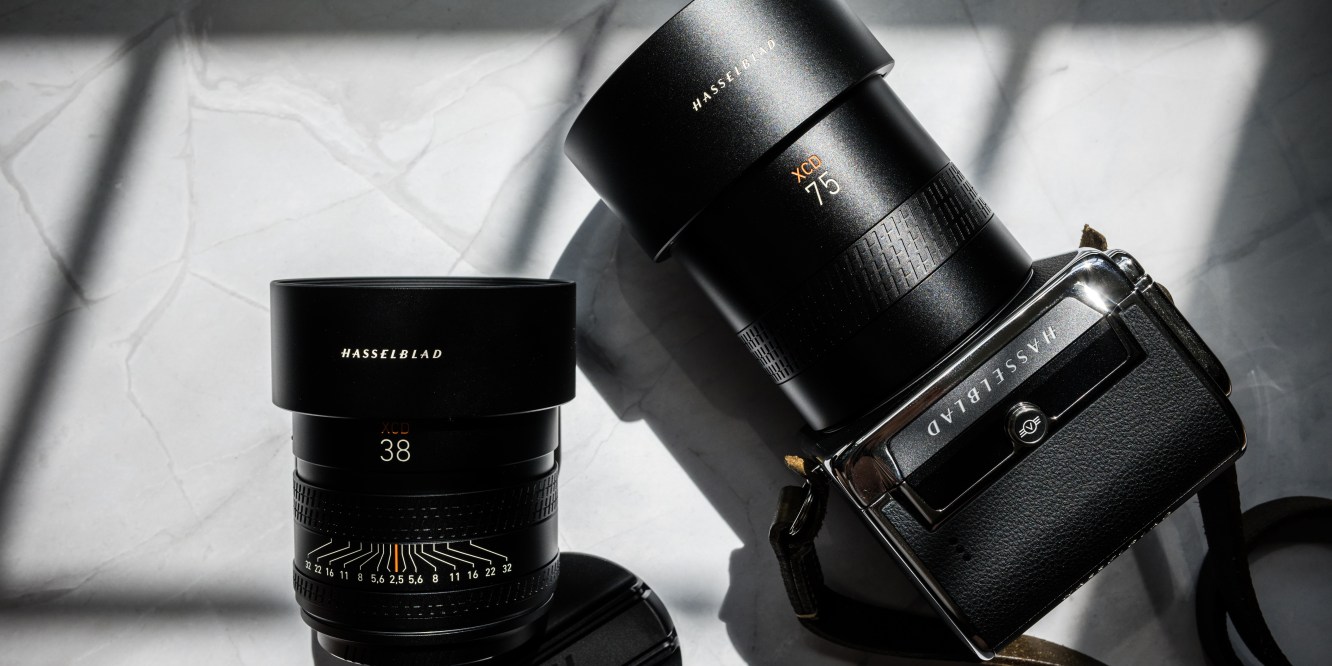
The Hasselblad XCD 3,4/75P is unmistakably the latter. Hasselblad calls it a lightweight portrait lens and positions it for portrait, street, and documentary work.
The Hasselblad “P” (Portable) series as been quietly redefining what “everyday carry” means for the X-system.

In practical terms, it’s a 59mm full-frame equivalent “normal-plus” prime, built to be carried and built to make people look good without turning every image into a shallow-depth-of-field flex.
And that matters, because in my own Hasselblad journey especially with the Hasselblad 907X CFV100C, I’ve learnt that the system shines brightest when it disappears. Once you set it up right, the camera becomes intuitive, and you stop thinking about menus and start thinking about moments.

The Hasselblad XCD 75mm ƒ3.4P feels designed for exactly this kind of photography.
tl:dr
The Hasselblad XCD 75mm ƒ3.4P is a compact, lightweight prime in Hasselblad’s Portable (P) line. With a field of view that works out to roughly a 59mm full-frame equivalent, it sits in that sweet spot between “standard” and “short portrait”, a focal length that can do a little bit of everything without feeling generic.
It exists as the walk-around “standard” lens that still flatters like a portrait lens, and it also feels like a more modern, everyday alternative to the older XCD 65mm ƒ2.8 option. The point isn’t to chase extremes and to give Hasselblad X-system shooters a default lens that’s genuinely easy to live with.

The main win is how much optical performance Hasselblad managed to pack into such a carry-friendly package. The exceptional sharpness and very clean, refined rendering; the kind of transparency that simply allows the Hasselblad 907X and X2D camera sensors do its magic with Hasselblad’s famed natural colour solution.
The compromise is classic P-series simplicity. You get the pared-down design language: no focus clutch or distance scale, and minimal physical controls which is balanced with a medium format lens at an incredibly light 398 grams.

The Hasselblad XCD 75mm ƒ3.4P may not be for everyone, but it does a great job being an everyday carry lens that presents the medium format magic from Hasselblad’s X-system without burning a hole in one’s wallet.

Technicalities
- Focal length: 75mm (≈ 59mm FF equivalent), for Hasselblad’s medium format X-system
- Aperture range: ƒ3.4 to ƒ32
- Optical design: 10 elements in 10 groups, including 1 aspherical and 3 Extra low dispersion elements
- Leaf shutter in lens design offering up to 1/2000s flash sync speeds
- Weight: 398g
- Dimensions: Around 76 × 75mm (length × diameter)
- Filter thread: 72mm (and it can share filters with lenses like the XCD 25V / 28P / 38V / 55V)
- Minimum focus distance: 0.55m

Handling and Performance
The “P” philosophy: less to fiddle with, more to shoot
The Portable series has a very specific vibe: minimalism, and an emphasis on carryability. With the XCD 75mm ƒ3.4P, that shows up as a lens that keeps physical controls to a minimum, with no buttons or switches to even toggle manual focusing which now has to be done in-body.

If you’re coming from the V-series lenses, like the XCD 38mm ƒ2.5V (my review is here) you’ll feel the trade-off: no focus clutch, no distance scale, less of that “mechanical theatre” that some of us love.
But in exchange, you get a lens that behaves like a true everyday companion — the kind that doesn’t make your camera feel precious.
On an Hasselblad X2D II/X2D 100C or the 907X CFV100C, the setup feels almost like a point-and-shoot, if that point-and-shoot happened to have a 100-megapixel medium format sensor with Hasselblad’s Natural Colour Solution.

The autofocus is driven by a stepping motor that is noticeably quiet and sufficiently snappy for street and portrait work. While it doesn’t have the “V” lens’s push-pull focus clutch, the manual focus ring is smooth and well-damped.
One thing to note is the leaf shutter. Like its siblings, it is whisper-quiet. Shooting with this lens in a quiet gallery or a hushed street corner feels respectful. And for strobists, having that 1/2000s sync speed in a lens this small is a huge advantage.

Distortion, chromatic aberration are all at minimal levels and if you are bothered, both distortion and falloff are automatically removed when your images are imported to Phocus 2, Hasselblad’s companion for the X-system.
Conclusions
The XCD 75mm ƒ3.4P is not trying to be the loudest lens in the room but seeks to be a great general-purpose focal length with stellar sharpness.
The compromise is classic P-series is simplicity. You get the pared-down design language: no focus clutch or distance scale, and minimal physical controls all in at a light-weight 398 grams for a medium format lens.

The centre sharpness is superb even wide open at ƒ3.4, and the leaf shutter keeps that Hasselblad advantage intact with flash sync up to 1/2000s. The minimalist, elegant look matches the P-series design beautifully, and it’s also a more affordable entry point into the X system without feeling “cheap” in build or intent.
On the bad side, ƒ3.4 can feel ‘slow’ if your idea of joy is paper-thin depth of field on demand, and for that you have the XCD 90mm ƒ2.5V and XCD 80mm ƒ1.9 siblings.

It’s trying to be the lens you keep. The one that stays mounted when life happens, the one you reach for when you want portraits that feel natural, travel frames that feel intimate, and street images that feel unforced.

What the XCD 75mm ƒ3.4P gives you is a lens that makes Hasselblad feel everyday.
And that, to me, is the point.
Thank you for reading.
Disclaimers:
- All product photos and samples here were photographed by me. I believe any reviewer with pride should produce their own product photos.
2. All images were shot with my personal set of the Hasselblad 3,4/75P lens and 907X CFV100C camera.
3. This review is not sponsored.
4. I write as a passion and a hobby, and I appreciate that photography brands are kind enough to respect and work with me.
5. The best way to support me is to share the review, or you can always help support me by contributing to my fees to WordPress for the domain using the Paypal button at the bottom of the page.

 KeithWee | Photography