Introduction
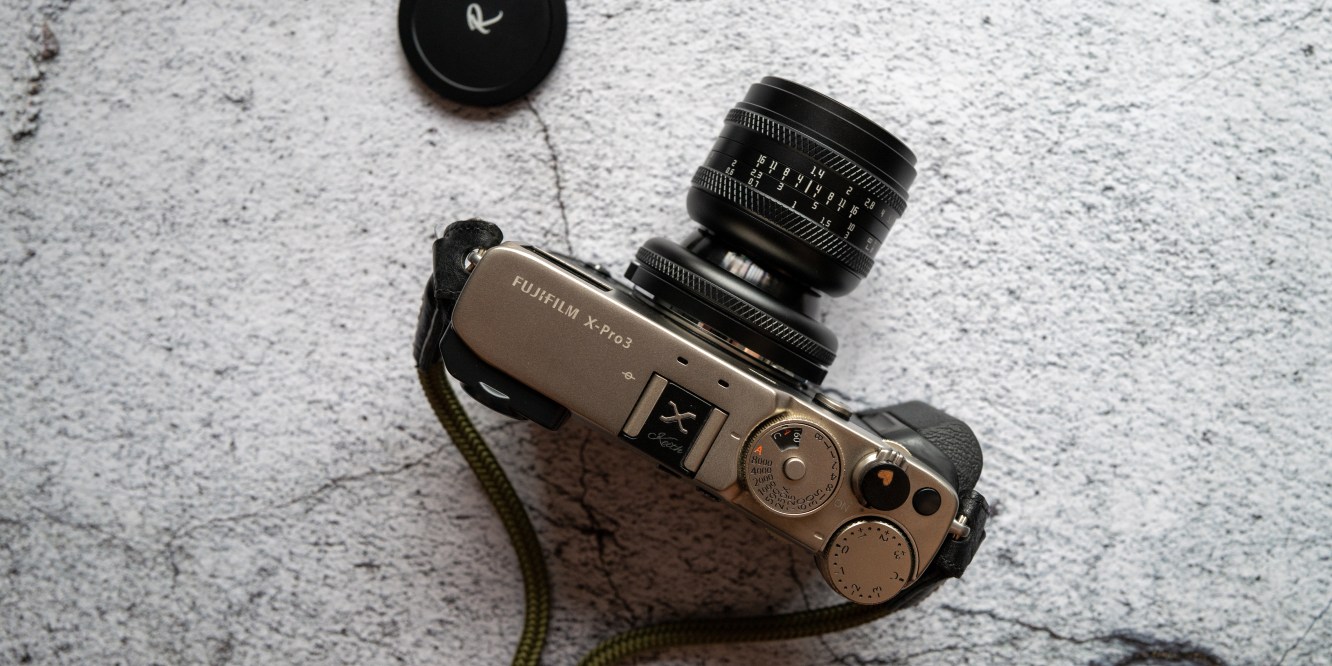
Established in 2018 and situated in Shenzhen, China, AstrHori is a company that has recently made inroads into the photography industry with a few interesting pieces of optics, and today we will take a look at the AstrHori 50mm ƒ1.4 Tilt lens.

A plus for users in a market with multiple third-party lens makers is the willingness to go further in producing more unique lens specifications.
Technicalities
- SRP at USD259
- Designed for Full-frame with support for Fujifilm X-mount, Nikon Z-mount, Sony E-mount, L-mount, MFT and Canon R-mount
- ƒ1.4 to ƒ16 with 7 elements in 6 groups and 12 aperture blades
- 43.2° angle of view
- MFD of 0.4m to infinity
- Approximately 53mm (diameter) x 70mm (length) at 340 grams with a filter size of 46mm
- Manual focusing

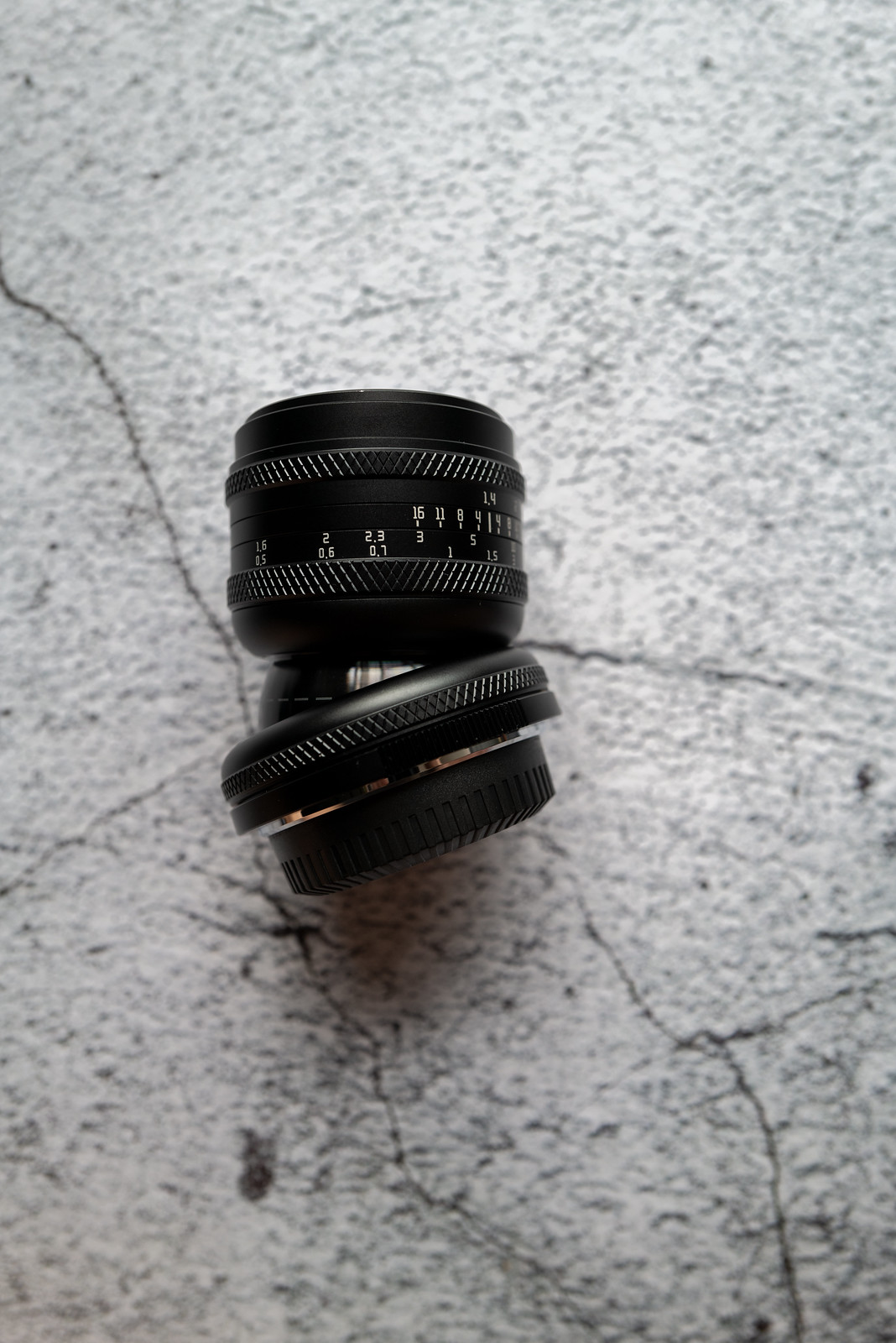
The white-dotted line is also the zero-return line, allowing one to see if one has returned the lens to its neutral position after using the tilt function.
As one can can see, there are three main rings to handle: the aperture ring for setting aperture values, the distance scale ring for setting focusing and the ‘limit-ring’ (as stated in the provided manual) that twists to loosen/tighten to allow on to adjust the ’tilt’ of the AstrHori 50mm ƒ1.4 Tilt lens.
Values on the aperture and distance scales are legibly labelled in white paint. The aperture ring has no click-stops (changing the aperture is silent), making the AstrHori 50mm ƒ1.4 Tilt suitable for videos too.


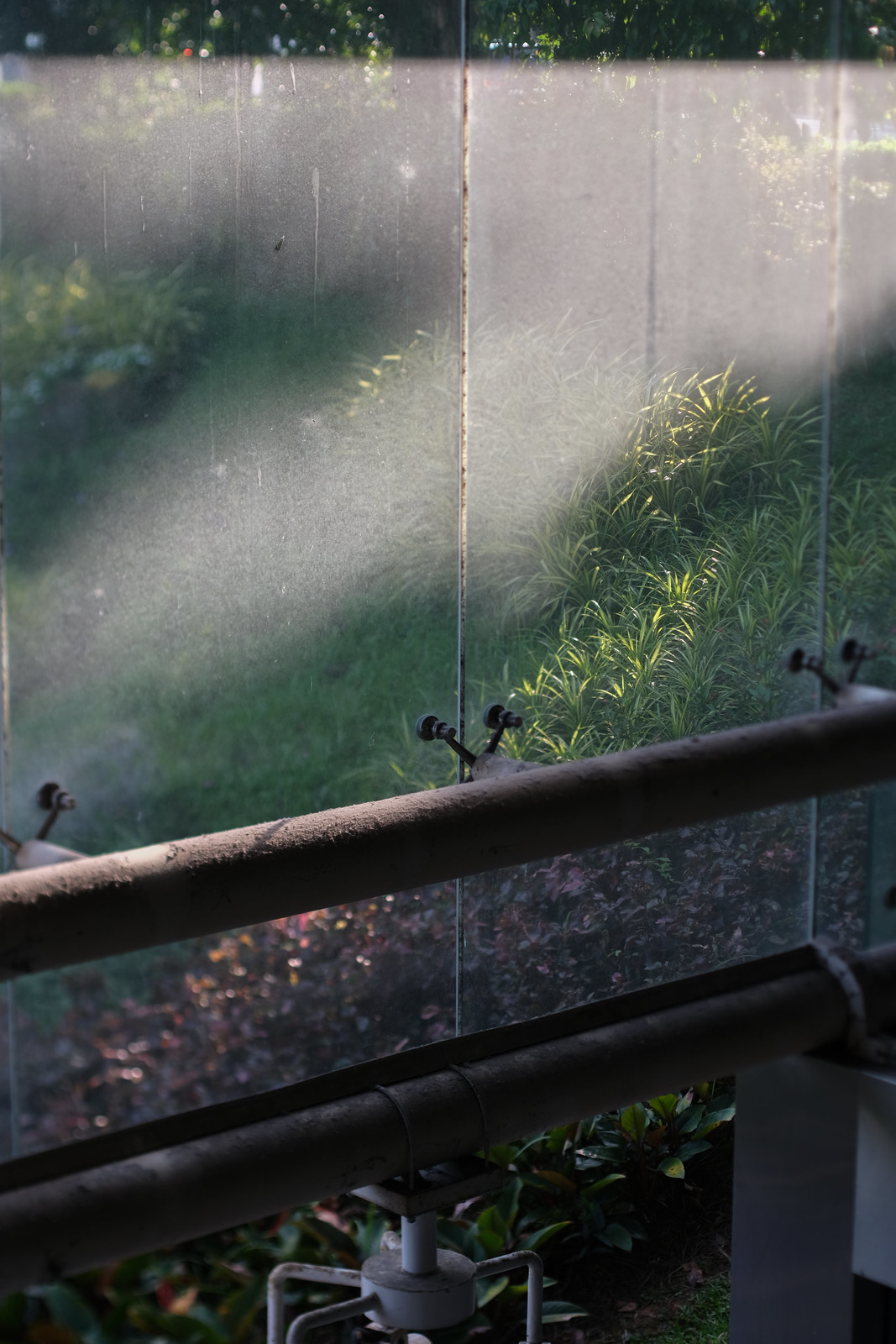
In my opinion, the AstrHori 50mm ƒ1.4 is foremost a large aperture general purpose lens, then a tilt lens, not the common otherwise line of thought.
Note that on Fujifilm X-mount, due to the APSC-sized sensor, the equivalent lens of this lens is 75mm
Err… tilt what and what can this do?
Most of us would have heard of Tilt/Shift lenses, and I guess associate these exotic lenses more with architecture. For tilt lenses like the AstrHori 50mm ƒ1.4 , we can modify the plane of sharpness by tilting the front part of the lens.
In this sense, one can use a tilt lens commonly for three optical effects: increasing depth of field, miniature effect or actually increasing the amount of ‘bokeh’.

Above and below, same scene, but the above is with the tilt function fully engaged, allowing one to modify the plane of sharpness and, of course, increasing the amount of bokeh to draw the eye into.
In this sense, the AstrHori 50mm ƒ1.4 tilt capabilities are indeed present for the photographer’s creative intent.

Handling and Performance
This is probably where it gets more interesting, and I will go along these two lines of discussion, with the AstrHori 50mm ƒ1.4 as a general-purpose lens and as a tilt lens.
As a general purpose lens, the AstrHori 50mm ƒ1.4 tilt performs well enough versus my expectations of it.


The build quality of the AstrHori 50mm ƒ1.4 Tilt is decent for its price range, but note that this is not a lens that will take much rough handling in the field.
The focus ring turns quite easily, and coupled with a click-less aperture ring, this is a lens with which one will need sight of the values to operate.
Distortion is surprisingly minimal and hardly noticeable, and even though the AstrHori 50mm ƒ1.4 Tilt does not come with a hood, it has very good flare resistance. However, once one goes to aperture values smaller than ƒ2, sharpness will not be a strength of this lens.
In this sense, I would say that the softness for wide aperture values in this lens while can be a positive for portraits as while not overly sharp, the Astrhori 50mm ƒ1.4 Tilt is ‘sharp enough’ for portraits but note that landscape or architecture photographers with more rigorous demands would do much better to only work with aperture values of ƒ4 onwards.

Wide open, I noticed a fair amount of chromatic aberrations, magenta in front and green behind the focal plane. Stepping down helps, of course, and this can be removed in post-processing.


As a tilt lens, the AstrHori 50mm ƒ1.4 tilt is not easy to apply, and will require a good amount of intent and patience to master.
AstrHori refers to the locking ring for the tilt mechanism as the ‘Limit ring‘, and when one unlocks the ring, the whole lens moves freely with very little resistance. This means there is fair trial and error, and setting precise tilt movements will not be easy.
Moreover, when trying to use the tilt function when adjusting the focus, there is also quite the likelihood of the lens wobbling, and you may end up changing the tilt setting again.


Lastly, while some may say to treat this as a Lensbaby-alike lens, I prefer to differ in that I would consider how I wish my tilt images to look before actually going ahead to adjust the tilt instead of, well, just playing around until I get a look I like.
In some cases at full tilt, I also did end up getting a blacked-out area, likely due to the image circle not being large enough even for the smaller APSC-sized sensors of Fujifilm X-mount compared to 4 other full frame mounts this lens is available for.

That said, the full 360° tilt does allow the photographer a very good amount of creative possibilities.

Above – slight tilt // Below – full tilt for ‘extra bokeh’ effect by changing the plane of sharpness.

Conclusions
The AstrHori 50mm ƒ1.4 Tilt is a unique lens, especially in Fujifilm X-mount, where I understand there are no native alternatives and only two third-party options.
As a general-purpose lens, and with Fujifilm X-mount’s 1.5x crop making this a 75mm equivalent lens, the AstrHori 50mm ƒ1.4 Tilt has its strengths, especially with its low amount of distortion and decently good image quality coupled with very good flare resistance.
As a tilt lens, the AstrHori 50mm ƒ1.4 Tilt does perform as advertised. As mentioned, I see this lens as a good candidate to consider if one sees it as a general-purpose lens with a tilt capability for added creative possibilities.

All in all, the AstrHori 50mm ƒ1.4 Tilt is an interesting lens and, at its price point, actually gives the photographer a good performance versus price ratio and is worth considering, especially if you are looking for something different from the run and mill lenses we see so often.
I surely look forward to future releases from AstrHori.

Thank you for reading.
Disclaimers:
- All product photos and samples here were photographed by me. I believe any reviewer with pride should produce their own product photos.
2. All sample images were shot with the AstrHori 50mm ƒ1.4 Tilt for X-mount on the Fujifilm X-Pro3 running firmware version 2.00.
3. This review is not sponsored. The AstrHori 50mm ƒ1.4 Tilt was sent by AstrHori for review purposes for a period of 2 weeks.
4. I do not do affiliate purchase links to keep myself neutral. I write as a passion and a hobby, and I appreciate that photography brands are kind enough to respect and work with me.
5. The best way to support me is to share the review, or you can always support me by buying me a cup of coffee which contributes to my WordPress fees for running the site using the Paypal button at the bottom of the page.

 KeithWee | Photography
One Reply to “Review of the AstrHori 50mm F1.4 Tilt – Uniquely ’tilt-ilating’”